Psychology says people who sit through the entire end credits of every movie - who stay in their seats while the theater empties, who read every name as it scrolls past, every key grip and second unit caterer and assistant to the director - are not being polite or obsessive but practicing the rarest form of attention a particular kind of childhood can teach, because a child who grew up feeling unseen learned that the smallest act of witness you can perform is staying to read the names of people whose work everyone else has already walked past
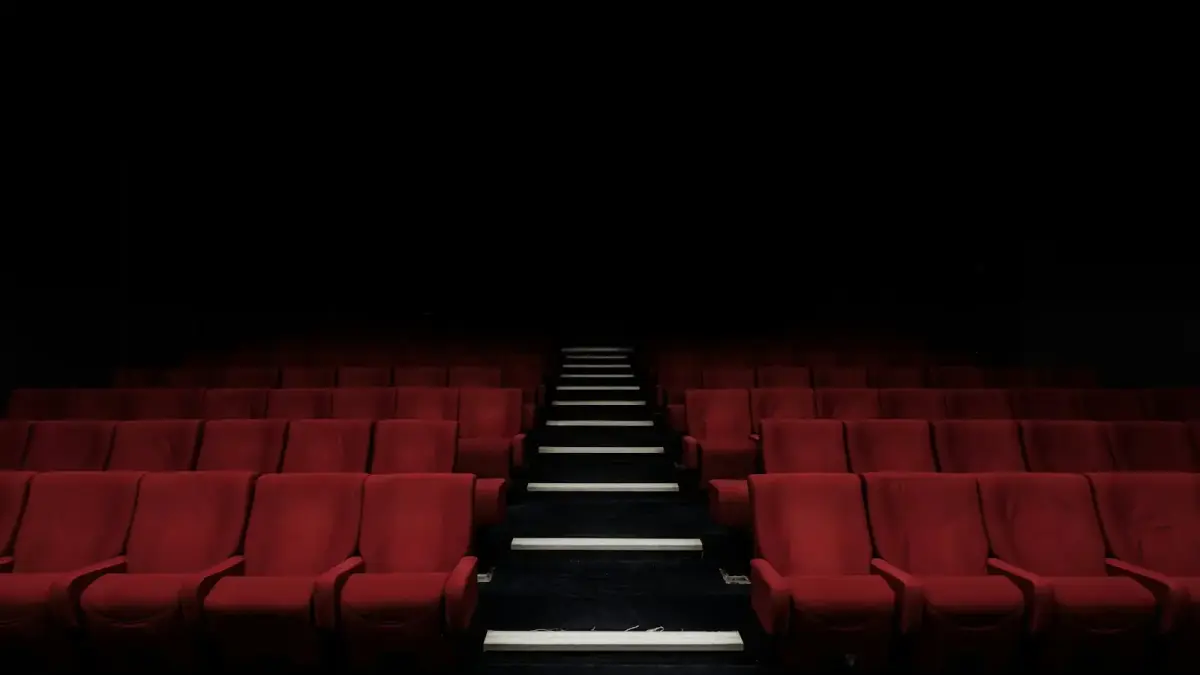
The lights came up and everyone stood.
My partner was already reaching for his coat, sliding past me toward the aisle, joining the stream of bodies moving toward the exit. The couple next to us gathered their things with that practiced efficiency of people who had somewhere else to be. A teenager three rows down was already on his phone, the screen glowing against his face before the first name had even finished scrolling.
I stayed.
I always stay. Not for the post-credits scene, though I will watch that too if there is one. Not because I think some gaffer in Vancouver will somehow sense that one person in theater seven read his name on a Friday night. I stay because something in me cannot walk away from a list of names belonging to people who worked on something I just experienced.
My partner knows this about me. He waits in the lobby now, patient, scrolling his own phone. He stopped asking why years ago, because my answer never quite made sense even to me. “I just like to,” I would say. Or, “It feels wrong not to.”
But that is not quite the truth. The truth is older than that, and it starts in a house where a particular kind of work was always being done and almost never acknowledged.
The names nobody reads
There are roughly six hundred to two thousand names in the end credits of a modern film. The number varies by production, but the scroll itself takes anywhere from four to twelve minutes. During that time, the theater loses about ninety percent of its audience.
Most people leave the moment the story is over. This is not rude. It is simply the way most brains are wired - the narrative has concluded, the emotional arc has resolved, and the credits represent information that does not feel personally relevant. There is no judgment in that.
But some people stay.
A 2020 study published in the Journal of Personality and Social Psychology examined what researchers called “dispositional attention to labor” - the tendency to notice, acknowledge, and mentally catalog the contributions of others, even when those contributions are invisible to most observers. The researchers found that this trait was strongly correlated with early childhood experiences of performing unacknowledged domestic or emotional work.
In other words, the people most likely to read credits are the people who grew up doing things nobody noticed.
The house where work was invisible
I grew up in a house that was always clean. The dishes were always done. The laundry was always folded. The bathroom floor was always dry. And nobody, not once, commented on any of it.
My mother worked. I do not mean at a job, though she had one of those too. I mean she worked inside the house the way water works inside a pipe - constantly, invisibly, with a kind of pressure that only became noticeable when it stopped.
She ironed shirts at five in the morning. She packed lunches that looked effortless but required planning the night before. She knew which groceries were running low before anyone opened the refrigerator, because she had been keeping a mental inventory since Tuesday.
And I watched her. That is the part that matters. I did not help enough - no child does, not really - but I watched. I saw the work. I cataloged it the way you catalog weather. It was always happening, always present, and nobody mentioned it because nobody saw it except me.
That is what a child learns in a house like that. Not that the work matters - every child understands that abstractly. But that someone can pour their entire self into maintaining a world and have that effort go unwitnessed. That a person can hold the architecture of a family together with their bare hands and never hear a single name read in their credits.
What you are really doing in that dark theater
When you stay for the credits, you are not reading names. You are performing a correction.
You are saying, with your body and your time and your attention, that the work matters even if no one else is here to see it. You are sitting in a darkening theater watching the name of a person who painted a wall on set fourteen months ago scroll past, and something in your chest recognizes that person. Not the individual. The category. The person who did something essential and was never going to be thanked for it in public.
Psychologist Adam Grant has written extensively about what he calls “givers” - people whose default orientation is to contribute without expecting reciprocity. His research suggests that the strongest givers are not motivated by altruism in the abstract but by a deeply personal understanding of what it feels like to give without acknowledgment. They stay because they know what it costs to leave.
That is not politeness. That is recognition.
And it starts in childhood, in a kitchen, watching someone work.
The quiet math of attention
Here is something I did not understand until I was well into my thirties. The reason I stay for credits is not because I think the second assistant camera operator needs my attention. It is because my nervous system learned, very early, that attention is the most honest currency a person has.
You can say you value someone’s work. You can tip. You can write a thank-you note. But the most basic, most irreducible unit of human acknowledgment is simply staying in the room while their name scrolls past.
A 2018 study in Psychological Science found that the experience of being “unseen” in childhood - of performing emotional or domestic labor that went systematically unacknowledged - creates what the researchers described as a heightened sensitivity to recognition gaps. Adults who grew up feeling invisible in this specific way became unusually attuned to moments when other people’s contributions were being overlooked.
They were the ones who noticed the janitor. Who thanked the sound technician. Who remembered the name of the person who set up the chairs.
Who stayed for the credits.
It is not about the movie
The movie is over. You know this. The story has ended, the music has resolved, and the lights are about to come up. There is nothing left for you in this theater except a scroll of white text on a black background.
But you stay anyway. You stay the way you once stayed in the kitchen after everyone else had gone to bed, watching your mother wipe down the counter one last time. Not because she asked you to. Not because you could help. But because someone had to see it. Someone had to be the witness to the work that made everything else possible.
And maybe that is the simplest way to understand what you are doing in that seat. You are not being eccentric. You are not being obsessive or performative or making a statement about artistic appreciation.
You are being the child in the kitchen. The one who stayed. The one who saw.
The difference is that now, the names are on the screen. And you read every one of them because you know what it costs when no one does.
If you are someone who stays for the credits, I want you to know this: the impulse that keeps you in your seat is not a quirk. It is a form of love. It is the specific, practiced, lifelong form of love that belongs to people who learned early that the most important work in the world is almost always done by someone whose name you will never hear unless you stay long enough to read it.
The theater is emptying. The lights are coming up. Your partner is waiting in the lobby.
Stay anyway. You were built for this.