Psychology says people who still dream about the house they grew up in - who walk the same hallway in their sleep every few months, who open the bedroom door they opened ten thousand times, who always end up in the kitchen or standing at the bottom of the stairs - are not stuck in the past and are not being sentimental, they are people whose nervous system filed that house not as a memory but as an open case, and the dream at fifty-one is not nostalgia but a body returning to the only scene it was never given permission to process while the lights were on
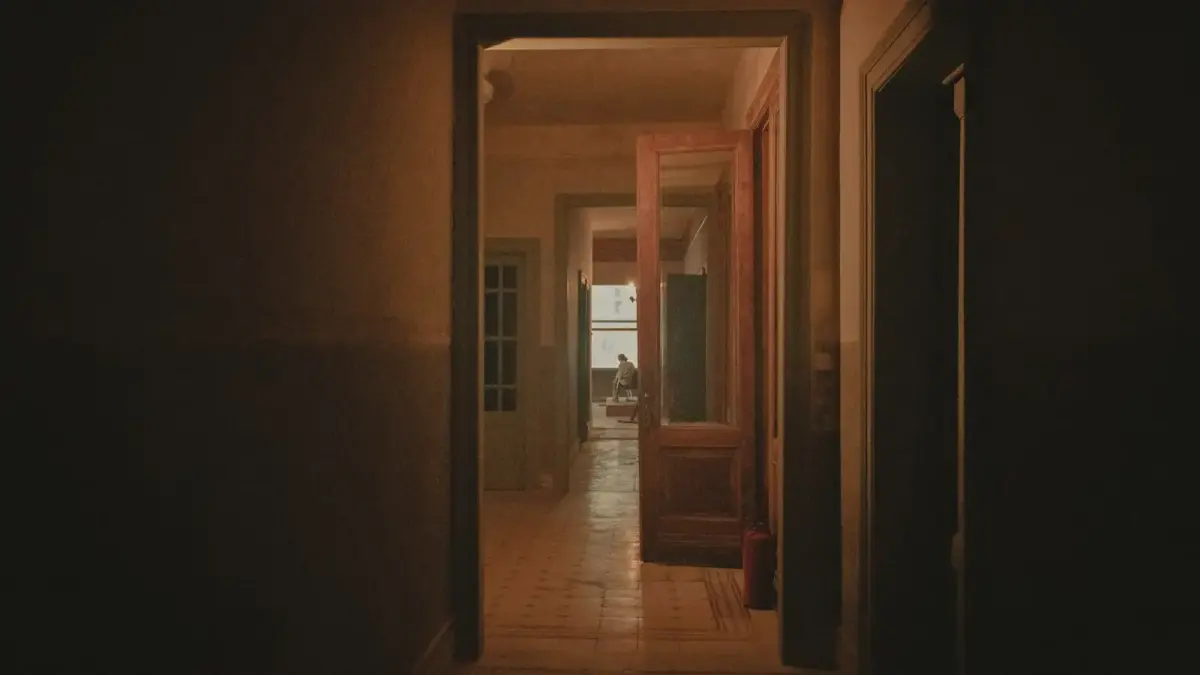
The house I grew up in was torn down in 2014. I know this because my sister sent me a photo of the empty lot, and I stared at it for ten minutes without speaking. There was nothing there. Just dirt and a chain-link fence and the shadow of where the oak tree used to be.
I hadn’t lived in that house since I was eighteen. I hadn’t visited in over a decade. But three nights after I saw that photograph, I dreamed I was standing in the kitchen, and the linoleum was exactly right. The crack by the refrigerator. The way the light came through the window above the sink at about four in the afternoon, turning everything amber. My mother was somewhere in the house but not visible. I could hear the particular sound the back door made when it closed, a sound I hadn’t consciously remembered in twenty years.
I woke up disoriented. Not sad, exactly. Something heavier. Like a file had been opened inside me that I didn’t know still existed.
I am a psychologist who studies memory, and I still wasn’t prepared for what that dream actually was.
The house is not a house
When people tell me they dream about their childhood home, they almost always apologize for it. They say it’s silly. They say they don’t know why it keeps happening. They assume it means they’re stuck, that they haven’t moved on, that some sentimental part of them can’t let go of a building that no longer exists or no longer belongs to them.
They are wrong about all of it.
The childhood home is not stored in your brain as a location. It is stored as a neural environment, a complete sensory world that your developing nervous system mapped with extraordinary precision during the years when your brain was most plastic and most alert. Between roughly ages three and twelve, the brain is in a prolonged state of environmental encoding. It is recording not just what happens but where it happens, how the air feels, what direction the sounds come from, how the floorboards respond to weight.
A 2017 review in Nature Reviews Neuroscience described this process as “contextual binding,” the way the hippocampus links emotional experiences to spatial environments during critical developmental periods. The childhood home isn’t remembered the way you remember a vacation or a phone number. It is embedded. It is architecture inside you, a three-dimensional emotional map that your nervous system built and never disassembled.
When you dream about it at fifty-one, your brain is not being nostalgic. It is reopening the map.
What the hallway actually holds
There is a reason you always end up in the same places.
The kitchen. The hallway. The bottom of the stairs. Your childhood bedroom. The bathroom with the door that didn’t lock properly. Maybe the garage, or the backyard, or the space under the dining room table where you used to sit when things got loud.
These locations persist in dreams because they were not neutral spaces. They were emotional stations, places where specific things happened that your child’s brain encoded but your child’s mind could not fully process.
The hallway where you heard your parents arguing at midnight. The kitchen where the mood of the entire household was set each morning by the expression on one person’s face. The bottom of the stairs where you paused, listening, before deciding whether it was safe to come down.
You learned the emotional weather of your family in those locations. And your nervous system recorded every reading.
Ernest Hartmann, one of the most important dream researchers of the past fifty years, published a landmark paper in the journal SLEEP in 2010 arguing that recurring environmental dreams serve a specific function. They are not replays. They are reprocessing attempts. The brain returns to a stored environment when it contains emotional data that was recorded but never integrated, experiences that were felt in the body but never narrated, never explained, never spoken about out loud.
The dream is not a memory. It is a second chance at processing what the memory contains.
The body keeps the floor plan
Gabor Mate has written that the body stores what the mind cannot hold. I think about this every time a patient describes walking through their childhood home in a dream with such precision that they can feel the carpet under their feet.
The detail is not incidental. It is diagnostic. The nervous system does not bother recreating environments it has finished with. It recreates the ones that still carry unprocessed weight.
Consider what it means that your brain, decades after you left, can still produce the exact layout of a house. The position of the light switches. The sound of the furnace kicking on. The way the third stair creaked. This is not trivia. This is your nervous system telling you that it cataloged that environment at the highest level of fidelity, because that environment mattered to your survival.
Children in unstable homes map their surroundings with particular intensity. Not because they are more observant by nature, but because spatial awareness becomes a survival tool. You learn which rooms are safe. You learn which doors to avoid. You learn the acoustics of conflict, which walls are thin, which corners let you hear without being seen.
And all of it gets filed. Not in your conscious memory, where you could talk about it in therapy. In your spatial memory, where it sits like a building waiting to be walked through again.
Why the dream comes back at certain ages
People rarely dream about their childhood home continuously. It comes in waves. And the waves tend to cluster around specific life events.
Becoming a parent. Turning forty. A divorce. A death in the family. A child leaving home. Retirement. Any moment when your current identity is disrupted enough that the nervous system reaches back for its original template.
G. William Domhoff, a dream researcher at the University of California, Santa Cruz, published findings in the journal Dreaming in 2018 showing that environmental dreams increase significantly during periods of “identity discontinuity,” moments when a person’s current self-concept is challenged or destabilized. The brain, Domhoff argued, returns to its earliest mapped environment not because it wants to go backward, but because it is searching for the foundational layer, the original floor plan on which everything else was built.
At fifty-one, you dream about the house not because you miss being a child. You dream about it because something in your current life has cracked the surface just enough for the older material to rise.
The dream is not about the house. It is about what happened in the house that you never had language for. The feeling in your chest when the front door opened and you didn’t know which version of your parent was walking in. The silence at dinner that lasted three days and was never explained. The night something happened in the next room and no one mentioned it in the morning.
You were too young to narrate those experiences. But you were not too young to feel them. And feeling without narration is exactly what creates the kind of memory that only surfaces in dreams.
The rooms you avoid
This is the part I find most telling.
When I ask patients to describe their childhood home dreams in detail, there is almost always a room they don’t enter. A door they stand in front of but don’t open. A part of the house they know is there but somehow can’t reach, or choose not to walk into.
That room is not random.
It is the place where the thing your nervous system most needs to process actually happened. And the fact that even your dreaming mind hesitates at the threshold tells you something about the weight of what’s stored there. The dream brings you close. It walks you through the hallway, through the kitchen, past the familiar wallpaper. It gives you the full sensory experience of the environment. And then it stops, right at the edge of the room that holds the thing you most need to feel.
This is not failure. This is pacing. Your brain is doing exactly what a good therapist does. It is approaching the material gradually, session by session, dream by dream, getting a little closer each time.
You are not stuck. You are approaching something at the speed your nervous system can tolerate.
What the dream is actually asking
If you still dream about the house you grew up in, I want you to stop treating it as a malfunction. It is not a sign of weakness or unresolved damage or an inability to live in the present. It is your brain doing exactly what brains do with experiences that were felt but never completed.
The dream is a question. It is asking: are you ready now? Are you old enough, safe enough, steady enough to walk through this room and feel what the child who lived here could not afford to feel at the time?
Sometimes the answer is no. Sometimes you wake up and the dream dissolves and you go about your day. That is fine. The house will be there the next time.
But sometimes, if you are still for a moment after waking, you can catch the edge of what the dream was carrying. Not a specific memory, usually. More like a temperature. The emotional weather of a room. The feeling of being small in a house where large things happened and no one explained them.
That feeling is not the past. It is the past asking to be brought into the present, where you finally have the language, the safety, and the distance to let it mean something.
The house they tore down in 2014 is still standing inside me. It will always be standing inside me. And the dream that walks me through it every few months is not a haunting. It is a homecoming, to the version of myself who lived there and recorded everything and has been waiting, patiently, for someone to come back and listen.