Psychology says people who always notice the exact moment someone in a group goes quiet aren't being 'too sensitive' - they're running a social surveillance system that a child built when silence was the only warning before everything fell apart
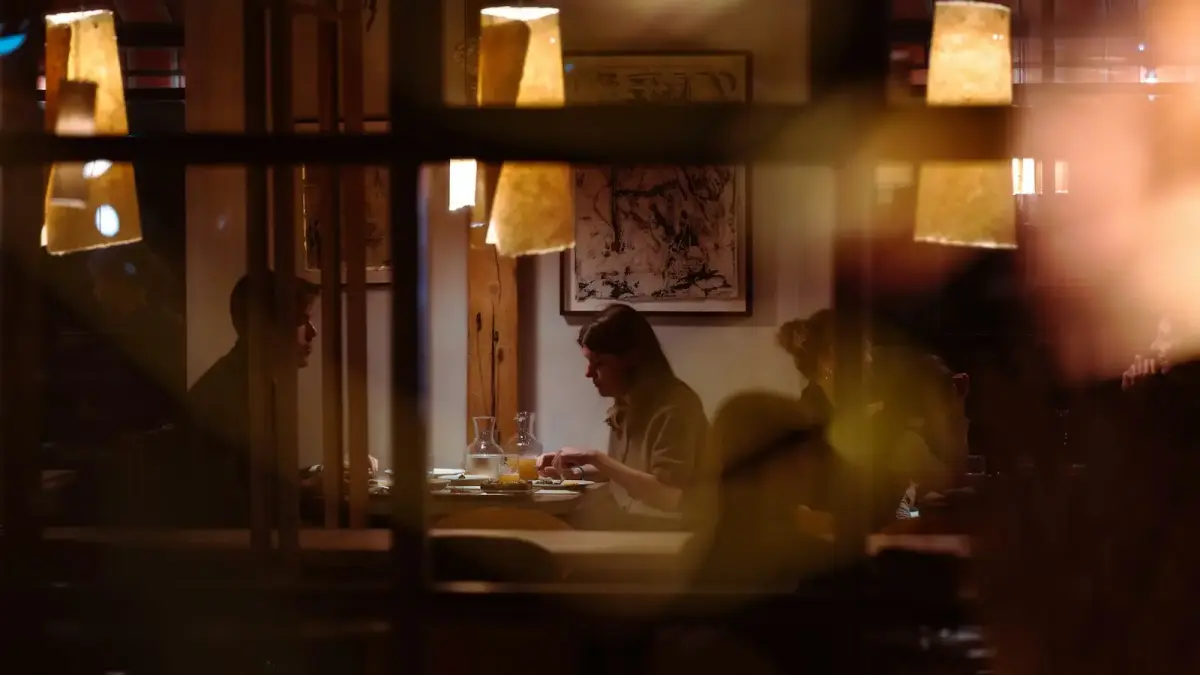
I noticed it again last Thursday at a friend’s dinner party. Seven people around a table, wine pouring, voices overlapping, laughter cresting in that easy way it does when the food is good and the evening is young. But somewhere between the second course and the third round of drinks, the woman sitting to my left went quiet.
Nobody else caught it. The conversation kept rolling. Someone was telling a story about a disastrous vacation. People were leaning in, refilling glasses.
But I felt it like a temperature drop. Like someone had cracked a window in winter. My whole body oriented toward her silence before my conscious mind even registered what was happening. I was already scanning her face, calculating. Was she upset? Bored? Had someone said something? Was this the beginning of something I needed to manage?
I have done this my entire life. And for most of that life, I believed it meant something was wrong with me.
You Were Never “Too Much” - You Were Too Well-Trained
If you’re the person who tracks the emotional weather of every room you enter - who can feel the precise moment someone’s energy shifts, who gravitates toward whoever seems most uncomfortable, who cannot let a silence go unmonitored - you’ve probably been told you’re too sensitive. Too aware. Too much.
You’ve been told to relax. To stop reading into things. To enjoy the party.
But here’s what psychology actually says about what you’re doing. You’re not being sensitive. You’re running a surveillance system. And you didn’t choose to build it. A child built it, in a home where reading the room wasn’t a social skill - it was a survival strategy.
A 2019 study published in the journal Development and Psychopathology found that children raised in unpredictable emotional environments develop what researchers call “enhanced threat detection” - a heightened ability to read micro-expressions, vocal shifts, and social withdrawal cues that children from stable homes simply never need to develop.
You didn’t become perceptive because you’re gifted. You became perceptive because you had to.
The Architecture of a Childhood Warning System
Think about what silence meant in your childhood home. For many people, it meant nothing. Dad was quiet because he was reading. Mom went still because she was thinking about groceries. Silence was neutral. Silence was safe.
But for some of us, silence was the alarm.
Silence meant someone was angry. Silence meant a fight was building behind closed doors. Silence meant that the mood of the house was about to shift in a direction nobody could control, and the only person who seemed to notice - the only person who seemed to be paying attention - was you.
So you got good at it. Extraordinarily good. You learned to read the angle of a jaw. The speed of a blink. The way someone sets a glass down just a little too firmly. You learned that the most dangerous moments in a home don’t arrive with yelling. They arrive with quiet.
Dr. Gabor Mate has written extensively about how children in emotionally volatile homes develop what he calls “the duty of attunement” - an unconscious compulsion to monitor the emotional state of the people around them. Not because they want to. Because their nervous system learned, very early, that unmonitored feelings become unmanageable situations.
You weren’t born an emotional radar. You were constructed into one.
Why You Can Feel a Room Shift Before Anyone Else
There’s a specific experience that people with this wiring share, and it’s hard to explain to anyone who doesn’t have it.
You walk into a room - a party, a meeting, a family gathering - and before you’ve taken off your coat, you’ve already mapped the emotional landscape. You know who’s tense. You know who’s performing happiness. You know which conversation is real and which is a surface-level script people are reading from.
You do this automatically. It costs you nothing in the moment but it costs you everything over time.
A 2017 study in Psychological Science found that individuals with heightened social monitoring tendencies process facial micro-expressions up to 200 milliseconds faster than the general population. That’s not a personality quirk. That’s a neurological adaptation. Your brain literally processes social threat cues faster than most people’s brains process that a traffic light has changed.
And the part that exhausts you most isn’t the noticing. It’s what comes after.
Because once you’ve noticed that someone has gone quiet - once you’ve registered the shift - you can’t un-notice it. Your system won’t let you. It flags the silence as a potential threat and then it demands a response. Check on them. Fix it. Make sure it’s not about to become something bigger.
This is why you’re always the one asking “Are you okay?” at parties. Not because you’re particularly kind. Because your nervous system won’t let the question go unasked.
The Exhaustion Nobody Sees
People with this pattern often describe a specific kind of tiredness that’s hard to name. It’s not physical exhaustion. It’s not even emotional exhaustion in the way most people use the term. It’s monitoring exhaustion.
You’re running background processes all the time. In every interaction, in every room, in every phone call - there’s a part of your brain dedicated to scanning for changes in the emotional environment. It never turns off. It doesn’t take breaks. It doesn’t care that you’re at a birthday party and everything is objectively fine.
It scans anyway.
Dr. Susan Cain’s research on high-reactivity temperaments aligns with this experience. She describes individuals whose nervous systems are calibrated for high-volume input processing - people who take in more social data per second than the average person and who, as a result, reach cognitive saturation faster.
This is why you need to leave parties early. This is why you feel drained after what everyone else describes as a “fun night.” You weren’t just at the party. You were working at the party. You were running an entire monitoring operation that nobody asked you to run and nobody knew was happening.
And the loneliest part? When you try to explain it, people think you’re being dramatic.
What the Research Actually Says About Your Wiring
Here’s where the reframe matters.
Clinical psychologist Dr. Elaine Aron’s framework of the Highly Sensitive Person has given many people language for this experience. But the deeper research points to something more specific than general sensitivity.
A 2021 study published in Frontiers in Psychology examined adults who scored high on measures of “affective monitoring” - the tendency to track and respond to others’ emotional states in real time. What they found was striking. These individuals didn’t just have a personality trait. They had a measurably different pattern of neural activation in the anterior insula and the anterior cingulate cortex - brain regions associated with empathy, interoception, and threat assessment.
In other words, your brain is structurally oriented toward doing this work. It’s not a choice. It’s not a habit you can break with enough mindfulness apps. It’s architecture. Built in childhood. Reinforced through thousands of repetitions. Now running on autopilot.
But - and this is the part I want you to hear - the research also shows something else. The same neural architecture that makes you hypervigilant to social threat also makes you extraordinarily attuned to social connection. The same wiring that won’t let you ignore a person’s silence is the wiring that makes you the friend people call when they can’t explain what’s wrong but need someone who will understand without being told.
Your surveillance system isn’t just looking for danger. It’s looking for people who need to be seen.
The Permission You Might Need to Hear
You don’t have to monitor every room you enter.
I know that sentence probably landed in your body like a small shock. Because the monitoring doesn’t feel optional. It feels like breathing. It feels like something you’d have to actively override, and the energy required to override it feels greater than the energy required to just keep doing it.
But here’s what I’ve learned, slowly and imperfectly, over years of sitting with this pattern in myself.
The monitoring was a gift from a child who was trying to keep you safe. That child did an extraordinary job. They built a system so sophisticated, so finely calibrated, that you can walk into a room full of strangers and know within seconds who is struggling.
That is not a flaw. That is not being “too sensitive.” That is a remarkable piece of emotional engineering, built under pressure, by someone very small who had no other tools.
And now you’re an adult. And the rooms you enter are not that childhood room. The silences you detect are usually not the silence before a storm. The quiet person at the dinner party is probably just tired, or introverted, or thinking about something that has nothing to do with you.
You are allowed to notice without responding. You are allowed to feel the shift without making it your job to fix it. You are allowed to sit with the knowledge that someone has gone quiet and choose - for once - to let someone else ask if they’re okay.
The child who built your system deserves to rest. And the adult who carries it forward deserves to know that what they’re doing isn’t weakness.
It never was.