Psychology says people who cannot sit down to rest until every dish is washed and every surface is clear are not perfectionists and they are not controlling - they were children who learned that the visible state of a room was the only reliable predictor of whether the evening was going to be safe, and the cleaning they cannot stop doing at fifty is a body still trying to prevent a storm that ended thirty years ago
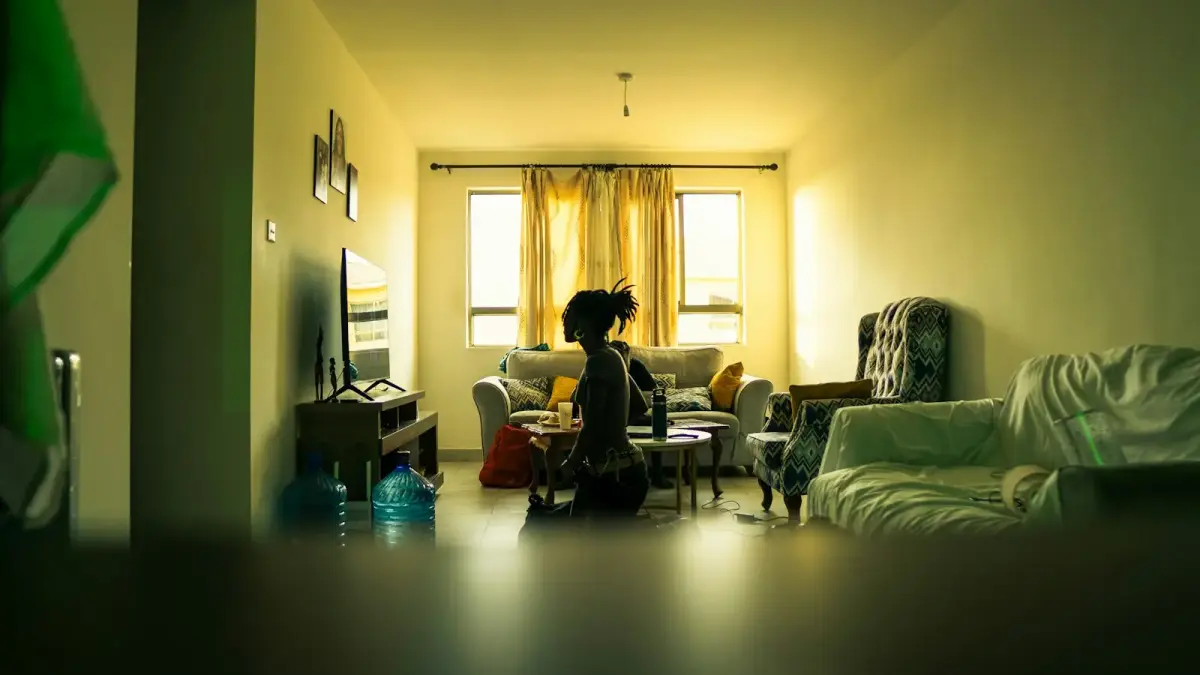
I stood in my kitchen at eleven o’clock on a Tuesday night, scrubbing a pot that was already clean. My husband had gone to bed an hour earlier. The house was quiet. There was nothing wrong with the pot - I had already washed it once. But something in me would not let me sit down.
The counters needed to be wiped. The dish towel needed to be folded and hung in a specific way. The crumbs near the toaster - invisible to anyone but me - needed to disappear before I could allow my body to stop moving.
I wasn’t tired, exactly. Or rather, I was exhausted - but the exhaustion lived underneath something louder. Something that kept scanning, kept checking, kept insisting that the job wasn’t finished even when it obviously was.
For years I called this “being particular.” My family called it “mom’s thing.” Friends would laugh about it at dinner parties - oh, Elena can’t relax if there’s a glass in the sink. And I would laugh too, because it seemed easier than explaining the truth, which is that I genuinely cannot feel safe in my own home until every visible surface confirms that nothing bad is about to happen.
That’s not a quirk. That’s not personality. That’s a body running old protective software it learned before I could reach the kitchen counter.
The room was the forecast
Here is something most people don’t understand about growing up in a volatile home: you become a meteorologist of spaces.
You learn to read a room the way a sailor reads the sky. Not the people in it - the room itself. The physical environment becomes your early warning system. A pile of dishes in the sink meant someone hadn’t been functioning. Shoes by the door in an unusual arrangement meant someone was home who wasn’t supposed to be. A half-finished bottle on the counter meant the evening had a direction, and that direction was not good.
A 2019 study published in the journal Development and Psychopathology found that children raised in unpredictable households develop heightened environmental monitoring - a persistent scanning of physical surroundings for cues of threat. This wasn’t anxious behavior in those children. It was intelligent behavior. They were reading the only data that was reliable.
Because the adults were not reliable. The words were not reliable. “Everything’s fine” could mean everything was fine, or it could mean that someone was forty-five minutes away from throwing a plate. But the room never lied. The room was always telling the truth about what kind of night it was going to be.
And so the child learns: if I can control the state of the room, I can control the state of the evening.
Tidying as a spell against chaos
This is the part that most people miss when they call someone a “neat freak” or a “control freak” or simply “type A.” They’re seeing the behavior at the surface - the compulsive wiping, the inability to leave a dish overnight, the need for the pillows to be arranged before sitting down.
What they’re not seeing is the belief system underneath it.
The belief is not “this house should be clean.” The belief is “if this house is clean, we are safe.” And that belief was installed at an age when it was absolutely, demonstrably true.
When you were seven and you cleaned the kitchen before your parent got home, you were not being a good helper. You were performing a ritual of protection. You were trying to remove every possible trigger from the environment. You were making the house look calm so that maybe - maybe - the person walking through the door would be calm too.
Gabor Mate has written extensively about how children in chaotic environments develop sophisticated coping mechanisms that look, from the outside, like personality traits. The child who keeps their room immaculate isn’t naturally tidy. They’re a child who figured out that disorder in the physical world correlated with disorder in the emotional world, and they are doing the only thing they have power over.
That strategy made perfect sense at seven. The problem is that the body doesn’t retire strategies just because the circumstances change.
Why your body won’t let you stop at fifty
You’re an adult now. You live in your own home. Nobody is going to walk through the door and scan the kitchen for a reason to rage. The threat is over. It has been over for decades.
But your body doesn’t know that.
A 2021 study published in Psychological Science demonstrated that threat-detection patterns learned in childhood remain active in the brain long after the threatening environment has been removed. The researchers found that adults who experienced unpredictable early environments showed elevated amygdala activation in response to environmental disorder - even benign disorder, like a cluttered desk or an untidy room.
Your survival wiring is still reading the kitchen counter the way it read it when you were eight. A dish in the sink is not a dish in the sink. It’s an unresolved variable. It’s a piece of evidence that the environment is not yet secured. And until the environment is secured, your body will not allow you to rest.
This is why it feels physical. This is why you can’t just “decide” to leave the dishes and go to bed. The part of you that learned before language doesn’t respond to logic. It responds to the visual confirmation that every surface is clear, every object is in its place, every sign of disorder has been neutralized.
You are not tidying the kitchen. You are completing a safety check that a child designed thirty or forty years ago.
The exhaustion underneath the clean house
People who live with this pattern often describe a specific kind of tiredness. Not the tiredness of physical labor - though the labor is real - but a deeper fatigue that comes from never being off duty.
Because it’s not just the kitchen. It’s the living room before you sit down. It’s the bedroom before you sleep. It’s the car before you drive somewhere. It’s the constant, quiet audit of every space you enter - is this environment secure? Have I done everything I can to make sure nothing erupts?
A 2017 study in Frontiers in Psychology found that adults with histories of childhood unpredictability scored significantly higher on measures of vigilance-related fatigue - a specific form of exhaustion tied not to activity but to sustained monitoring. These individuals reported feeling “tired for no reason,” not understanding why they were drained when they hadn’t done anything particularly demanding.
But they had done something demanding. They’d been running a background program since childhood - scanning, evaluating, adjusting - and that program never shuts off. It runs while they’re cooking dinner. It runs while they’re watching television. It runs at midnight when the house is dark and quiet and there is no conceivable threat, but the body keeps checking anyway.
Your partner says, “Just leave it. Come to bed.” And they mean it with love. But they don’t understand that “just leaving it” requires you to override a warning system that kept you alive. You can’t just leave it the way they can’t just stop breathing. It’s not a choice anymore. It’s a reflex.
What the clean counter really means
Here is the reframe that changed everything for me: the compulsive tidying is not a flaw. It’s a monument to how hard you worked to keep yourself safe.
Every time you wipe down a counter that’s already clean, you are honoring a child who had no power, no authority, no ability to make the adults behave differently - and who found the one tiny lever of control available to them and pulled it with everything they had.
That child was brilliant. That child figured out a system that worked, under impossible conditions, with no help and no instruction manual. The fact that you’re still running that system decades later is not a sign of rigidity. It’s a sign of how deep the learning went.
Susan Cain has written about how the traits we’re most ashamed of in adulthood are often the exact traits that saved us in childhood. The sensitivity, the vigilance, the need for control - these aren’t weaknesses. They’re evidence of a survival intelligence that most people will never need to develop.
The problem isn’t that you clean. The problem is that you believe you have to. The problem is that your body still lives in a house where the dishes predicted the weather, and it hasn’t received the message that the forecast has changed.
Learning to leave the dish in the sink
I’m not going to tell you to stop cleaning. That would be like telling someone to stop flinching - you can understand why you do it and still not be able to stop on command. The wiring is deep, and it was laid down at an age when your brain was still under construction.
But I will tell you this: the next time you’re standing in your kitchen at ten o’clock at night, wiping a counter for the second time, and you feel that familiar pull that says you cannot rest until it’s done - pause. Just for a moment. Not to stop yourself, but to witness yourself.
Notice what your body is doing. Notice the tension in your shoulders, the way your jaw is set, the way your eyes keep sweeping the room like searchlights. That’s not you being “anal” or “obsessive” or whatever dismissive word people have used. That’s a child standing in a kitchen, trying to make the room safe enough to survive the night.
You survived. You made it out. You built a home where nobody is going to walk through the door with fury in their eyes and scan the countertops for a reason to detonate.
The storm ended. It ended a long time ago.
Your body just hasn’t gotten the news yet. And that’s not a failure of willpower or a personality defect. That’s the echo of a child who loved themselves enough to try, with the only tools they had, to build something that looked like safety out of a sponge and a clean counter and the desperate hope that if the kitchen was perfect, maybe tonight would be okay.
You were never a perfectionist. You were a child meteorologist who read the room to survive - and you were so good at it that your body still can’t stop reading it, even now, even here, even safe.
That’s not something to fix. That’s something to hold gently, the way you’d hold that child if you could reach back through the years and find them standing on a step stool, scrubbing a pot before someone got home.
You did so well. You kept yourself alive. And now, slowly, you can begin to let the dishes wait.