Psychology says people who cannot sit down in their own homes without immediately thinking about something they should be doing are not restless and they are not anxious, they were children who learned that being quiet was a privilege they had not yet earned, and the exhaustion they are carrying in their forties is thirty years of a mind that refuses to let the body rest until the invisible ledger of usefulness has been paid
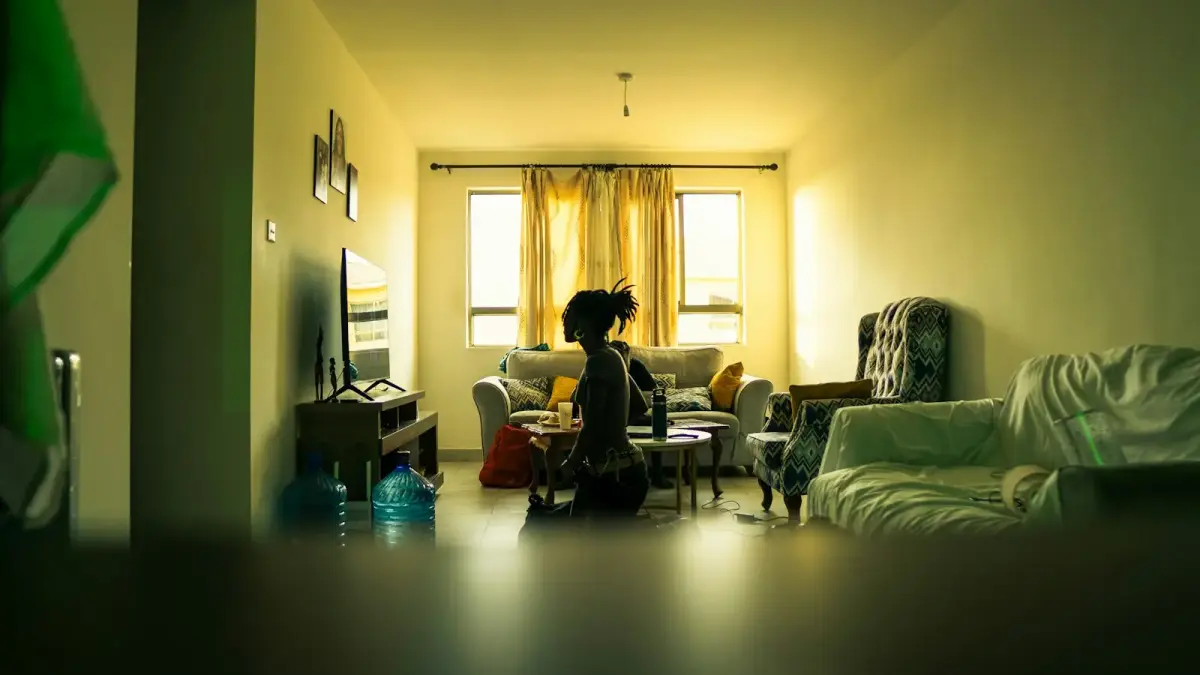
It was a Saturday in early April, and I had made myself a cup of tea on purpose.
I want you to notice the phrase “on purpose,” because it is the only reason anything that follows is worth telling you. I had cleared the afternoon. I had set my phone face-down on the kitchen counter, not near me, not on the couch, but in another room entirely. I had picked the good mug.
I sat down in my own living room, in the apartment I have paid for by myself for ten years, and within ten seconds my mind said: the dishwasher needs emptying.
I stood up.
I emptied the dishwasher. I came back to the couch. Within another twenty seconds my mind said: you should pick up the dry cleaning, you should return that email, the plant on the windowsill looks thirsty. I stood up again. I did one of them. I came back.
At some point I became aware of the tea, which was now lukewarm, and the realization landed in my body before it landed in my head. I had not actually been in this room - the room I had paid for, the room I had chosen, the room I lived in - for more than a minute at a time in years. Not as a person inhabits a room. Only as a person passes through one on the way to the next task.
The ledger no one handed you but you learned to keep anyway
I want to tell you what I think is actually happening, because it is not what I spent most of my adult life assuming.
I used to think I was bad at relaxing. I used to think I had some kind of low-grade, lifelong restlessness. For a while I wondered about ADHD. My therapist, gently, suggested anxiety. None of those frames ever quite fit, and I could never figure out why.
What I eventually understood is this: somewhere very early, in a house where nobody meant to teach me anything, I learned that quiet was contingent.
Quiet was something you earned. Sitting still was something you earned. Being in a room without doing something in the room was something you earned. I cannot point to the day I learned this, because it was not taught in words. It was taught in the way a tired adult’s shoulders tightened when I was just sitting there. It was taught in the small, unconscious sigh that came out of a parent walking into the living room and finding me doing nothing.
I learned to pick up a dish rag. I learned to start folding laundry. I learned to go check on my younger brother. The second an adult came into the room, my hands found something to do.
I did not consciously decide this was protective. My nervous system decided for me. Helpfulness was not a chore in that house. Helpfulness was the way you proved you deserved the room you were taking up.
Why the body refuses to sit down now
Here is the part that matters most, and it took me years to understand.
What is happening in your body when you sit down on your own couch and immediately feel you must get up is not restlessness. It is not anxiety the way we usually mean the word. It is a threat response.
Stephen Porges, who developed polyvagal theory, has written for decades about something he calls neuroception - the way the nervous system scans, below conscious awareness, for signals of safety or danger. For a child who learned that being unhelpful felt like trespassing, stillness itself becomes a danger signal. The body is not interpreting the couch as a couch. The body is interpreting the couch as the moment just before an adult walks in and finds you doing nothing.
A 2019 study published in Frontiers in Psychology looked at chronic low-grade sympathetic activation in adults who scored high on childhood parentification measures, and the finding was quietly devastating. These adults were running, at baseline, the physiological profile of a person on mild alert. Not panicking. Not in crisis. Just permanently, almost imperceptibly, bracing.
That is not a personality. That is a setting. And the setting was installed when you were too young to know it was being installed.
The invisible ledger in your forties: how it shows up now
I want to list, with unusual specificity, the ways this shows up in adult life, because I think you will recognize yourself and I want you to feel less alone in the recognition.
You cannot watch a television show without folding laundry at the same time. You try, and about eight minutes in, your hand reaches for something - your phone, a stray sock, the corner of a blanket that could be straightened.
You cannot read a novel without feeling, by chapter three, a faint guilt that rises up from somewhere you cannot name. The guilt is not about the book. The guilt is about the sitting.
You cannot sit alone at a cafe without something. A laptop. A notebook. A phone held like a prop. Being in public without a visible purpose feels exposing in a way you would struggle to explain to anyone who has not lived inside the same ledger.
You feel inexplicably panicky on the first morning of a vacation. You clean the house before the cleaner comes. You apologize to the massage therapist for “being so tense.” You cannot take a nap without setting an alarm, because the nap must be efficient, the nap must be productive, the nap must be a nap on a schedule.
None of these are personality quirks. None of these are charming little foibles. Each one is a ledger entry, and the ledger has been open since you were seven years old.
The research finally says what your body has been saying
A 2017 study in the Journal of Personality and Social Psychology tracked adults who had been parentified as children - meaning children who were given, implicitly or explicitly, adult-level responsibility for the emotional or practical running of the home. The researchers found that these adults carried a chronic cognitive load into middle age. Their minds were, quite literally, always running a background process. Always scanning. Always tallying.
Gabor Mate, in his writing about what he calls the myth of normal, has made the same point in softer language. He describes a whole generation of people whose nervous systems were trained for output and never taught to rest. These are not lazy people. These are not anxious people. These are people whose bodies were wired, very early, to equate usefulness with permission to exist.
Tara Brach has a phrase I love, even though I will not use the jargon: she talks about the quiet, background hum of not-enoughness that a person can carry for decades without ever identifying it. That hum is not a flaw in your character. It is a tone your nervous system was tuned to before you had language.
The research is finally catching up to what your body has known the whole time. This is not a personality disorder. This is not a focus problem. This is not laziness dressed up as exhaustion. It is a nervous system that was trained, very young, to treat stillness as trespass. And it is still running that program, faithfully, thirty or forty years later.
What is actually happening when you try to rest, and why the exhaustion is real
I want to say something about the exhaustion, because I think it is the most overlooked part of this whole pattern.
When a woman in her forties tells me she is tired, I no longer assume she is tired from work. I assume she is tired from the meta-work. The constant, background tallying. The invisible accounting. The running sum.
It is not the laundry that is exhausting. It is the mental ticker that notes the laundry, holds the laundry as a debt, and keeps reminding the body about the laundry every time the body tries to sit down. The laundry itself takes eleven minutes. The ledger takes thirty years.
Your body is not tired because you have done too much. Your body is tired because your mind has never once, in three decades, given it permission to clock out. Even when you are sitting. Even when you are sleeping. Some part of the system is awake, counting.
That is a specific kind of exhaustion, and I want you to know that it is real. It is not in your head in the dismissive sense. It is in your head in the literal sense, and it has been translating itself into your shoulders and your jaw and the slightly clenched place at the base of your skull for most of your adult life.
What your body is actually asking for, and it isn’t more productivity
Here is what I want to tell you, and I am going to say it carefully, because I have been on the receiving end of a lot of advice that did not help.
You do not need a better time management system. You do not need a new productivity app. You do not need, God help us, a more optimized morning routine.
You need a nervous system update. You need to teach your body, very slowly and very gently, that being quiet in your own home is not a debt to be paid. It is a right you already own.
The practice I am going to suggest is almost embarrassingly small, and that smallness is the point. Sit down on your couch. Notice the first impulse to get up. Do not get up. Stay for two minutes.
That is it. That is the whole practice.
You are not trying to relax. You are not trying to meditate. You are not trying to be good at anything. You are simply sitting in the room, noticing that the room is not asking you to leave, noticing that no adult is going to walk in and find you failing at usefulness.
You are not relearning how to rest. You are telling a frightened child that the room is safe now.
Some days that will feel easy. Most days, especially at first, it will feel physically uncomfortable in a way that surprises you. That discomfort is not a sign you are doing it wrong. That discomfort is the old program noticing that it is being interrupted for the first time in thirty years.
Let it be uncomfortable. Stay anyway. Two minutes.
I am back on the couch now, in the apartment I have paid for by myself for ten years. The tea is fully cold, and I am going to drink it anyway. There is afternoon light coming through the window, falling on the arm of the couch in a specific warm shape I have never actually seen before, which is an embarrassing thing to admit about a piece of furniture I have owned for a decade.
I am not getting up.
The dishwasher can wait. The email can wait. The plant is, honestly, fine. I am putting my hand on the warm cushion where the light is, and I am not doing anything with the hand, and I am not doing anything with the afternoon, and for the first time in a very long time I am not paying a debt I do not owe.
You were a good child. You learned a hard lesson nobody in your house meant to teach you, and you learned it so early that it became the water you swam in, and for a long time you thought the water was just who you were.
The work of your forties, if you want it, is not becoming better at resting. It is something smaller and more important. It is slowly, patiently, telling your body that the ledger closed the day you moved out of that first house, even if nobody ever told your nervous system, even if nobody ever sent the letter.
You already own the room. You always did. Nobody is coming to collect. The light on the couch is yours.