Psychology says people who check the lock twice, pat their pocket for keys three times, and circle back to make sure the stove is off aren't anxious - they grew up in homes where something that should have been safe wasn't, and their nervous system learned that trusting the first check was a luxury they couldn't afford
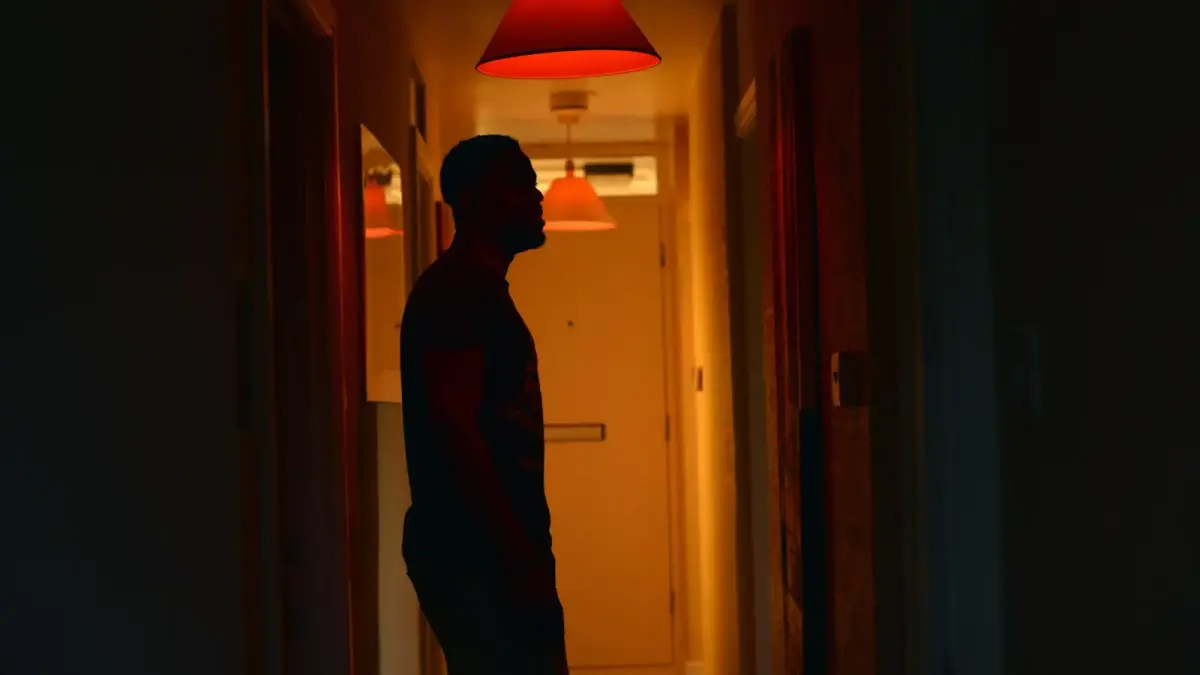
I locked the front door last Tuesday, walked to the car, started the engine, and then sat there for eleven seconds before turning the engine off, walking back, and checking the door again. It was locked. I knew it was locked. My hand remembered turning the deadbolt. My ears remembered the click. Every piece of evidence confirmed the door was secure.
But my body didn’t believe any of it.
I stood on the porch with my palm flat against the door, pushing gently, testing - the way you’d test ice before stepping further onto a frozen lake. And only when the resistance held did something in my chest loosen enough to let me walk away.
I used to think this made me neurotic. A little broken, maybe. The kind of person who couldn’t just trust the simple things. But I’ve spent years studying why some nervous systems refuse to accept the first check, and what I’ve found has changed the way I understand myself entirely. Because this isn’t about anxiety. It isn’t about being irrational or obsessive. It’s about growing up in a world where the things that were supposed to stay safe didn’t.
The ritual that looks like worry but isn’t
You know the pattern. You lock the door and walk away, then something tugs you back - not a thought, exactly, but a feeling. A low hum in your chest that says maybe. Maybe you didn’t. Maybe it didn’t catch. Maybe this will be the one time you were wrong.
So you go back. You check. The door is locked. You knew it would be.
Or you’re lying in bed at midnight and the stove floats into your mind like a ghost you didn’t summon. You turned it off. You’re sure you turned it off. You can picture your hand on the dial. But the picture isn’t enough. So you get up, walk to the kitchen in the dark, press your fingers against the burner, and only then can you sleep.
The pat-down before leaving the house. Keys - left pocket. Phone - right pocket. Wallet - back right. You check once. Then again at the car. Then once more when you arrive. Not because you think something disappeared, but because your body requires proof on a schedule your rational mind cannot override.
From the outside, this looks like anxiety. It even feels like anxiety sometimes. But a 2019 study published in the Journal of Personality and Social Psychology found something that reframes this behavior entirely. Researchers examining “safety-checking behaviors” in adults without clinical OCD discovered that the strongest predictor was not generalized anxiety, trait neuroticism, or worry proneness. It was what they called “early environmental unpredictability” - growing up in a home where the physical or emotional environment shifted without reliable warning.
The checking wasn’t born from fear of the future. It was born from experience with the past.
Where the body learned not to trust the first answer
There is a specific kind of childhood that produces this. It doesn’t require trauma in the way most people picture trauma. No single catastrophic event. No diagnosis-worthy abuse. It’s quieter than that, and in many ways harder to name.
It’s a home where the ground shifted.
A parent whose mood could change between the kitchen and the living room. A household that felt safe at breakfast and dangerous by dinner, with no obvious trigger for the transition. A caregiver who was warm and present on Tuesday and emotionally absent on Wednesday - not because they were cruel, but because something inside them was unstable, and they didn’t have the tools to keep it steady.
In that kind of home, a child learns something devastating: that their first assessment of a situation cannot be trusted. The room felt safe, and then it wasn’t. The parent seemed happy, and then they weren’t. The evening looked calm, and then someone was crying or yelling or leaving or going silent in that particular way that silence goes when it’s louder than shouting.
Dr. Gabor Mate has written extensively about how a child’s nervous system calibrates itself to its environment in the first years of life. In stable homes, the system learns a baseline: safe means safe. The door is locked means the door is locked. The world holds still when you look away from it.
But in unpredictable homes, the system learns a different baseline: safe means safe right now. And right now has an expiration date you can never quite see. So you check again. Not because the lock changed. Because in your earliest world, things like locks - things like safety - did change when you weren’t watching.
The nervous system’s math
Your body runs on a kind of math that has nothing to do with logic.
The equation is simple: if trusting the first check ever cost you something - if the one time you assumed it was fine, it wasn’t - then the body recalculates the price of assumption. And the price is always higher than the cost of one more check.
This is not irrationality. This is the most rational response to the data your nervous system was given.
A 2021 study in Frontiers in Psychology examined what the researchers called “verification compulsion” in non-clinical populations. They found that participants who reported rechecking behaviors showed heightened activity in the anterior insula - a brain region associated not with fear, but with interoceptive prediction. Their brains were running probability calculations in real time, weighing the cost of being wrong against the cost of checking again.
And in every case, the brain chose checking. Because in the math your body learned as a child, the cost of being wrong was catastrophic. Not in the logical, adult sense. In the felt sense. In the body-memory sense where being wrong meant the ground disappearing, the safe person becoming unsafe, the quiet evening erupting into something you couldn’t control.
One more check costs you eleven seconds and a walk back to the porch. Not checking costs you the possibility - however tiny, however irrational - that the one time you trusted it, the thing you trusted failed. And your body will not accept that trade. It hasn’t accepted it in decades. It may never accept it. Because the original cost was too high, and the body never forgets who paid it.
The distinction that matters
I want to be careful here, because there is a clinical condition called Obsessive-Compulsive Disorder, and it is real, and it is serious, and it involves a very different mechanism. In OCD, intrusive thoughts generate distress that the person attempts to neutralize through compulsive actions. The checking is driven by a thought pattern that feels alien - unwanted, ego-dystonic, experienced as something happening to you rather than something coming from you.
What I’m describing is different.
This checking doesn’t feel alien. It feels like you. It feels like the most natural thing in the world - an extension of the same vigilance that has kept you safe your entire life. You’re not checking because a terrifying thought invaded your mind. You’re checking because your body has a standing policy, written in childhood, that says: confirm everything twice, because the world has a history of lying on the first pass.
Research from Susan Cain’s work on temperament suggests that people who grow up in unpredictable environments often develop what she calls a “heightened verification threshold” - meaning they require more evidence than average before they can accept that something is settled. Not because they’re more fearful. Because their nervous system’s standard of proof was set higher by an environment that taught them the cost of a low bar.
You don’t check the stove because you think the stove is dangerous. You check the stove because once, a long time ago, something that should have been reliable wasn’t. And your body generalized that lesson to everything.
What you were actually doing all those years
Here is the part I need you to hear.
Every time you walked back to the door, every time you patted your pocket one more time, every time you got out of bed to verify the stove - you were not failing. You were not being weak or irrational or broken.
You were protecting.
Your nervous system identified a world where safety was conditional, and it built a protocol to manage that. The protocol is thorough. It is relentless. It costs you time and self-respect and sometimes the patience of people who love you but don’t understand why you can’t just trust that the door is locked.
But the protocol was never the problem. The protocol was the solution. A child surrounded by unreliable safety did the most intelligent thing a child can do - they stopped relying on a single data point and started requiring confirmation. They built redundancy into their sense of security because the original security system had failed them.
A 2023 study published in Psychological Science found that adults with rechecking behaviors who traced those behaviors to childhood environmental instability showed no deficit in memory, perception, or reality-testing. They remembered locking the door just as clearly as anyone else. They perceived the click of the deadbolt with perfect accuracy. Their cognition was not impaired.
What was different was their trust threshold. They required the same information more times before their nervous system would accept it. Not because the information was insufficient. Because their early experience had taught them that sufficient information could become insufficient without warning.
A body that is still keeping watch
I still check the door. Not every time, but most times. I’ve stopped calling it a problem. I’ve started calling it what it is - a body that learned to keep watch in a home where watching was the only thing between safety and whatever came next.
If you recognize yourself in this, I want you to sit with something for a moment. Not a fix. Not a technique. Just a recognition.
Your checking is not evidence that something is wrong with you. It is evidence that something was wrong around you, once, and you adapted with the tools you had. You were a child running a security audit on a world that kept changing the answers, and you did it brilliantly. You are still doing it, even now, in a life that may be vastly safer than the one you started in.
The next time you find yourself standing at the front door with your hand on the lock you already turned, the next time you circle the car to check the handbrake you already set, the next time you lie awake wondering about the stove you already turned off - try this. Instead of the usual frustration, instead of the quiet shame of not being able to trust yourself, try saying something different.
Thank you. You were paying attention when it mattered. You can rest now.
You may not believe it yet. Your body may not accept it for a long time. That’s fine. The body learns slowly, and it has been running this program for decades. But knowing where the program came from - knowing it was written by a child who needed it - is the first step toward letting the child put down the clipboard.
You were never broken. You were the most careful person in a careless house. And that carefulness kept you whole.