Psychology says the person who always falls asleep last in the house - who lies awake listening until her partner's breathing settles, who checks the lock one final time, who makes sure every phone is charging and every window is latched before she closes her own eyes - is not an insomniac or a worrier but someone who learned as a child that the house was only truly safe when one person stayed conscious to keep watch, and she has spent her entire adult life volunteering for a shift nobody assigned

The last light in the house
I used to think I had a sleep problem.
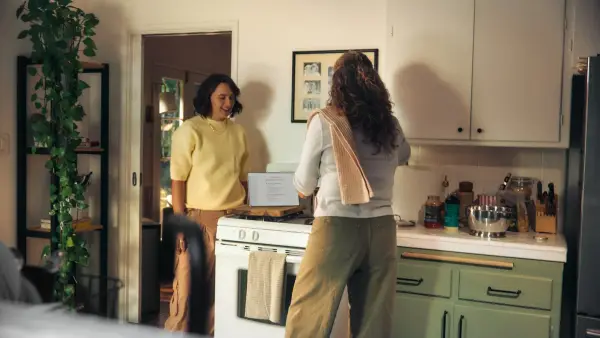
Every night, the same ritual. My partner would drift off around ten-thirty, her breathing going slow and even within minutes. And I would lie there, wide awake, cataloguing the house. Front door - locked. Back door - locked. Stove - off. Kids’ nightlights - on. Phones charging. Windows latched against nothing in particular.
Only after I had confirmed every single detail would my body even consider letting go. By then it was midnight, sometimes later. I would fall asleep exhausted, not from the day but from the patrol.
I mentioned it to a therapist once, almost as an aside. I figured she would suggest melatonin or a white noise machine. Instead she asked me a question that sat in my chest for days.
“Who kept watch in your house when you were growing up?”
I opened my mouth to answer. Nothing came out. Because the answer was nobody. And then, eventually, the answer was me.
The child who learned that someone has to stay awake
Here is what a lot of people misunderstand about vigilance. They think it starts in adulthood - that it is a response to stress, to mortgage payments, to the weight of being responsible for other humans.
But for many of us, it started decades earlier. It started in a house where the adults were unreliable. Not necessarily dangerous, not necessarily cruel. Just unpredictable enough that a child’s nervous system made a quiet, unconscious calculation: if nobody is watching, bad things happen.
Maybe it was a parent who drank and forgot to lock the door. Maybe it was parents who fought at night, and you learned to track the rising tension from your bedroom by listening to footsteps and tone of voice. Maybe it was a home where someone was sick, and you trained yourself to sleep lightly in case you needed to get up.
The specifics vary. The lesson is always the same. Safety is not a given. Safety is a job. And somebody has to do it.
A 2017 study published in the journal Development and Psychopathology found that children raised in unpredictable environments develop what researchers call “heightened threat monitoring” - a nervous system calibration that stays locked in scanning mode long after the original threat has disappeared. The child does not choose this. Their biology chooses it for them.
And so the child grows up. Moves out. Builds a life that is, by every objective measure, safe. And still cannot fall asleep until they have confirmed it.
What the nightly ritual is actually doing
Let me describe the ritual more precisely, because if you are this person, you will recognize every piece of it.
You do not just check the door. You check it, walk away, and then feel a pull to check it again - not because you forgot, but because your body did not register the safety the first time. Your nervous system needs repetition before it will accept the data.
You listen to your partner breathing. Not casually. You are tracking the rhythm, waiting for it to reach a specific cadence that signals deep sleep. You are not even fully aware you are doing this. Your ears are doing it for you, the way they have been doing it since you were eight years old and listening through a wall.
You mentally inventory the house. You know where every person is. You know which doors are open and which are closed. You could draw a floor plan from memory with every light switch labeled.
This is not anxiety in the clinical sense. This is a security system that was installed in childhood and never decommissioned.
Psychologist Bessel van der Kolk, in his research on trauma and the body, describes how the brain’s alarm system - the amygdala - can become permanently calibrated to a higher baseline in people who grew up in environments where safety was inconsistent. The alarm does not ring louder. It simply never fully turns off.
You are not lying awake because something is wrong tonight. You are lying awake because something was wrong a long time ago, and your body never got the memo that the war ended.
The weight of a shift nobody assigned
Here is what makes this pattern so heavy. Nobody asked you to do this.
Your partner did not say, “Please stay awake until I fall asleep so you can guard the house.” Your children did not request a nightly perimeter check. No one handed you a clipboard and said, “You are responsible for confirming that this household is safe before you are allowed to rest.”
You assigned yourself this shift. Or more accurately, a version of you that was seven or nine or eleven years old assigned it, and the adult version of you has been showing up for it ever since without questioning whether it is still necessary.
This is one of the loneliest things about growing up in a home that required vigilance. You do not just carry the behavior into adulthood. You carry the belief that the behavior is required. That without it, something will go wrong. That if you let your guard down - truly, fully let it down - you will be punished for the lapse.
A 2020 study in Psychological Science found that adults who reported high levels of childhood unpredictability showed significantly elevated cortisol levels during the evening hours - exactly when the body should be winding down. Their stress response was not reacting to present danger. It was rehearsing for a danger that belonged to a different decade.
You are running a night shift in a building that closed years ago.
Why your partner sleeps so easily and you don’t
This can breed a quiet, unspoken resentment in relationships if you are not careful with it.
You watch your partner close their eyes and drop into sleep like it is the most natural thing in the world. Because for them, it is. They grew up in a house where the adults handled the adult things. Where the doors were locked by someone else. Where safety was not a job you had to earn - it was just the weather.
They do not fall asleep faster than you because they care less. They fall asleep faster because their nervous system was never recruited for guard duty. Their childhood taught them that sleep is safe. Yours taught you that sleep is a vulnerability.
And so you lie there, not angry exactly, but aware of a gap between your experience and theirs that you cannot fully explain. You might have tried once or twice. “I just can’t turn my brain off,” you say, and they nod sympathetically and suggest chamomile tea, and you love them for trying but also know that chamomile tea is not going to decommission a twenty-year-old surveillance system.
This is not a flaw in your relationship. It is a difference in your operating systems, one that was written in a language neither of you chose.
The cost of permanent watch
The person who always falls asleep last pays a tax that rarely shows up on any medical chart.
They are tired in a way that coffee does not fix. Not sleep-deprived in the traditional sense, but resource-depleted from the sheer energy it takes to scan, assess, and confirm safety every single night before their body will release them into unconsciousness.
They struggle to take vacations because unfamiliar environments mean unfamiliar variables - new locks, new sounds, new floor plans to memorize before the surveillance system will stand down.
They may have trouble delegating. Not at work necessarily, but at home. Letting someone else lock up, letting someone else do the final check, feels physically uncomfortable. Like handing your post to someone who does not understand the protocol.
Research by psychologist Dan Siegel on what he calls the “window of tolerance” suggests that people with early experiences of unpredictability often have a narrower range of arousal in which they feel safe. Their window is not broken. It was just built smaller, in a house that demanded it.
The cost is real. But the reason you are paying it is not because something is wrong with you.
Retiring from a post you never applied for
I want to be careful here. I am not going to tell you to “just let go” or “learn to relax.” If it were that simple, you would have done it twenty years ago.
But I do want to name what is happening, because naming it changes something.
You are not an insomniac. You are a retired security guard who never filed the paperwork. Your body is still showing up for a shift that ended when you moved out of your childhood home, but nobody told your nervous system that the contract was over.
The healing is not about stopping the ritual overnight. It is about slowly, carefully introducing your body to the idea that the house is safe without your surveillance. That the doors will stay locked whether or not you check them a second time. That your partner’s breathing will continue its rhythm whether or not you are tracking it.
This might look like telling your partner what you are actually doing at night - not “I can’t sleep” but “I am standing guard, and I have been doing it since I was a kid.” Sometimes being witnessed in the pattern is the first step toward releasing it.
It might look like letting one night be imperfect. Leaving one thing unchecked. Sitting with the discomfort of not completing the patrol and discovering that the morning comes anyway, and everyone is fine, and the house held.
Gabor Mate has written extensively about how the body stores survival strategies long after they are needed, and how the path forward is not to fight those strategies but to honor what they were built for - and then, gently, to let the adult self take over from the child who has been working the night shift alone for decades.
You were not anxious. You were necessary.
If this is you - if you are the last one awake, every night, running your quiet circuit through the house before you will allow yourself to close your eyes - I want you to hear something.
You were not broken. You were not dramatic. You were not “a worrier.”
You were a child who figured out that someone needed to keep watch. And in the absence of anyone else volunteering, you raised your hand. You did that at an age when your biggest responsibility should have been remembering your backpack.
The fact that you still do it means your loyalty runs bone-deep. It means your love expresses itself as vigilance. It means that when you care about someone, you do not just say it - you stay awake for it.
That is not a disorder. That is devotion shaped by necessity.
And you are allowed, now, to let someone else take the watch. You are allowed to close your eyes before the whole house is accounted for. You are allowed to sleep like the people you have been guarding.
You have done enough nights. The shift is over, if you will let it be.