Psychology says the person who always lets the phone ring to voicemail and then texts back 'what's up?' two minutes later - who can see the name on the screen, who is not busy, who is perfectly capable of answering but watches it ring the way you watch a door you are not ready to open - is not rude or antisocial, they are someone whose nervous system learned in childhood that an incoming voice could carry any mood from warmth to devastation, and text became the only form of communication where you could read the emotional temperature of a conversation before your heart rate changed
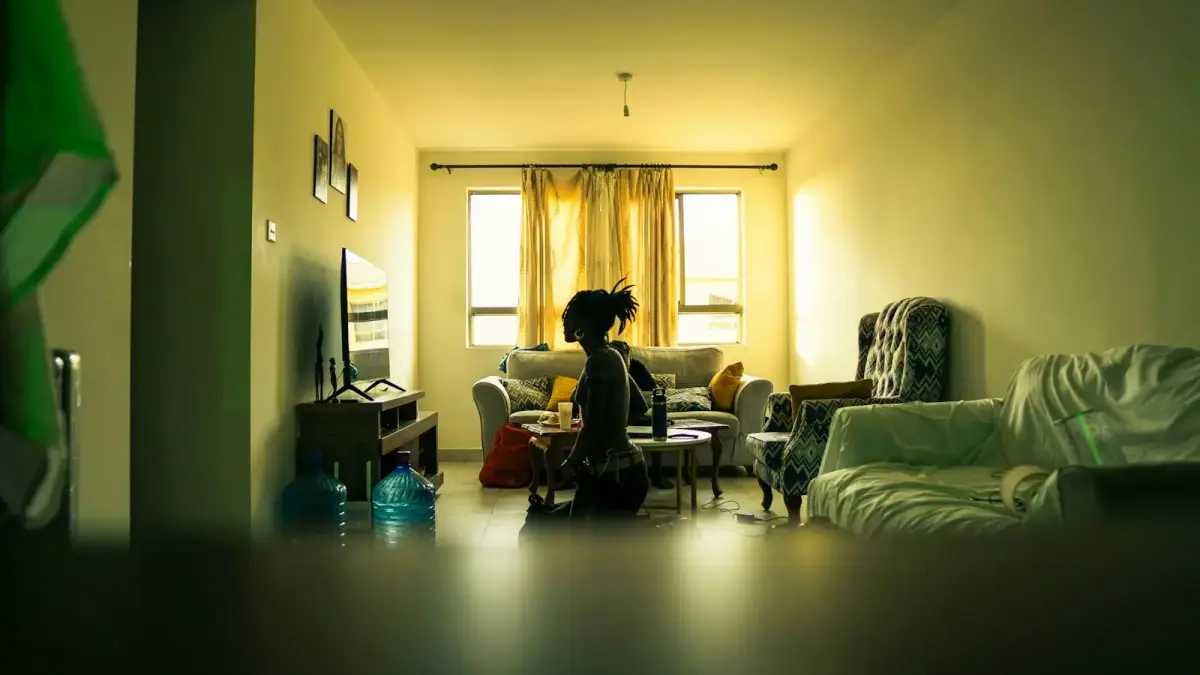
I watch my phone ring the way I used to watch my mother’s face when she came home from work
The phone buzzes on the kitchen counter. I see the name. I’m standing right there, coffee in hand, nothing happening, nowhere to be. And I watch it ring.
Not because I don’t want to talk to this person. Not because I’m busy. But because a ringing phone is a door that opens before you’ve had time to check the weather on the other side.
Two minutes later, I text back: “Hey, what’s up?” And in those two minutes, I’ve done something my body has needed to do since I was nine years old. I’ve given myself time to prepare.
If you do this - if you’ve been called rude for it, antisocial, avoidant, or “bad at communication” - I want you to know that what you’re doing has a name in psychology. And it isn’t a disorder. It’s a regulation strategy built by a nervous system that learned, very early, that an incoming voice could carry anything.
The two minutes that change everything
Here’s what happens in those two minutes between the missed call and the text.
Your heart rate settles. Your breathing evens out. And most importantly, you get to read the emotional temperature of the conversation before you enter it.
A text that says “Hey, can you grab milk on the way home?” lands completely differently than a voice that might say the same thing cheerfully - or might say it with an edge that means something else went wrong today.
Text gives you what a phone call never does: a preview. A chance to calibrate. A moment to decide how much emotional energy this interaction will require before you’ve already spent it.
A 2019 study published in Computers in Human Behavior found that individuals with higher sensitivity to social cues showed a marked preference for text-based communication, not because they were less social, but because asynchronous communication gave them processing time that real-time conversation did not allow. The researchers called it “communication pacing” - the ability to regulate the speed of emotional exchange.
You’ve been doing this instinctively. You just didn’t know it had a name.
In certain houses, the phone ringing was never a neutral event
I grew up in a house where a ringing phone could mean anything.
It could be my grandmother calling to say she’d made pie. It could be the school calling about my brother. It could be the kind of call that made my mother sit down slowly at the kitchen table and press her hand against her forehead while the rest of us went quiet.
The ring itself carried no information. It was pure potential energy - and in a home where emotional weather shifted without warning, potential energy was something you learned to brace against.
If your childhood home had unpredictable emotional patterns - a parent whose mood you had to read before you knew which version of them you’d get that day, financial stress that turned every official-sounding ring into a threat, or the kind of household tension where a phone call could either resolve everything or detonate it - then your nervous system learned something specific.
It learned that incoming sound, arriving without context, is dangerous.
Not physically dangerous. Emotionally dangerous. Because you might have to respond to grief, anger, disappointment, or crisis before you’ve had a single second to prepare yourself for it.
Dr. Stephen Porges’ polyvagal theory describes exactly this pattern. The nervous system doesn’t distinguish between physical threat and social unpredictability - both activate the same protective responses. For children raised in emotionally variable environments, an unexpected voice becomes a stimulus that triggers a surveillance response. You don’t run. You don’t fight. You freeze, assess, and wait for data.
That’s what you’re doing when you watch the phone ring. You’re waiting for data.
The generation that remembers when the ring itself was a mystery
There’s a layer to this that people under thirty may not fully feel.
If you grew up in the era before caller ID, the ringing phone was completely anonymous. You picked it up and you found out who it was at the same time they started talking. There was no buffer, no preview, no caller name glowing on a screen to give you even a half-second of preparation.
You answered, and whatever emotional reality that person was carrying poured directly into your ear.
For people who grew up in houses where this mattered - where the difference between a good call and a devastating one could reshape the entire evening - the introduction of caller ID wasn’t just convenient. It was the first time the phone gave you a single second of warning.
And texting? Texting was a revolution.
For the first time in the history of human communication, you could receive a message, understand its emotional content, and choose your response - all without the other person hearing the tremor in your voice while you figured out how to feel about what they’d just said.
A 2021 study in the Journal of Social and Personal Relationships found that adults who reported higher levels of childhood emotional unpredictability showed significantly stronger preferences for text-based communication in adulthood. Not because they were avoidant - their attachment styles varied widely. The common thread was a need for what the researchers called “emotional previewing” - knowing what’s coming before being required to respond.
It’s not just phones - it’s every door that opens without warning
If you’re the person who lets calls ring, I’m willing to guess something else about you.
You probably prefer email over impromptu meetings. You’d rather get a text that says “Can we talk about something later?” than have someone walk up to your desk and start talking about something heavy. You read a room before you enter it. You check the group chat before you join the dinner.
This isn’t social anxiety, though it can look like it from the outside.
This is pattern recognition. Your nervous system built an entire filtering system - one that scans incoming social information for emotional temperature before allowing you to engage with it.
Think about what that means. As a child, you were doing something incredibly sophisticated. You were monitoring tone of voice, facial expressions, word choice, the weight of a footstep on the stairs, the specific way a car door closed - all to determine whether the next few minutes would be safe.
You built a weather station inside yourself. And it still runs.
Adam Grant has written about how people who process social information more deeply often get mislabeled as shy or avoidant when they are actually engaging in what he calls “deliberate social cognition” - thinking carefully about interactions rather than moving through them reflexively. This isn’t a deficit. It’s a depth of processing that most people never develop.
The cost of the workaround
I want to be honest about something, because this article isn’t about pretending everything is fine.
The text-back strategy works. It protects you. It gives you the buffer your nervous system needs. But it also keeps you at a distance from something that voice carries and text cannot: the warmth of someone’s actual tone when they’re happy to hear from you.
There’s information in a voice that text strips away. The laugh before they say hello. The softness that tells you they’ve been thinking about you. The pause that means they’re about to say something real.
When you always filter through text, you get the safety - but you sometimes miss the warmth.
A 2020 study in the Journal of Experimental Psychology found that people consistently underestimated how much more connected and understood they would feel after a phone call compared to a text exchange. The researchers suggested that we avoid calls partly because we overestimate the awkwardness and underestimate the intimacy.
This doesn’t mean you should force yourself to answer every call. Your nervous system has its reasons, and they deserve respect. But it might mean that with certain people - the ones whose voices have never carried anything but kindness - you could let the phone ring one less time.
Not as a correction. As an experiment.
You built a sophisticated system, and it kept you safe
Here’s what I want you to take with you.
You are not rude. You are not antisocial. You are not “bad at communication” - you are, in fact, extraordinarily attuned to communication, which is exactly why you need to control the terms of it.
The child who learned to read emotional weather before stepping into a room grew into an adult who reads a text before answering a call. That’s not dysfunction. That’s adaptation. And it worked.
The people who don’t understand why you can’t “just pick up the phone” are people whose childhoods taught them that a ringing phone was neutral. For them, it was. For you, it was a dice roll with your emotional equilibrium as the stakes.
You don’t owe anyone an explanation for how you protect your peace. But if you’ve ever felt guilty about those two minutes between the missed call and the text - about watching the screen go dark and then typing “what’s up?” as if you weren’t just standing there the entire time - I want you to know something.
Those two minutes are not avoidance. They are the space your younger self never had. And you deserve every second of them.