Psychology says women who feel a wave of guilt on the rare afternoon when nothing needs doing are not lazy - they are women who grew up in houses where a girl sitting still was a girl not earning her place, and the restlessness they carry at fifty-five when the house is empty and no one needs anything is a lifetime of a nervous system that never received the message that her presence alone, without productivity attached, was enough
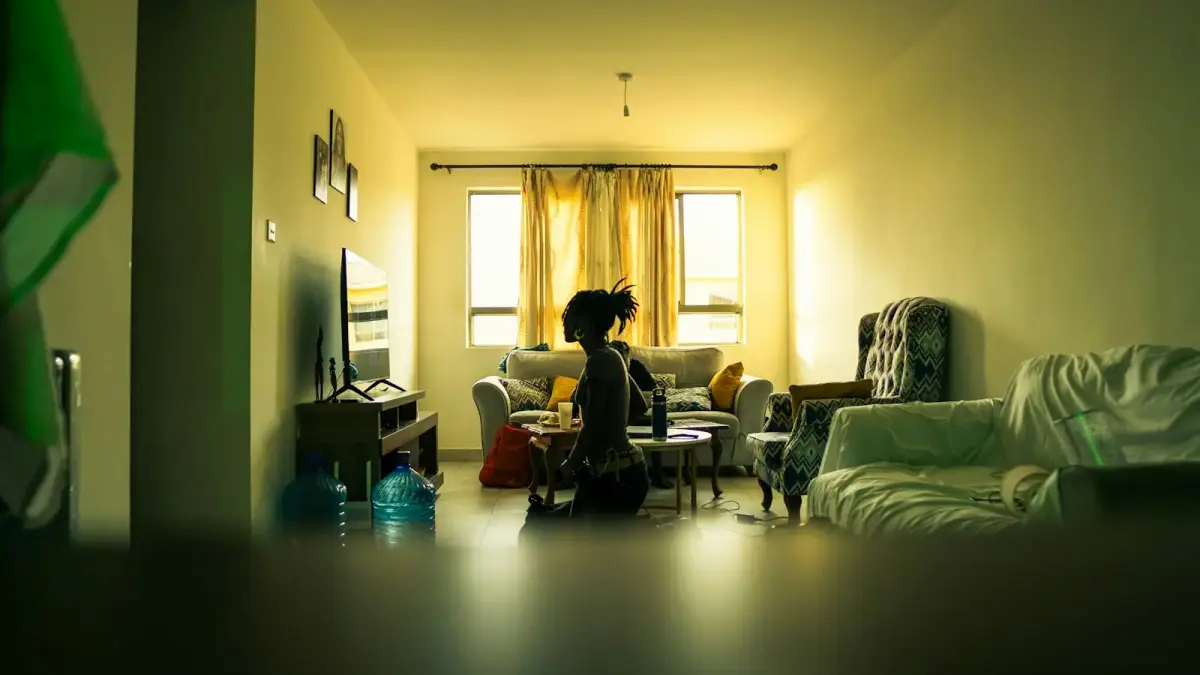
She sat down on the couch at 2:15 on a Saturday afternoon. The house was empty. The laundry was done. The dishes were clean. No one was coming over. No one needed a ride, an answer, a meal.
She had the whole afternoon.
She lasted four minutes.
By 2:19 she was on her feet again, pulling open the pantry to reorganize the spice shelf - not because it needed reorganizing, but because her body had started producing a feeling she couldn’t name. Something between dread and shame. Something that felt like being caught doing something wrong, except the thing she was doing wrong was nothing.
She has done this her entire adult life. She just never noticed it had a pattern until now. The couch, the quiet, the brief window of nothing - and then the urgent need to be somewhere, doing something, being useful to someone. Every time. Without exception.
If you recognize this in yourself, I need you to know something that might change the way you understand the last forty years: there is nothing wrong with your motivation. There is something very old happening in your nervous system. And it started long before you were old enough to have a word for it.
The girl who was praised for helping
You were not born restless. No child is.
But somewhere around six or seven - maybe earlier, maybe later - you received a message that landed in your body and never left. The message wasn’t spoken in a single sentence. It arrived through a thousand tiny moments of approval and withdrawal, presence and absence, warmth and silence.
The message was: you are wanted when you are useful.
It came when your mother smiled at you for clearing the table without being asked. It came when your father said, “That’s my good girl” after you helped carry groceries. It came in the particular warmth that flooded the room when you anticipated what needed doing and did it before anyone had to ask.
And it came in the cold space - the withdrawal of attention, the slight tightening of your mother’s mouth, the heaviness in the house - when you sat on the floor reading a book while the kitchen needed wiping down. When you wanted to play outside but there were things to be done. When you were still and the world around you was busy, and your stillness felt like a kind of failure.
Nobody said “you are only lovable when you are productive.” Nobody needed to. The house said it. The rhythm of the family said it. The way your body learned to read the room said it.
A 2020 study published in the Journal of Personality and Social Psychology found that children who received disproportionate praise for helpfulness - relative to praise for simply existing, playing, or resting - were significantly more likely to develop what the researchers called “contingent self-worth tied to productivity” as adults. The praise itself wasn’t harmful. What was harmful was the absence of its counterpart: the message that you were equally valued when you weren’t doing anything at all.
You never got that message. And your body has been waiting for it ever since.
The nervous system that never learned to be idle
Here is what happens biologically when a child learns that stillness is dangerous.
The sympathetic nervous system - the part responsible for fight, flight, and the diffuse state of vigilance that sits beneath both - begins to associate rest with threat. Not the dramatic kind of threat, not the kind that makes you run. The low-grade kind. The kind that produces a quiet hum of unease in your stomach when you have nothing to do. The kind that makes your hands itch for a task. The kind that says, without words, something bad is going to happen if you stop moving.
This is not anxiety in the clinical sense. It is more specific than that. You might be perfectly calm in a meeting, at a dinner party, in a crisis. You might handle pressure beautifully. The restlessness only arrives when the pressure disappears - when there is nothing between you and your own stillness, and the absence of demand feels like a kind of emptiness that your body cannot tolerate.
Gabor Mate has written extensively about how early relational dynamics encode themselves in the nervous system, not as memories but as physical states. The child who learned that being useful was the price of connection doesn’t think “I need to be productive to be loved” at fifty-five. She doesn’t think anything. She just feels a sickening pull toward the kitchen, the closet, the inbox, the pantry - anywhere she can convert her existence into output.
And when she cannot find something to do, she doesn’t feel free. She feels guilty. Guilty for resting. Guilty for having nothing to show for an afternoon. Guilty in a way that makes no logical sense and operates entirely below the level of thought.
The woman who cleans before the cleaner arrives
You know this woman. Maybe you are her.
She is the woman who cannot sit through a film without folding something. Not because she doesn’t want to watch the film, but because watching a film without simultaneously being productive feels indulgent in a way her body interprets as wrong.
She is the woman who cleans the house before the cleaning service arrives. She knows this is absurd. She has made jokes about it. But the thought of someone walking into her home and seeing evidence that she has been sitting still - dishes in the sink, a blanket rumpled on the couch - produces a shame response that is wildly disproportionate to the situation.
She is the woman who hasn’t read a book for pleasure in fifteen years. She used to love reading. She still buys books. But every time she sits down with one, some internal alarm starts ringing - not loudly, not urgently, just persistently enough that she puts the book down after three pages and goes to check whether the dishwasher has finished.
She is the woman who fills every silence with a task. Whose hands are never empty. Whose idea of relaxation is a different kind of work - gardening instead of cleaning, reorganizing a closet instead of answering emails. She calls it “pottering.” She calls it “keeping busy.” She has never called it what it actually is: a nervous system running a program that was installed before she could read.
A 2022 study in Frontiers in Psychology examined guilt responses in women during periods of unstructured leisure time. They found that women who scored high on what the researchers called “productivity-contingent self-esteem” experienced measurable cortisol spikes - the same hormone released during stress - when placed in situations with no tasks and no external expectations. Their bodies were treating rest as a threat.
Not a metaphorical threat. A physiological one.
What she lost and didn’t notice losing
The cruelest part of this pattern is not the restlessness itself. It is what the restlessness took from her without asking.
It took the Saturday afternoons. The slow mornings. The ability to sit on her own porch and listen to the birds without calculating what she should be doing instead.
It took the capacity to receive. Because receiving - a gift, a compliment, a meal someone else cooked, an afternoon someone else planned - requires stillness. It requires sitting in the position of someone who is being given something without earning it. And for a woman whose entire self-worth was wired to output, receiving feels almost unbearable.
It took the relationship with her own body. Because a body that cannot be still is a body that cannot be felt. The aches, the tiredness, the subtle signals that something needs attention - she overrides all of them, not out of toughness but out of habit. Sitting still long enough to feel her body would mean sitting still, and sitting still is the one thing her nervous system will not permit.
Daniel Goleman has described emotional intelligence as the ability to sit with internal states without immediately acting on them. By that measure, this woman has extraordinary emotional intelligence in every direction except one: toward herself. She can sit with other people’s discomfort for hours. She cannot sit with her own stillness for four minutes.
The reframe that changes everything
Here is what I want you to understand, and I want you to understand it not as a concept but as a fact about your body.
The restlessness you feel when nothing needs doing is not a character flaw. It is not laziness avoidance. It is not a personality trait. It is a survival strategy that was installed in you during a time when you needed it to maintain connection with the people who kept you alive.
The girl who helped without being asked was not born helpful. She was a child reading her environment with extraordinary precision and making a calculation that no child should have to make: I am safer when I am useful. I am more loved when I am busy. My stillness makes people uncomfortable, and when people are uncomfortable, I am at risk.
That calculation was accurate. In the house where you grew up, it may have been completely correct. Your nervous system was doing its job - keeping you safe, keeping you connected, keeping you in the good graces of the people whose approval felt like survival.
But you are not in that house anymore. You are fifty-five, or sixty, or forty-seven. The house is yours. The afternoon is yours. Nobody is going to withdraw their love because you sat on the couch for an hour and did nothing.
Your nervous system doesn’t know that yet. It is still running the old program. It is still scanning for the danger that existed in 1978, in a kitchen where a girl sitting idle was a girl not earning her place.
What rest actually requires
Rest, for a woman with this wiring, is not passive. It is possibly the most active thing she will ever do.
Because rest requires her to override a lifetime of conditioning. It requires her to sit with the guilt and not obey it. To feel the pull toward the pantry and stay on the couch. To let the cortisol rise and not interpret it as evidence that she is doing something wrong.
This is not relaxation. This is reprogramming.
And it is slow. It is uncomfortable. It will feel wrong for a long time before it starts to feel like anything else.
But I want you to know what is on the other side of that discomfort. On the other side is the experience of being alive without earning it. Of existing in a room without producing anything. Of sitting with your own presence and discovering - maybe for the first time - that you are not what you do. You are not your output. You are not the clean kitchen or the folded laundry or the meal that was ready on time.
You are the woman on the couch. And she is enough. She was always enough.
The girl who learned to earn her place in a room already had a place. It was hers from the beginning. Nobody told her, and so her body never learned it. But her body can still learn. It is not too late for the message to arrive.
You are allowed to sit down. You are allowed to stay.