Psychology says women over fifty who still hold their stomach in the moment someone raises a camera - who straighten and arrange themselves in the half-second between hearing 'smile' and hearing the shutter - are not vain or insecure, they are the last generation of girls who were taught that a woman's body was a presentation before it was a home, and the held breath at fifty-five is not about the photograph but about the girl who learned that the most dangerous thing her body could do was relax where anyone might see it
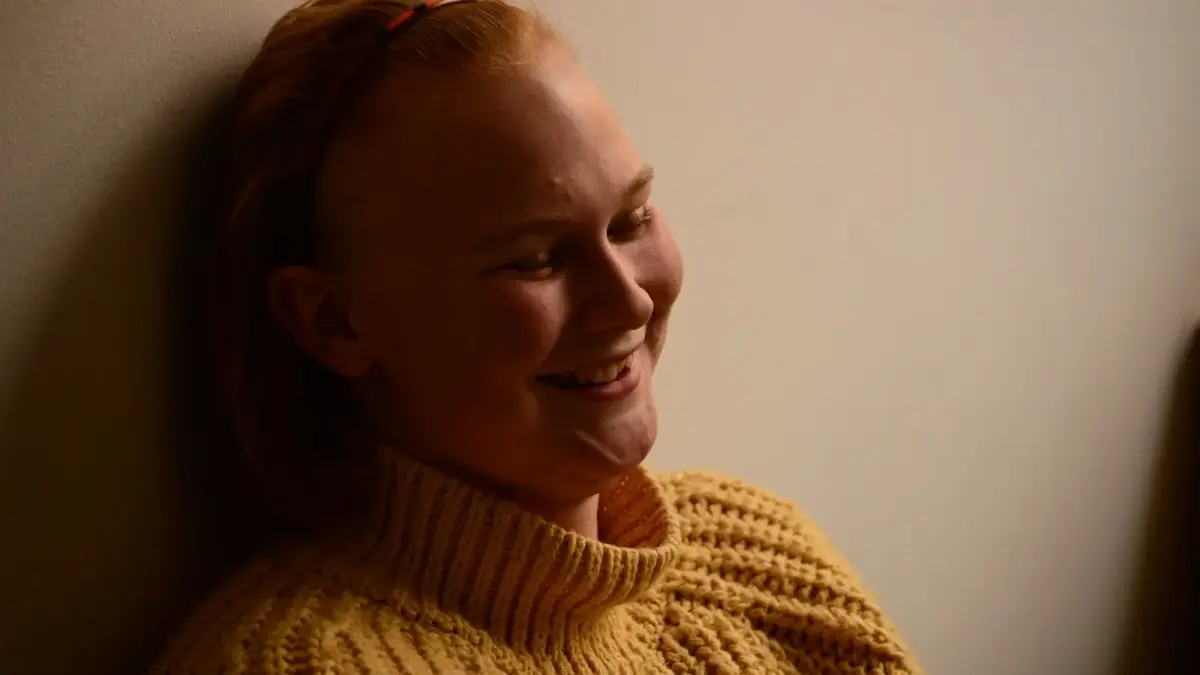
Someone raised a camera at my cousin’s birthday last month, and I watched every woman over forty-five in the room do the same thing in the same half-second.
Shoulders back. Chin tilted slightly up. Stomach pulled in. A small rearrangement of the face from whatever it had been doing naturally into something more composed, more acceptable, more ready. It happened so fast that if you weren’t looking for it, you’d think they were simply smiling. But I was looking. Because I’d just done it too.
I’m fifty-three years old. I have a doctorate. I’ve published papers on body cognition and self-perception. I can tell you exactly which neural pathways activate when a person shifts from a resting state to a performative one. And I still cannot hear the word “cheese” without pulling my ribcage up and my belly button toward my spine.
That reflex is not about the photograph. It was never about the photograph.
The half-second that reveals forty years of training
There’s a moment between the announcement of a camera and the click of the shutter. It lasts maybe a second and a half. And in that window, something extraordinary happens in the bodies of women who grew up in the 1970s, ’80s, and early ’90s.
The nervous system runs a checklist that was installed before they had the language to question it. Stomach flat. Posture aligned. Face pleasant. Arms positioned to minimize width. It’s not a conscious decision. It’s closer to the way your hand moves to catch a glass before you’ve registered it falling.
A 2021 study published in the journal Body Image found that women over forty-five demonstrated significantly higher levels of what researchers call “anticipatory body monitoring” - the unconscious adjustment of posture and appearance in response to perceived observation. The study noted that this monitoring was not correlated with current body dissatisfaction. Women who reported feeling generally comfortable with their bodies performed the adjustments at the same rate as those who didn’t.
Which means this isn’t about how these women feel about their bodies now. It’s about what their bodies learned to do before they were old enough to have an opinion about it.
The phrase every woman over forty-five has heard
Suck it in.
Three words. Usually said quickly, casually, sometimes even playfully - by a mother, an aunt, a grandmother, a swim coach, a ballet teacher, a friend’s mom at the pool. Said before a photograph, before walking into church, before the school play, before the beach.
I heard it for the first time when I was seven. My mother said it while zipping the back of my Easter dress. She wasn’t being cruel. She was being thorough. She was preparing me for a world that she had already learned would be watching.
And that’s what makes this so complicated. The women who taught us this weren’t villains. They were veterans. They had survived their own decades of being measured and found lacking and they were handing us the only armor they knew - the ability to look like you were already taken care of, already under control, already occupying as little space as possible.
“Suck it in” was never about the stomach. It was a philosophy compressed into three syllables. It meant: your body, as it naturally exists, is a rough draft. The final version requires effort. And the effort must be invisible.
What the body learns when relaxation becomes dangerous
Here’s what I find most striking as a researcher - the reflex doesn’t weaken with age. You would think that decades of life experience, professional accomplishment, and genuine self-acceptance would gradually override a pattern learned in childhood. But the data tells a different story.
A 2018 study published in Psychological Science examined what researchers termed “embodied vigilance” - the body’s learned habit of self-monitoring in social contexts. They found that patterns established before age twelve showed remarkable persistence across the lifespan, operating independently of conscious belief systems. A woman could fully believe, intellectually, that her body was fine exactly as it was. Her nervous system would still run the old program the moment a camera appeared.
This is because the learning wasn’t cognitive. It was somatic. It went into the muscles, not the mind. The body learned that being observed and being relaxed were mutually exclusive states. That visibility required preparation. That the natural resting state of a woman’s body was, by definition, not ready.
Think about what that teaches a girl. Not just about photographs - about existence. If your body’s default state is something that needs to be corrected before it can be witnessed, then you learn, at the level of your muscles and your breath, that you are never simply okay as you are. You are always a correction away from acceptable.
The mothers who modeled it without knowing
My mother is seventy-eight. Last Thanksgiving, my niece took a candid photo of her laughing in the kitchen, and when my mother saw it, the first thing she said was, “Oh, delete that one. I wasn’t ready.”
She wasn’t ready. She’d been laughing. She’d been genuine and unguarded and beautiful in the specific way that people are beautiful when they’ve forgotten anyone is watching. And her immediate response was that this version of herself - the unperformed one - was not fit for documentation.
She learned this from her mother, who learned it from hers. A lineage of women who understood that the unguarded body was the vulnerable body. That control was safety. That the moment you let your belly soften or your chin double or your arms hang naturally at your sides, you had given the world something to use against you.
Psychologist and author Brene Brown has written extensively about how vulnerability and worthiness are connected - that the willingness to be seen as you actually are is the foundation of self-worth. But what do you do when you were raised by women for whom being seen as you actually were was genuinely unsafe? When letting your guard down didn’t lead to connection but to criticism?
You hold your stomach in. Not because you think it matters. But because your body was taught, long before your mind had a vote, that relaxation was a risk.
The magazines that made it structural
It wasn’t just mothers. It was an entire infrastructure.
If you were a girl in the 1970s or ’80s, you grew up inside a media environment that treated a woman’s body as a public project. Magazines ran features on “problem areas” as if certain parts of the female body were manufacturing defects. Television taught you that the female stomach was either flat or a punchline. Advertisements showed you what a woman’s body was supposed to do - which was, primarily, take up less space while looking like that came naturally.
A 2023 review published in Frontiers in Psychology analyzed the long-term effects of what the authors called “formative media exposure” - the media consumed during the developmental period between ages eight and sixteen. They found that women who came of age during peak diet-culture media (roughly 1975-1995) showed measurably higher rates of body vigilance behaviors at age fifty than women from either earlier or later cohorts. The behaviors persisted regardless of whether the women had engaged in formal body-image work, therapy, or feminist consciousness-raising.
The training went that deep. It wasn’t just a message they received. It became the water they swam in, the air they breathed, the silent agreement their body made with the world before their mind was old enough to negotiate.
What the camera actually reveals
Here is the reframe, and I want you to sit with it for a moment.
When a woman over fifty holds her stomach in at the sound of a camera, she is not being vain. She is not being insecure. She is not failing at body positivity. She is not behind the times or unable to accept herself.
She is performing - in a single half-second reflex - the entire history of what her generation was taught about what a woman’s body owes the world. That held breath is not about the photograph. It’s about the girl who was told to stand up straight at eight. Who heard “suck it in” before she could spell the word “posture.” Who flipped through magazines that treated her natural body as a before photo. Who watched her mother delete every candid shot and keep only the ones where she was ready.
That held breath is forty years of training compressed into an instant. And the fact that it still fires - automatically, without thought, even in women who have done the inner work - is not evidence of failure. It’s evidence of how deeply a lesson can be installed when you teach it to a child’s body instead of her mind.
The breath you might finally let go
I’m not going to tell you to stop holding your stomach in. That would be like telling someone to stop flinching. The reflex isn’t yours to simply override with willpower. It was put there by people and systems that understood, correctly, that the body learns faster and forgets slower than the mind.
But I will say this.
The next time a camera comes out and you feel your body do that thing - the straighten, the suck-in, the quick arrangement of yourself into someone more presentable - try noticing it. Not judging it. Just noticing.
That’s not you being vain. That’s a seven-year-old in an Easter dress doing exactly what she was taught. That’s a twelve-year-old at the pool hearing her aunt’s voice. That’s a sixteen-year-old standing sideways in the mirror because a magazine told her the front view was the problem.
She’s not gone, that girl. She’s still in there, still running the program, still believing that the most dangerous thing her body could do is be witnessed at rest.
And maybe - not today, maybe not even this year - but maybe one day, you’ll feel the camera come out and you’ll let your belly stay soft. You’ll leave your chin where it was. You’ll let the photograph capture whatever your face was actually doing before you had time to fix it.
And it will be the most honest picture anyone has ever taken of you. Not because you looked perfect. But because, for the first time, you let yourself be seen without the armor. And the girl who learned to hold her breath - finally, after all these decades - got to exhale.