She is 58 and has just realized that every friendship she has ever had was built on her being the one who listens - the one who asks the questions, who remembers the details, who sits with the silences - and she cannot name a single person in forty years of closeness who has ever once asked how she is doing and actually waited for the answer, because a woman who holds space for everyone eventually becomes invisible inside the room she built
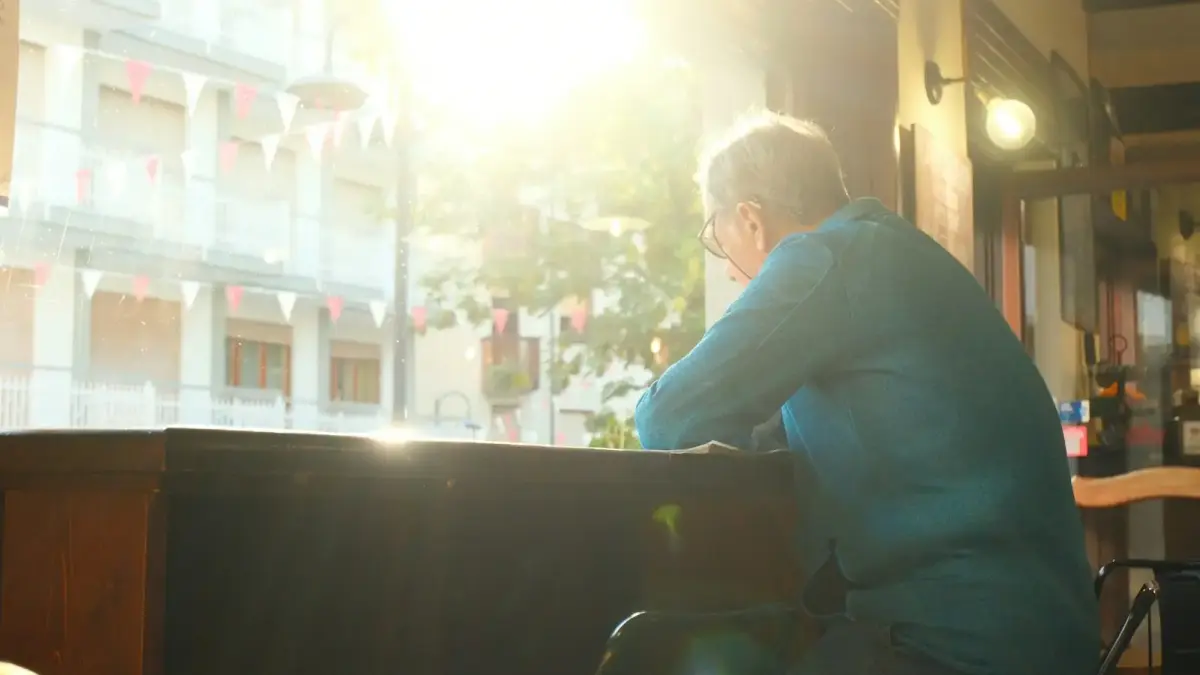
There is a moment - and it comes quietly, the way most devastating things do - when a woman looks around the table at brunch and realizes that she knows the name of every friend’s therapist, the status of every friend’s marriage, the birthday of every friend’s child, and the precise way each of them takes their coffee.
And then she tries to remember the last time any of them asked her a question that wasn’t rhetorical.
Not “how are you?” tossed like loose change into a conversation already moving past her. But the real version. The one where someone leans in, goes quiet, and waits. The one where the silence after the question is not a gap to be filled but a doorway being held open.
She is 58. She has been holding doors open for people her entire life. And she has just noticed that she has been standing in the hallway the whole time, never once walking through one herself.
The architecture of being needed
It started young. It almost always does.
She was the child who noticed when her mother went quiet at the dinner table. The one who learned to read a room before she learned to read a book. By age ten, she could tell you exactly what kind of day her father had by the sound of his footsteps on the porch.
This is not a small thing. A 2017 study published in the Journal of Personality and Social Psychology found that children who develop early emotional attunement - the ability to read and respond to the feelings of others - often carry that skill into adulthood not as a gift but as an obligation. It becomes the thing people count on them for. It becomes the shape of every relationship they enter.
She didn’t choose to become the listener. She just got very good at it. And the world rewarded her for it in the specific way the world rewards women who make other people feel comfortable - by never asking what it cost her.
By her twenties, the pattern was locked in. She was the friend you called at midnight. The one who remembered you mentioned a job interview three weeks ago and texted to ask how it went. The one who noticed when you cut your hair, when your voice sounded different, when you laughed a half-second too late.
She built a life out of paying attention to other people. And no one ever noticed.
The invisible labor of remembering
Here is what people do not understand about being the person who remembers everything: it is not a personality trait. It is work.
She remembers that Karen’s daughter is applying to colleges this fall and that the first choice is somewhere in New England. She remembers that David’s back has been bothering him since that fall in March. She remembers that Liz stopped drinking wine last year but never explained why, and she has been quietly ordering sparkling water at dinners ever since so Liz would not feel alone in it.
None of this is automatic. All of it is attention - deliberate, sustained, unreturned.
Psychologist Adam Grant has written about the phenomenon of “givers” in relationships - people who consistently invest more emotional energy than they receive. What he observed, and what resonates here, is that givers do not burn out because they give too much. They burn out because they give into a void. The giving itself is not the problem. The silence that comes back is.
She does not resent her friends. That is the part that makes this harder to explain. She loves them. She chose them. She would do it all again.
But somewhere around 55, a thought crept in that she could not push away. She was sitting on the phone with her oldest friend, forty minutes into a conversation about that friend’s adult son and his wedding plans, and she realized - with the kind of clarity that arrives like cold water - that this friend did not know a single important thing about her inner life.
Not because she had hidden it. But because no one had ever come looking.
The cost nobody counted
There is a specific kind of loneliness that belongs to women who are good at listening. It is not the loneliness of isolation. It is the loneliness of being surrounded by people who genuinely love you and have absolutely no idea who you are.
She has friends who would drive across the state if she called and said she needed help. She knows this. She believes it.
But she has never made that call. Not because she is too proud, but because the infrastructure of the relationship was never built in that direction. The roads all lead toward her. There are no roads leading back.
A 2021 study published in Psychological Science examined what researchers called “relational asymmetry” - the gap between how much people believe their relationships are mutual and how mutual those relationships actually are. The findings were striking. Nearly half of all friendships that people described as reciprocal were, by behavioral measures, one-directional. One person was consistently doing the emotional maintenance. The other person was consistently receiving it.
The woman who listens lives inside that gap. She has been living there for decades. And the cruelest part is not that people failed her. The cruelest part is that she made it so seamless, so effortless, so graceful that nobody ever realized there was a gap at all.
She held the space so well that people forgot she was in it.
The moment it becomes visible
It usually surfaces in a small way. Not a betrayal. Not a fight. Something ordinary that cracks the whole thing open.
For her, it was a Tuesday. She had a medical scare - nothing that turned out to be serious, but for seventy-two hours she did not know that. She told two close friends. Both responded with concern. Both said to keep them posted.
Neither one followed up.
She sat with that for a week. She replayed it. She made excuses for them - they are busy, they have their own lives, they probably assumed she would reach out if something was wrong.
And then she heard it. The sentence she had been carrying for forty years without ever saying it out loud: I am the one who follows up. That is my role. Nobody follows up on me because that is not how this works.
That is the moment the whole architecture becomes visible. Not just in one friendship, but in all of them. The pattern that stretches back to childhood, to the little girl who noticed her mother’s silence, to the teenager who became everyone’s confidante, to the adult woman who built an entire social world on the foundation of her own invisibility.
She was never weak - she was generous beyond what anyone measured
Here is what she needs to hear, and what I wish someone had told her decades ago.
What she did - what she has been doing her whole life - is not codependency. It is not people-pleasing. It is not a deficit.
It is one of the most extraordinary forms of emotional generosity a person can offer. She paid attention to people. She held their stories. She made them feel known. That is not a small thing. In a world where most people are waiting for their turn to talk, she actually listened.
Brene Brown has spoken about the difference between fitting in and belonging - how fitting in requires you to change who you are, while belonging means being accepted as you are. The woman who listens has spent her life helping other people feel like they belong. She has been the belonging for everyone around her.
The cost - and there is a cost - is that she never turned that extraordinary attention inward. She never asked herself the question she asked everyone else: How are you, really?
And the people around her never asked either. Not because they did not care, but because she had built a world where she was the asker and they were the asked. She wrote the script. They followed it. And now, at 58, she is rewriting it.
What changes from here
She does not have to blow up her friendships. She does not have to deliver speeches or issue ultimatums or make anyone feel guilty.
What she can do - what is already happening, if she is reading this - is begin to take up space.
That looks different for everyone. For some women it means answering “how are you?” honestly for the first time, even when the honest answer is complicated. For some it means letting a silence sit without rushing to fill it with a question about the other person. For some it means saying “I need to talk about something” and watching - really watching - to see who leans in.
A 2019 study in Frontiers in Psychology found that when people who habitually suppress their own needs begin expressing them - even in small ways - the relationships that survive that shift tend to deepen significantly. The ones that do not survive were, in a meaningful sense, already hollow. They were built on a version of her that was never complete.
She might lose a few friendships. That will hurt. But what she will gain is something she has never had - the experience of being known. Not as the listener. Not as the safe harbor. Not as the woman who remembers everything.
Just as herself. With all the questions she never asked out loud finally given room to breathe.
She spent forty years building a room where everyone felt held. She is 58 now, and for the first time, she is pulling up a chair for herself.
That is not a loss. That is not selfishness. That is a woman who finally realized that the generosity she gave everyone else was something she deserved too - and the room she built has always had space for her. She just never sat down.