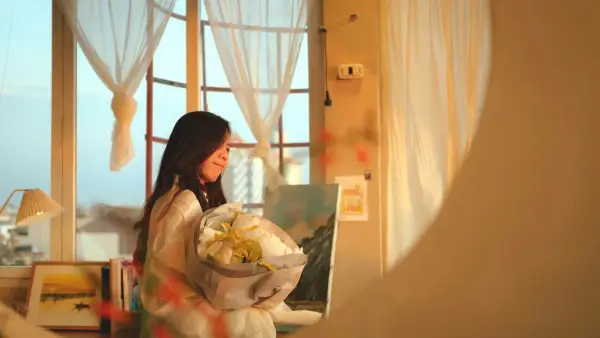
She's 54 and has quietly realized that the reason her phone only rings when someone needs something - a ride, advice, help with their mother, someone to listen at midnight - is not because she attracts needy people, it is because she spent thirty years building a life where the only version of herself anyone was allowed to see was the useful one, and the woman everyone calls 'the strong one' has never once been asked how she is doing by someone who actually waited for the answer
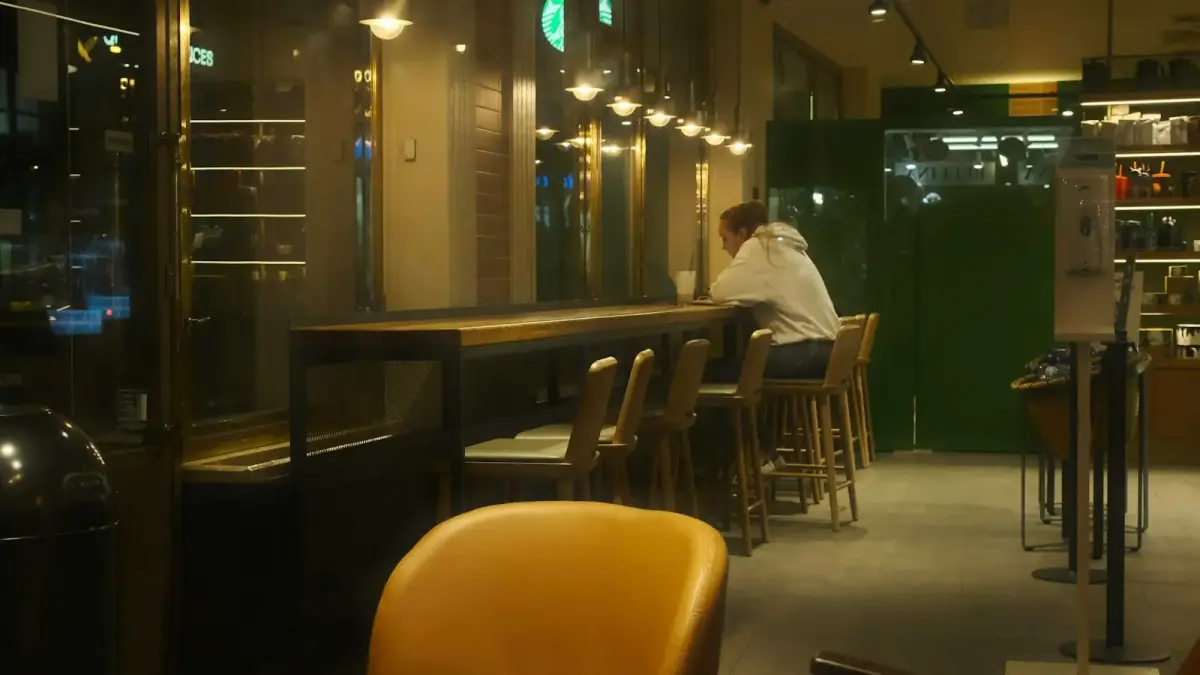
I noticed it on a Tuesday. Nothing remarkable about the day. I was sitting on my kitchen counter eating toast over the sink - the way you eat when nobody’s watching and you don’t bother with a plate - and my phone buzzed.
It was my sister. Could I call the insurance company about their mother’s prescription? She didn’t have time and I was “so much better at that stuff.”
I said yes. I always say yes. Then I scrolled back through my recent calls and something shifted in my chest. Twelve incoming calls in the last two weeks. Every single one was someone who needed something.
Not one person had called to ask how I was. Not one person had called just to hear my voice. And the part that made me set my toast down and stare at the wall for a long time was this: I wasn’t surprised.
If your phone looks anything like mine - if you already know before you answer that someone is about to need you - then I need you to sit with something uncomfortable. Because the answer isn’t what you think it is.
The phone that only rings with requests
You’ve probably told yourself the story I told myself for years. You attract needy people. You’re a magnet for takers. Something about your energy draws in the kind of person who calls at 11 p.m. with a crisis but never remembers your birthday.
It’s a clean story. It puts the problem outside of you. And it isn’t entirely wrong - there are absolutely people who target the generous. But it misses the deeper pattern.
The reason your phone only rings when someone needs something is not because of who they are. It’s because of who you taught them you were.
You were the one who answered every call. You were the one who said “I’m fine” so quickly and so convincingly that nobody ever learned to hear the pause before those words. You were the one who showed up to the hospital, organized the funeral, handled the landlord, made the spreadsheet, booked the appointment, and then drove home alone in your car and sat in the driveway for ten minutes because you needed a moment where nobody needed you to be anything.
And you did it so well - so seamlessly, so cheerfully - that the people around you stopped seeing a woman. They started seeing a function.
How she became the useful one
This didn’t start at 54. It started so early you probably can’t remember a time before it.
Maybe you were the oldest daughter in a household where somebody had to be the steady one. Maybe your mother was fragile, or overwhelmed, or absent in some essential way that meant a child had to step into the gap. Maybe your father worked himself hollow and you learned that love looked like being indispensable.
A 2018 study published in the Journal of Personality and Social Psychology examined what researchers called “compulsive caregiving identity” - a pattern where individuals, predominantly women, constructed their core sense of self around being needed by others. The researchers found that this identity typically originated in childhood family systems where the child’s emotional needs were only met when they were actively serving someone else’s.
Read that again. Your emotional needs were only met when you were serving someone else’s.
This is the invisible contract you signed before you were old enough to understand contracts. The deal was: if I am useful, I am loved. If I am needed, I belong. If I can fix this, I am safe.
And the terrible efficiency of that contract is that it works. It works for decades. You become the person everyone depends on, and that dependence feels like proof that you matter. Every midnight phone call, every favor, every “I don’t know what I’d do without you” lands in the exact place where a child once wondered whether she was worth keeping around.
The invisible terms of the contract
Here is what nobody tells you about building your identity around being useful: the people who love you will eventually cooperate with the version of you that you presented.
If you only ever showed them the capable one - the one who handles things, the one who doesn’t need help, the one who responds to “how are you” with a redirected question about their life - then that is the woman they know. Not because they’re selfish. Not because they don’t care. But because you were so convincing that they believed you.
You taught them that you don’t have needs. You taught them that your version of closeness is service. You taught them that asking you for help is the appropriate way to connect with you, because that’s the only door you ever left open.
Brene Brown has written about this dynamic with devastating clarity. She describes the “strong one” pattern as a form of emotional armor - a way of staying connected to people while keeping the most vulnerable parts of yourself locked in a room nobody has the key to. The problem, she argues, isn’t strength. The problem is that over time, you forget there’s a woman in that locked room at all.
And so your phone rings. And it’s always someone who needs something. And you answer, and you help, and you hang up, and you sit in the quiet that follows and feel something you can’t quite name.
It’s not resentment, exactly. It’s more like a homesickness for a version of yourself that someone might have wanted to know.
What happens when the useful one stops being useful
I know what you’re afraid of. I’m afraid of it too.
You’re afraid that if you stopped being the capable one - if you stopped answering every call, stopped organizing every crisis, stopped being the person who holds everything together - the phone would stop ringing entirely. And then you’d have your answer. You’d know that the connection was never about you. It was about what you could do.
A 2022 study in Frontiers in Psychology looked at women between 45 and 65 who described themselves as “the reliable one” in their social networks. When researchers asked these women what they believed would happen if they became unavailable for an extended period, over seventy percent predicted significant relationship loss. They expected people to simply disappear.
But here’s what the study actually found when it followed women who had been forced into unavailability - through illness, relocation, or burnout: the relationships that disappeared were real losses, yes. But they were losses of roles, not losses of love. The people who stayed - and some did stay - were the ones who had been trying to reach the real woman all along, bumping up against a wall of competence they couldn’t get past.
The silence you’re afraid of isn’t the sound of being unloved. It’s the sound of a system recalibrating. It’s the terrifying, necessary quiet that comes when you stop performing and wait to see who shows up for the woman underneath.
Some people won’t. That is real and it will hurt.
But some people have been waiting years for you to stop being so relentlessly fine. They just didn’t know how to say it to someone who never seemed to need anything.
The self-silencing pattern and what it costs
Psychologist Dana Jack developed a theory in the early 1990s called “self-silencing” - the practice of suppressing your own needs, feelings, and identity within relationships in order to maintain connection. Her research found that women who scored high on self-silencing measures didn’t just lose touch with their own needs. Over time, they lost the ability to recognize those needs existed at all.
This is the part that makes me want to reach through the screen and hold you.
You might not even know what you need. If someone sat across from you right now and said, “What do you want? Not for your kids, not for your mother, not for your partner - what do you want for yourself?” you might feel a kind of blankness. A static where an answer should be.
That blankness isn’t emptiness. It’s atrophy. It’s the result of thirty years of redirecting every impulse toward yourself into service for someone else. The muscle that says “I want” and “I need” and “I’m hurting” has been unused for so long that it takes a minute to remember it’s there.
Daniel Goleman’s work on emotional intelligence describes a phenomenon where highly empathic individuals - people who are exquisitely tuned to the emotional states of others - can lose the ability to turn that attention inward. The radar is always pointed outward. You can sense what your daughter needs before she says it. You can hear the wobble in your friend’s voice that means she’s about to fall apart. But the frequency of your own interior life has been turned so low that you can’t pick up the signal anymore.
You are not broken. You are a woman who got so good at listening to everyone else that she forgot to listen to herself.
The quiet reclamation
I’m not going to tell you to set boundaries. You’ve read that article. You’ve probably read it a hundred times. You know the language. You know you’re supposed to say no more often, supposed to prioritize yourself, supposed to put on your own oxygen mask first. The advice isn’t wrong. It’s just incomplete.
Because the real work isn’t learning to say no. The real work is learning to tolerate being seen as something other than useful.
It means letting someone see you struggle and not immediately pivoting to reassure them that you’re fine. It means calling a friend and saying “I had a terrible day” without following it up with “but anyway, how are you?” It means sitting in the discomfort of someone worrying about you and not rushing to fix their worry.
It means answering “how are you” honestly and then waiting. Waiting through the awkward silence that comes when people realize you’re not going to deflect. Waiting to see if they lean in or step back.
Some of the bravest women I know are women in their fifties who are learning, for the first time, to be inconvenient. To take up space not because they’re doing something for someone, but just because they’re there. Just because they exist and that is enough.
You spent thirty years building a life where the only version of yourself anyone was allowed to see was the useful one. That was a survival strategy. It worked. It got you here.
But you’re 54 now. And the woman who held everything together deserves to be held. Not because she did something to earn it. Not because she handled the crisis or drove the carpool or stayed up until 2 a.m. listening to someone else’s pain.
Just because she’s a person. And people deserve to be asked how they’re doing by someone who actually waits for the answer.
Your phone might keep ringing with requests for a while. Old patterns don’t unravel quickly. But somewhere in the coming months, you’re going to answer a call and someone is going to say, “I was just thinking about you. How are you, really?”
And you’re going to open your mouth. And for the first time in a very long time, you’re going to tell the truth.