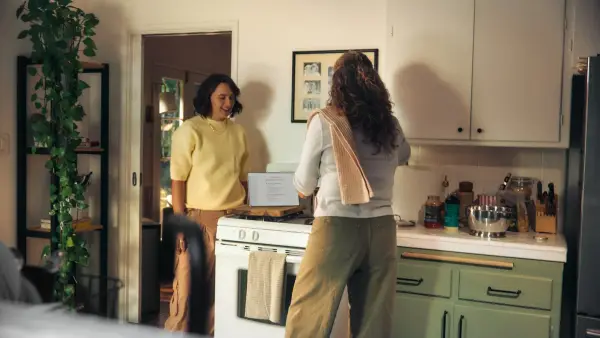
She's 54 and has just realized that every time her adult children come home for the weekend she sleeps worse than any other night of the year - not because of the noise or the disrupted routine but because her nervous system reactivates the full overnight monitoring protocol it spent eighteen years perfecting, and the body never actually retired from the job of keeping them safe through the night
The First Night They’re Back
I noticed it again last Friday.
My daughter pulled into the driveway around seven, her younger brother about an hour behind her. By nine we were all on the couch doing absolutely nothing together, which is the purest form of family time I know. By eleven, we drifted to our separate rooms the way we used to, with the easy choreography of people who once shared a hallway for two decades.
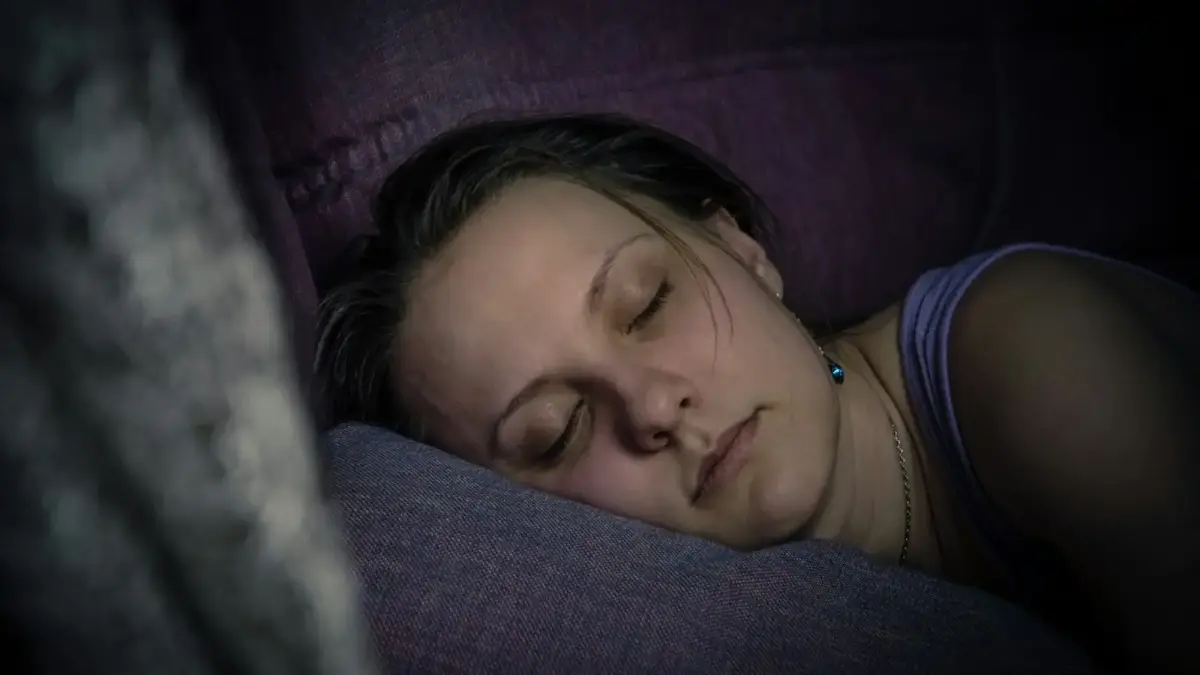
And then I lay in the dark, wide awake, for five hours.
Not anxious. Not restless. Not thinking about anything specific. Just - on. Like someone had flipped a switch somewhere behind my ribs that I didn’t even know still existed.
It happened the last time they visited, too. And the time before that. And the time before that. I kept blaming the disrupted routine, the extra coffee I made in the afternoon, the fact that the house was louder than usual. But the house wasn’t louder. They’re 26 and 23. They go to bed quietly. They’re considerate guests in the home they grew up in, which is its own particular kind of heartbreak.
The sleeplessness had nothing to do with noise. It had everything to do with what my body remembered.
The Protocol That Never Shut Down
Here is what I think happened, and I don’t think I’m wrong.
For roughly eighteen years, I slept with one ear open. Not metaphorically. Literally. I could hear a cough through two walls and a closed door. I could distinguish between the sound of my daughter rolling over and the sound of my son getting out of bed. I knew what a normal creak of the hallway floor meant versus an unusual one.
I wasn’t doing this on purpose. I wasn’t lying awake cataloging sounds. I was asleep - but a specific, shallow, vigilant kind of asleep that mothers learn without ever being taught it.
My body developed an overnight monitoring protocol. It tracked breathing patterns, footstep cadences, the particular quality of silence that means everyone is genuinely resting versus the kind of silence that means someone is lying awake with a fever they haven’t mentioned yet.
When my kids moved out - first my daughter at eighteen, then my son two years later - that protocol didn’t delete itself. It just went dormant. Like a program running in the background of an old computer, using almost no power, waiting.
And every time those children sleep under my roof again, even for forty-eight hours, the full system powers back on.
What the Research Actually Says
This isn’t just a feeling I’m romanticizing. There’s a measurable biological mechanism behind it.
A 2019 study published in the journal Psychological Science found that mothers show heightened neural responsiveness to their children’s vocal and auditory cues even years after the daily caregiving period has ended. The brain doesn’t unlearn the sounds it spent years cataloging. It archives them.
Researchers at UCLA found that parental sleep architecture - the specific patterns of light and deep sleep - fundamentally reorganizes after the birth of a first child, and in many cases, particularly for mothers, it never fully returns to its pre-parental baseline. The body adjusts to a new normal where true deep sleep coexists with a layer of environmental monitoring that wasn’t there before.
Dr. Darby Saxbe, who studies the neuroscience of parenting, has written about how caregiving literally reshapes brain structure. The neural pathways associated with hypervigilance toward a child’s wellbeing don’t atrophy when the child moves out. They quiet down. But they remain structurally intact, ready to fire again when the stimulus returns.
The stimulus, in this case, is the sound of your 26-year-old getting a glass of water at midnight. And your body responds as though she is three.
The Particular Devotion of Temporary Assignments
There’s something about the temporary nature of their visits that makes the monitoring more intense, not less.
When they lived here full-time, the vigilance was distributed. It spread itself across thousands of nights, diluted by routine, softened by the certainty that there would be another night after this one. The system could afford to be efficient. It didn’t need to be thorough every single time, because it had tomorrow night as backup.
But when your adult child is home for two nights - Friday and Saturday, gone by Sunday afternoon - your body seems to understand the assignment differently. This is not routine monitoring. This is a limited engagement. The system performs the job with the devotion of someone who knows it will be taken away again in forty-eight hours.
I think that’s why Sunday nights, after they leave, I sleep like I’ve been drugged. Not because the house is quiet again. Because the protocol finally powers down, and the exhaustion of two nights of involuntary surveillance hits all at once.
My husband sleeps fine when they visit. I asked him. He looked at me like I was describing a medical condition. Maybe I am. But I don’t think it’s a disorder. I think it’s an infrastructure.
The Body Keeps the Job Description
There’s a concept in psychology called biological embedding - the idea that repeated experiences, especially those tied to strong emotional bonds, get encoded not just in memory but in physiology. Your body doesn’t just remember what it did. It remembers how to do it.
A 2021 study in Frontiers in Psychology explored how maternal stress-response systems remain calibrated to their children’s needs well into midlife. The cortisol patterns, the autonomic nervous system activation, the sleep-wake regulation - all of it bears the fingerprint of years spent in a particular kind of attentiveness.
Gabor Mate has written extensively about how the body stores what the conscious mind has moved past. We think we’ve adjusted to the empty nest. We’ve redecorated their rooms. We’ve reclaimed our evenings. We’ve learned to cook for two again. Consciously, we’ve adapted beautifully.
But the body didn’t get the memo. Or rather, it got the memo and filed it under “temporary reassignment,” not “retirement.”
Because the body knows something the conscious mind tries to forget. The job of keeping them safe was never a phase. It was a permanent position that lost its daily responsibilities. And the body, loyal beyond reason, keeps the job description active just in case.
What Monday Morning Actually Means
I used to think the exhaustion I felt on Monday mornings after the kids’ weekend visits was age. I’m 54. Everything is easier to blame on age. The tiredness, the foggy thinking, the heaviness in my limbs that feels less like sleepiness and more like something emotional wearing a physical costume.
But it’s not age. I know what age-related tiredness feels like, and this isn’t it.
This is the specific fatigue of a system that ran a two-night operation with the urgency of someone who hasn’t been needed in years and finally got called back in. It’s the exhaustion of love in its most involuntary form - the kind that bypasses your preferences, your logic, your awareness entirely.
I didn’t choose to lie awake tracking the sound of my son’s footsteps in the hallway at 2 AM. I didn’t decide to note the creak of the bathroom door and then wait, without realizing I was waiting, for the creak of it closing again. I didn’t consciously catalog the moment the house settled back into the particular frequency of everyone-is-safe.
My body did all of that without consulting me. It performed the full job with the competence of someone who has done it ten thousand times. And then it handed me the invoice on Monday morning.
The Sound of a House With Everyone in It
There is a specific quality of silence in a house where all your children are sleeping. If you’re a parent, you know exactly what I mean, even if you’ve never tried to describe it.
It’s not quiet. Quiet is the absence of sound. This is the presence of something - a kind of fullness in the air, a density to the dark that only happens when the people you made are breathing in rooms you can almost reach from where you’re lying.
I think the reason I can’t sleep on those nights is that some part of me doesn’t want to miss it.
Not consciously. I’m not lying there savoring it. I’m lying there mildly frustrated, wondering why I can’t drift off, mentally calculating how tired I’ll be tomorrow. But underneath that, in the layer where the body makes its own decisions, I think there’s a recognition that this - all of them here, all of them close, all of them safe under the same roof - is becoming rare. And the body refuses to sleep through rare things.
A Love That Doesn’t Ask Permission
I told my daughter about this theory over breakfast last Saturday. She looked at me for a long moment and then said, “Mom, that’s the most beautiful and slightly unhinged thing you’ve ever told me.”
She’s not wrong on either count.
There is something slightly unhinged about a nervous system that spent eighteen years learning a job and then spent the next eight years keeping itself ready for occasional weekend shifts. It’s excessive. It’s biologically expensive. It serves no practical purpose - my adult children do not need me to monitor their breathing from two rooms away.
But the body doesn’t operate on practical purpose. It operates on love, and love at this level - the involuntary, structural, woven-into-your-sleep-architecture level - doesn’t ask for permission. It doesn’t check whether it’s still needed. It doesn’t retire gracefully.
It just waits. Patient and quiet, like a light left on in the hallway that nobody remembers turning on. And when the house fills up again for two days, it does the only thing it knows how to do.
It keeps watch.
And if the cost of that is a tired Monday morning and a second cup of coffee you didn’t used to need, I think that’s a price most of us would pay without hesitation. Not because we chose to. Because our bodies already chose for us, a long time ago, the first night we brought them home and slept with one ear open and never fully closed it again.