She's 55 and has just realized the reason she reads every text message three times before sending and twice more after is not perfectionism - it is a child who learned at nine that the wrong word at the wrong moment could change the entire weather of the house, and the careful woman everyone admires was built by a girl who could not afford to let a single sentence land wrong
I caught myself doing it again last Tuesday.
I had typed a three-sentence text to my sister about Thanksgiving plans. Nothing loaded. Nothing emotional. Just dates and logistics.
And before I hit send, I read it four times. I moved a comma. I softened a phrase. I added “no worries either way!” at the end - a tiny escape hatch in case my words landed somewhere I hadn’t intended.
Then I sent it.
And then I read it again. Twice.
I’m 55 years old. I have a graduate degree. I’ve written research papers, published articles, given talks to rooms full of people.
And I cannot send a text message to my own sister without performing what amounts to a full editorial review - weighing each word for hidden sharpness, scanning for anything that could be misread, anything that could shift the air.
For decades, I called this perfectionism. I wore it like a quiet badge. The careful communicator. The woman who always says the right thing. The one who never makes people uncomfortable.
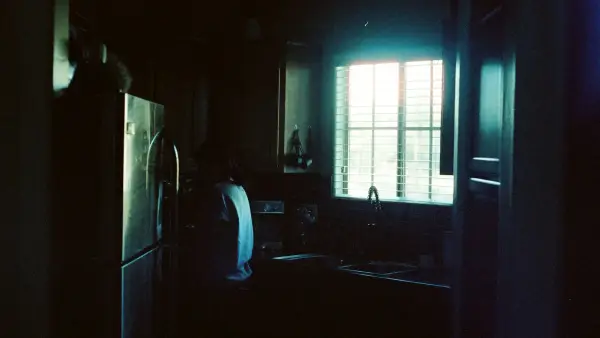
But sitting in my kitchen that Tuesday, phone still warm in my hand, I felt something crack open. This wasn’t perfectionism. This was something much older. Something that started long before I knew what a text message was.
The house where sentences had consequences
I grew up in a home where the emotional climate could change in the time it took to finish a sentence.
My father wasn’t violent. He wasn’t absent. He was unpredictable. Monday’s joke was Wednesday’s offense. A comment about dinner that landed as charming at noon could land as ungrateful by six. The rules were never written down because they were never the same twice.
So I learned to read the room the way some children learn to read books - early, obsessively, and with the understanding that getting it wrong had real consequences.
Not physical consequences. Emotional ones. A shift in temperature. A withdrawal of warmth. A silence that could last hours or days, and you were never quite sure which version you’d get.
A 2019 study published in the Journal of Child Psychology and Psychiatry found that children raised in emotionally unpredictable environments develop heightened sensitivity to social cues - not because they’re gifted at reading people, but because their nervous systems learned that survival depended on it.
I wasn’t becoming perceptive. I was becoming vigilant.
The girl who drafted conversations in her head
By nine, I had developed a system.
Before I said anything to my father - anything at all - I would rehearse it internally. I’d test it for tone. I’d imagine his face hearing it. I’d adjust, soften, add a laugh or a qualifier. “I was just wondering” became my opening line for everything because “I want” felt too direct, too risky, too much like a sentence that could change the weather.
I did this hundreds of times a day. Before asking for help with homework. Before mentioning that a friend had invited me somewhere. Before saying I didn’t like what was for dinner - which, eventually, I stopped saying altogether.
The rehearsal became invisible. It became who I was. By high school, people described me as thoughtful, careful, diplomatic. Teachers loved me. Friends trusted me with their secrets because I never said anything carelessly.
What nobody understood - what I didn’t understand - was that I wasn’t choosing my words with care. I was choosing them with fear.
When the pattern follows you into adulthood
The thing about survival patterns is that they don’t retire when the danger does.
My father has been gone for eleven years. I haven’t lived in that house for over three decades. And yet every single morning, I wake up and perform the same ritual with my phone that I performed with my voice at nine years old.
I draft texts the way I used to draft sentences in my head - testing them for sharpness, scanning for misinterpretation, building in escape hatches.
“Just checking in!” means I want to talk but I need you to know there’s no pressure. “Totally fine either way!” means I have a preference but I’m too afraid to hold it without giving you a way out. “Haha” at the end of something honest means please don’t take this seriously enough to be upset by it.
Dr. Gabor Mate has written extensively about how childhood adaptations become adult identities - how the strategies we developed to survive our earliest relationships quietly become the personality traits we carry into every relationship after. We don’t outgrow them. We just stop recognizing them as strategies.
That’s what happened to me. The careful communicator everyone admires isn’t a personality trait. She’s a security protocol.
The cost of never letting a sentence land wrong
There’s a price for this kind of vigilance, and it’s one most people never see.
On the surface, I look effortless. My emails are warm and professional. My texts are considerate. I never start fights. I rarely cause misunderstandings. People tell me I’m easy to talk to.
But what they don’t see is the twenty minutes I spent composing a four-line message to a colleague. The way I rewrite a birthday text to my daughter three times before sending it. The exhaustion that comes from treating every act of communication like a negotiation with someone who might detonate.
Nobody detonates anymore. But my body doesn’t know that.
A 2021 study in Frontiers in Psychology found that adults who grew up in emotionally volatile homes often exhibit what researchers call “communication hypervigilance” - a persistent, elevated state of monitoring during social interactions that mirrors the arousal patterns associated with anxiety disorders. The study noted that this hypervigilance often goes undiagnosed because it looks like conscientiousness.
It looks like being good at your job. It looks like emotional intelligence. It looks like the kind of woman who never says the wrong thing.
It looks like everything except what it actually is - a nervous system that never learned it was allowed to be casual.
Re-reading the message after sending
The part that gave me away - the part that finally made me see it - was the re-reading.
Perfectionism would stop at sending. You’d proofread, feel satisfied, and move on. But I don’t move on. I go back. I open the conversation and read my own words again, not to admire them but to check them. Did that land okay? Could that be misread? Is she going to take that the wrong way?
I’m not editing. I’m monitoring.
I’m doing at 55 what I did at nine - standing in the hallway after saying something, listening for footsteps, trying to gauge whether the weather just changed.
The phone is just the new hallway. The text is just the new sentence spoken at dinner. And the re-reading is just the new version of holding my breath after I spoke, waiting to find out whether today’s rules were the same as yesterday’s.
What it means to see the pattern
I want to be clear about something. This is not a story about blame.
My father was carrying his own weather. His own childhood. His own patterns he never got the chance to name. I have no interest in building a case against him. That’s not what this is.
This is about recognition.
It’s about sitting in your kitchen at 55 and realizing that the thing you thought was your personality - the carefulness, the precision, the way you hold every word up to the light before letting it go - was actually a child’s best attempt at keeping the peace in a home where peace was never guaranteed.
A 2023 study in the Journal of Personality and Social Psychology found that adults who identify strongly with traits like “diplomatic” or “careful communicator” are significantly more likely to have experienced emotional unpredictability in childhood than those who don’t. The researchers suggested that these traits, while genuinely functional, often originate as coping mechanisms rather than inherent personality features.
You can be good at something and still deserve to know why you’re good at it.
The permission to send without re-reading
I haven’t stopped re-reading my texts. I want to be honest about that. Thirty-plus years of patterning doesn’t dissolve because you name it.
But something has shifted.
Now, when I catch myself hovering over a message - adding a softener, inserting a “haha,” building in an exit for someone who never asked for one - I pause. And instead of asking myself “is this safe to send,” I ask a different question.
“Who am I protecting right now?”
Usually, the answer is a nine-year-old girl standing in a kitchen, choosing her words like someone choosing where to step in a minefield.
And I send the text anyway. Sometimes without the exclamation point. Sometimes without the escape hatch. Sometimes just the bare, honest sentence, sitting there with no apology attached.
It feels like standing in the hallway and not listening for footsteps.
It feels like trusting that the weather will hold.
If you recognize yourself in any of this - if you’ve spent your whole life being admired for a carefulness that was actually built from fear - I want you to know something.
The careful person you became is real. She is genuinely skilled at reading rooms and choosing words and making people feel safe. That’s not fake. That’s not a performance.
But she deserves to know where she came from. She deserves to know that the girl who built her was doing the best she could with the tools she had. And she deserves, after all this time, to send a message without holding her breath.
The weather in your house is yours now. And it can hold.