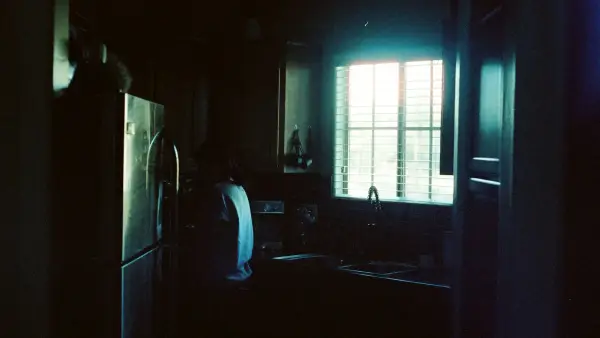
She's 56 and has quietly realized that the reason she rewrites every text message four times before pressing send is not carefulness and it is not perfectionism, it is thirty years of carrying a childhood where the wrong word said out loud could shift the entire temperature of the house, and her fifty-six-year-old fingers are still editing sentences on behalf of a girl who learned that language was the most dangerous thing she owned
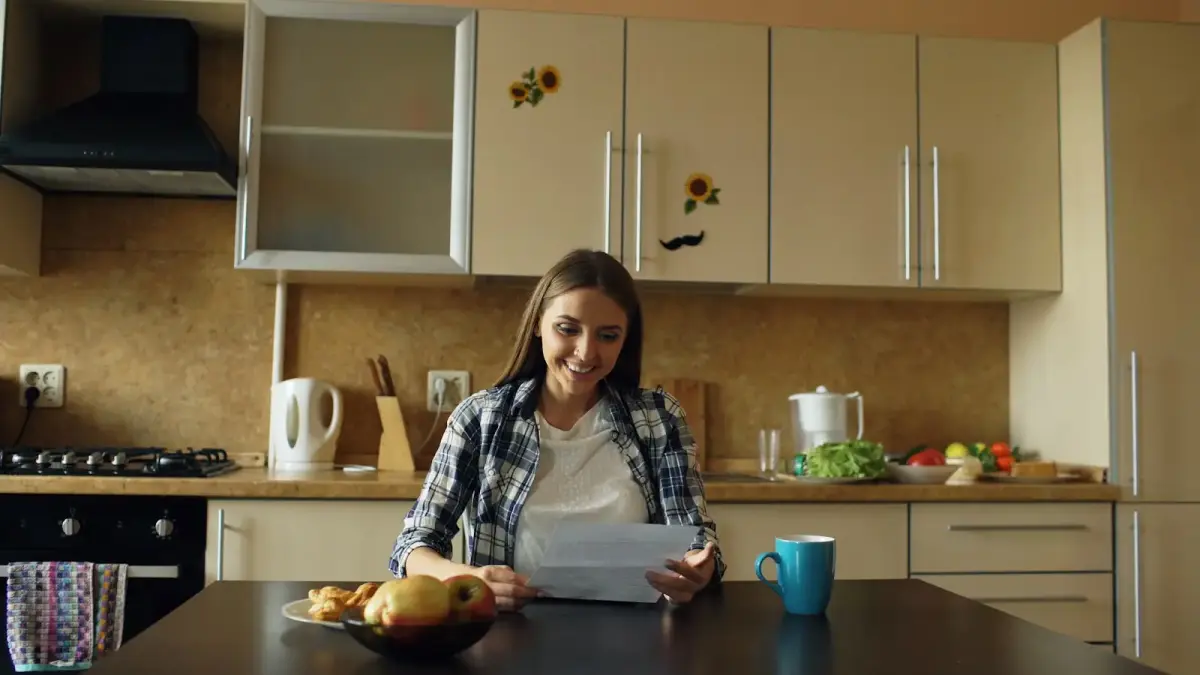
She typed “sounds good!” and then stared at it.
Too enthusiastic. The exclamation mark was doing too much. She deleted it and wrote “sounds good” - but now it felt flat, possibly cold, like she was annoyed. She added a period. “Sounds good.” No. That was worse. A period at the end of a two-word text is a kind of passive aggression she’d never intend but couldn’t guarantee wouldn’t be received.
She deleted the whole thing and started over.
“That works for me!” Warmer. But was it too agreeable? Was she being a pushover? Did it matter? This was a text about dinner plans with her sister. A Tuesday night, nothing important, nothing high-stakes.
And yet her thumbs were hovering. Still editing. Still running the sentence through some invisible filter that checks every word for sharpness, for ambiguity, for the chance - however small - that the person on the other end might read it wrong.
She pressed send on the fifth version. Then she put the phone face-down on the counter and exhaled like she’d just finished a presentation.
I know this woman. I’ve been this woman. And for most of my life, I thought this was just how careful people communicated. It took me decades to understand that what I was doing had nothing to do with carefulness and everything to do with a house where the wrong sentence could rearrange the emotional furniture of an entire evening.
The house where words had weather
There are homes where language is neutral. Where a child can say “I don’t want to” or “that’s not fair” and the room stays the same temperature. The parent might disagree. There might be a conversation. But the air doesn’t change.
And then there are homes where words have weather.
Where a sentence said at the wrong pitch, the wrong moment, with the wrong inflection, could turn a calm Tuesday into something you spent the rest of the week recovering from. Not necessarily through yelling - though sometimes that, too. More often through silence. Through the withdrawal of warmth. Through a parent whose face would shift in a way that told you the next three hours were going to be different now, and it was because of something you said.
You didn’t always know which word did it. That was the cruelest part. The rules weren’t consistent. Sometimes “I’m tired” was met with sympathy. Sometimes the same sentence, said in the same tone, triggered a lecture about ingratitude. You couldn’t map the pattern because there was no pattern. There was only a person whose emotional state was unstable, and a child who was trying, word by word, to avoid being the thing that tipped it.
A 2019 study published in the journal Development and Psychopathology found that children raised in unpredictable caregiving environments develop significantly heightened threat-detection systems - not just for physical danger, but for social and verbal cues. Their brains learn to scan language the way other children scan traffic before crossing the street. Constantly, automatically, without being asked.
This isn’t a disorder. It’s an adaptation. And for many of us, it worked. We learned to choose words with extraordinary precision. We kept the peace. We kept ourselves safe.
But the scanning never turned off.
What it looks like at fifty-six
By the time you’re in your fifties, this pattern has burrowed so deep that you can’t distinguish it from your personality. You think you’re just “someone who chooses words carefully.” You think you’re a thoughtful communicator, a person who values clarity. And you are those things - but you’re also something else.
You’re a person who cannot send a three-sentence email without reading it seven times.
Who rewrites a birthday card message until the pen runs dry and you start a new card.
Who drafts a text to a friend saying you can’t make brunch and then spends eleven minutes adjusting the tone so it doesn’t sound like rejection, or excuse-making, or a lie.
You’re a person who has, on more than one occasion, agonized over whether to use “sorry” or “apologies,” not because of grammar but because one might land softer, might be less likely to trigger something in the other person.
You proofread your grocery list. Not for accuracy - for tone.
And the exhausting part is that nobody knows you do this. From the outside, your messages arrive polished and warm. People tell you that you always know exactly what to say. They think this is a gift. They don’t see the seventeen deleted drafts behind every “hope you’re doing well.”
Dr. Martin Teicher, a researcher at Harvard Medical School, has spent years studying how early exposure to verbal unpredictability reshapes the brain. His work shows that regions involved in language processing and threat assessment become functionally intertwined in people who grew up in emotionally volatile homes. The same neural circuitry that processes the meaning of a sentence also runs it through a danger filter.
This means that for some of us, composing a text message activates the same part of the brain that once listened for a parent’s footsteps on the stairs.
The perfectionism that isn’t perfectionism
People will call this perfectionism. Therapists might call it anxiety. Friends will say you’re overthinking.
And you’ll nod, because those labels are close enough, and explaining the real thing would take longer than anyone wants to listen.
But what you’re actually doing is something more specific, more ancient, and more intelligent than any of those words capture.
You are performing real-time emotional risk assessment on every sentence you compose. You are running each word through a filter that asks not just “is this clear?” but “could this hurt someone? Could this be misread? Could this make someone go quiet in a way that means I’ve lost them?”
You’re not editing for grammar. You’re editing for safety.
And the person you’re trying to keep safe isn’t always the recipient. Often, it’s you. Because somewhere in your body, in the part of you that still remembers what happened when language went wrong, there is a belief that the wrong word can cost you a relationship. The wrong tone can turn love into silence. The wrong text, sent without enough revision, can undo everything.
Research by psychologist Patricia Zautra and colleagues, published in the Journal of Personality and Social Psychology, found that people raised in unpredictable emotional environments develop what she calls “affective complexity” - a heightened ability to hold multiple emotional states simultaneously. When you’re editing a text message, you’re not just thinking about what you mean. You’re simultaneously modeling what the other person might feel, what they might assume, what previous experiences they might filter your words through.
You’re holding four conversations at once - the one you intend, the one they’ll receive, the one they might misinterpret, and the one that would happen if misinterpretation turned into conflict.
That’s not anxiety. That’s a supercomputer of social cognition running in the background of a Tuesday afternoon text about dinner plans.
The girl who is still editing
Here’s what I want you to understand, if this is your story.
The woman who rewrites every message four times is not broken. She is not neurotic. She is not “too much.” She is the adult version of a child who figured out - brilliantly, resourcefully, at an age when she should not have needed to - that language was power, and power was dangerous, and the only way to survive dangerous power was to control it with absolute precision.
She became a linguist of emotional survival. She learned to read rooms the way meteorologists read pressure systems. She could feel a sentence land wrong before it finished leaving her mouth, and she trained herself to catch the dangerous ones before they got out.
And she carried that training into every email, every text, every voicemail, every handwritten note for the rest of her life.
That girl - the one who learned to measure every word - she’s still in there. She’s still sitting at the kitchen table, still listening for footsteps, still running each sentence through the filter. She doesn’t know the house is different now. She doesn’t know the people in her life aren’t going to withdraw if she uses the wrong word.
She’s doing her job. The one nobody asked her to do but she took on anyway, because someone had to keep the weather stable, and she was the only one small enough to believe that words were the lever.
Susan Cain, in her exploration of introversion and sensitivity, has written about how certain temperaments are uniquely shaped by early environments - not damaged, but sculpted. The quiet child in a volatile home doesn’t break. She specializes. She becomes the most attuned person in any room, the one who notices the micro-shift in someone’s expression before anyone else does.
That specialization came at a cost. But it also gave her something real.
What the rewriting actually is
I stopped seeing my text-editing habit as a flaw the day I realized what it actually represents.
It represents a person who cares enormously about how her words land. Not out of vanity, but out of deep respect for the fact that language shapes the emotional experience of the person receiving it. She knows this because she lived it. She was the person whose entire day could be shaped by a single sentence from someone who held power over her.
So she handles her own words with that same weight. Not because she’s fragile, but because she knows language isn’t fragile. She knows exactly how much it can carry, and exactly how much damage it can do when it’s careless.
The rewriting is not a symptom. It’s a value system.
It’s a fifty-six-year-old woman saying, with every draft she deletes and recomposes, “I will not do to you what was done to me. I will not let my words land without thought. I will not be careless with the thing I know is most powerful.”
That’s not dysfunction. That’s emotional architecture built by someone who was never given a blueprint but constructed something remarkable anyway.
Letting the girl rest
If you are this person - if you are reading this with your phone face-down on the table because you just spent four minutes editing a text that says “no worries, we can reschedule” - I want to offer you something.
You don’t have to stop doing this. You don’t have to train yourself out of it, rush through messages, or force yourself to send the first draft. If the editing feels like care, not compulsion, then it’s yours to keep.
But you might consider, just once in a while, noticing the moment when the editing shifts from care to fear. There’s a line between “I want this to land well” and “I’m afraid of what happens if it doesn’t.” You’ll feel it in your body. The first one feels like thoughtfulness. The second one feels like holding your breath.
When you notice the breath-holding, that’s the girl. That’s the child at the kitchen table, still checking the weather. And she deserves to hear, from you - the adult who survived and built a life and learned that most people don’t detonate when you say the wrong thing - that she can put the pen down.
Not forever. Just for this one text.
Just this once, she can press send without the fourth revision. She can let “sounds good!” exist in the world with its exclamation mark, imperfect and enthusiastic and a little too eager, and trust that the person on the other end will receive it as it was meant.
Which is to say: with warmth. With good intention. With the kind of care that most people don’t bring to their most important conversations, let alone their Tuesday night dinner plans.
You learned that words were dangerous. And then you spent a lifetime proving they could also be safe.
That’s not something to fix. That’s something to honor.