She is 56 and has realized she has never once sat in the front row of anything - not a lecture, not a concert, not a work meeting, not even her own daughter's school play - not because she prefers the view from the back or values a quick exit but because a girl whose visibility always attracted correction learned before twelve that the safest place in any room was the one where she could see everyone without anyone looking directly at her, and the back row at fifty-six is not humility but the last surviving architecture of a girl who was taught that being noticed was always the first step toward being told she was wrong
I noticed it last Tuesday at a poetry reading in the basement of a bookstore I love.
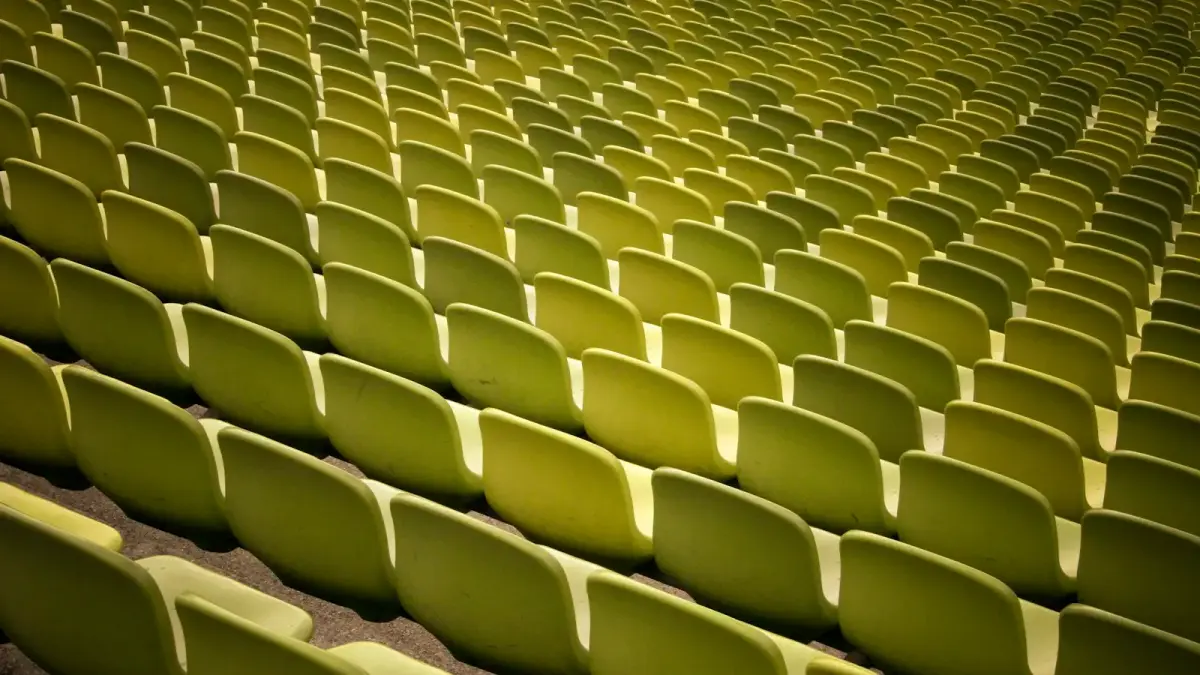
There were maybe forty chairs set up in neat rows, and the room was still mostly empty when I arrived. I could have sat anywhere. Front row, wide open. Second row, plenty of space. I walked past all of them and sat in the second-to-last row, near the wall, angled slightly toward the exit.
I didn’t think about it. I didn’t weigh my options. My body just walked there the way it has walked to the back of every room I have entered for as long as I can remember.
And then something cracked open. I sat down and thought - when was the last time I sat in the front row of anything? A conference. A church service. A classroom. A theater. My daughter’s third-grade holiday concert, where she sang a solo and I watched from the sixth row because the first five felt too exposed.
I am fifty-six years old and I have never once chosen the front.
Not once.
The inventory no one asks you to take
Once you see it, you cannot stop seeing it.
I started mentally cataloguing every room I had entered in the last year. Staff meetings where I chose the chair closest to the door. My book club, where I always sit on the couch tucked behind the coffee table. Airports, where I find the seat with my back against the wall and a full view of the terminal.
It looks like preference. It feels like preference. But preference is something you choose after considering the alternatives, and I have never once considered the front row as an alternative.
It was never on the menu.
A 2019 study published in the Journal of Personality and Social Psychology found that adults who experienced unpredictable correction in childhood - environments where attention led to criticism rather than care - develop what researchers call “visibility avoidance.” It is not shyness. It is not introversion. It is a deeply encoded spatial strategy: minimize visual exposure, maximize situational awareness.
I read that and felt my chest tighten. Not because it was new information. Because someone had named the floorplan I had been living inside for forty-four years.
What the back row actually is
People think the back row is about humility. About being unassuming. About not needing to be seen.
And maybe for some people it is.
But for me, the back row was never about modesty. It was about survival. It was the one place in any room where I could watch without being watched, where I could observe the mood of the room before the room had a chance to observe me.
When you grow up in a house where being noticed meant being corrected - where walking into a room too loudly or laughing at the wrong volume or wearing the wrong expression could trigger a lecture you did not see coming - you learn something about space that most people never have to learn.
You learn that visibility is exposure. And exposure is risk.
So you develop a map. An internal architecture of every room you enter. You find the seat where you can see the door. Where the light does not fall directly on your face. Where you can leave without anyone noticing you have gone.
You do this at eight. At twelve. At twenty-five. At fifty-six. And somewhere along the way, you stop knowing you are doing it at all.
The girl who learned before twelve
I was not a quiet child. That is the part people get wrong.
I was loud and curious and I wanted to be seen. I raised my hand in class. I sang in the car with the windows down. I wore bright colors and talked to strangers in the grocery store while my mother shopped.
But somewhere between nine and eleven, the feedback changed. Being noticed stopped leading to warmth and started leading to correction. Not cruelty - nothing that would have made a headline. Just a steady, grinding recalibration.
You are too much. You are too loud. You are drawing attention. People are looking. Sit down. Be still. Stop making a scene.
No single sentence was devastating. But the accumulation was. Dr. Gabor Mate has written about how children do not need to experience dramatic trauma to reshape their nervous systems - they just need the consistent message that who they are, unedited, is somehow inconvenient.
I got that message in hundreds of small moments. A look across the dinner table. A sigh when I entered a room too energetically. The way my name was said - not yelled, just weighted with exhaustion.
By twelve, I had solved the equation. The variable was me. The solution was less of me. And the back row was where less of me could exist without consequence.
What it costs to be invisible by design
Here is what no one tells you about spending forty years in the back of the room: it works.
You do not get corrected. You do not get singled out. You do not attract the kind of attention that used to make your stomach drop.
But you also do not get seen.
You do not get promoted as quickly because you do not sit at the table where the decisions are made. You do not get asked for your opinion because people forget you are in the room. You do not get invited to the things that matter because your absence is so seamless it barely registers.
A 2022 study in Frontiers in Psychology found that adults with chronic visibility avoidance - people who habitually position themselves at the periphery of social spaces - report higher rates of professional stagnation, relational dissatisfaction, and a persistent feeling researchers described as “ghost syndrome”: the sense that you are present in your own life but not quite participating in it.
I read that phrase - ghost syndrome - and had to put my phone down for a while.
Because that is exactly what it feels like. You are there. You showed up. You did the thing. But you did it from behind glass, from the back row, from the seat where no one’s eyes land naturally.
You watched your daughter sing her solo from six rows back. You were there. You were proud. But you were also invisible, by your own design, and your daughter looked out into the audience searching for your face and you will never know if she found it.
That is the cost. Not dramatic. Not cinematic. Just a lifetime of almost-being-there.
The difference between choosing the back and being sent there
I want to be careful here, because I am not saying that every person who sits in the back row is carrying childhood wounds. Some people genuinely prefer it. Some people have bad eyesight. Some people like being near the door because they have small bladders and no shame about it.
The difference is in the choosing.
If you sit in the back and feel content, that is preference. If you sit in the back and feel safe, that is something else entirely.
Safety is not the same as comfort. Safety is the absence of a threat you are still scanning for. And if you are fifty-six years old and still scanning every room you enter for the seat where you are least likely to be noticed, you are not exercising a preference. You are running a program that was installed before you were old enough to understand what it was protecting you from.
Susan Cain’s work on introversion has been transformative, and I admire it deeply. But what I am describing is not introversion. Introversion is a trait. This is a strategy. Introversion is how you recharge. This is how you survive.
And the tragedy is that the threat is gone. The dinner table that required you to be smaller does not exist anymore. The parent whose sigh could flatten you is either changed or absent or deceased. The room is safe.
But your body does not know that. Your body is still eight years old, still walking past the front row, still heading for the chair where no one will look at you directly.
What it looks like to walk forward
I did something last month that I have never done.
I went to a lecture at the community college - something about creative writing, nothing high-stakes - and I sat in the third row.
Not the front row. I am not there yet. But the third row, which for me might as well have been the stage.
My heart rate was elevated for the first fifteen minutes. I kept glancing behind me to see if anyone was watching. I felt exposed in a way that was entirely disproportionate to the situation. I was a middle-aged woman at a free lecture. No one cared where I sat.
But my body cared. My body thought I had done something reckless.
And then the lecture started, and I got absorbed in it, and twenty minutes later I realized I had forgotten to be afraid. I was just there. In the third row. Listening. Visible.
It was such a small thing. But it was the first time in forty-four years that I chose a seat closer to the front of anything.
I do not think healing looks like leaping into the front row and demanding to be seen. I think it looks like inching forward, one row at a time, and noticing that the correction you braced for does not come.
You were never too much
If you read this and recognized yourself - if you have spent decades choosing the back of the room without ever questioning why - I want you to sit with something for a moment.
You were not too much. You were a child in an environment that could not hold all of you. And so you made yourself smaller, and you found the places where smaller could exist without pain, and you have been returning to those places ever since.
That is not a flaw. That is one of the most intelligent things a child can do.
But you are not a child anymore. And the room you are sitting in right now - whatever room it is - is probably safer than the one where you first learned to disappear.
You do not have to sit in the front row tomorrow. You do not have to sit in the front row ever, if you genuinely do not want to.
But if you have been choosing the back out of something that feels less like preference and more like reflex - if you could not explain why you always sit where you sit but you know, somewhere underneath the explanation, that it has something to do with a version of you who was told she was too visible - then maybe the next time you walk into a room, you pause.
You look at the front row. You look at the second row. You notice that they are just chairs.
And then you choose. Actually choose. For the first time in your life, you let the decision be yours.
That is not a small thing. For someone who spent forty-four years in the back of every room she entered, choosing where to sit - truly choosing - might be the most radical act of self-trust she has ever performed.
The front row will be there when you are ready. And the girl who learned to disappear? She is still in there, watching from the back, waiting to see if it is finally safe to come forward.
It is. It has been for a long time. She just needed someone to tell her.