She's 58 and has finally noticed the sound she makes every time the last person leaves her house - a long, slow exhale through her nose, shoulders dropping, eyes closing for exactly three seconds - because a girl who shared a bedroom with two sisters until she was seventeen learned that the body could not release until the room was truly empty, and that exhale was the only signal her nervous system ever trusted that she was finally off duty
I heard it for the first time last Tuesday. Not because it was new - because I finally got quiet enough to notice.
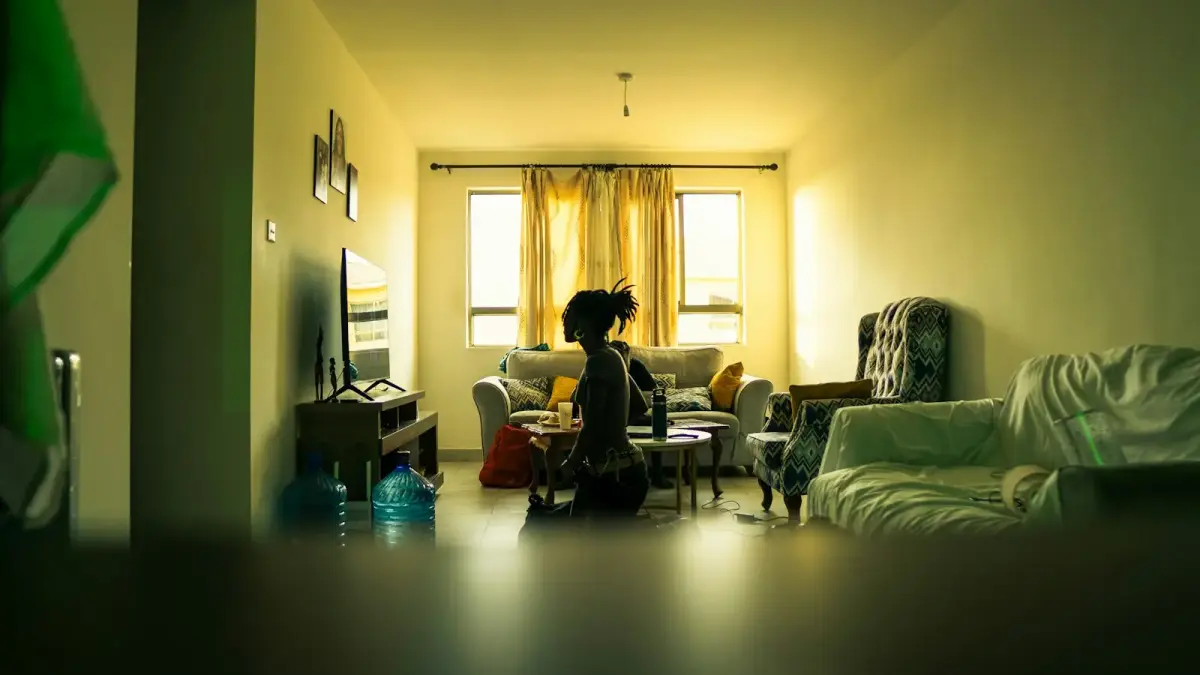
The front door closed behind my daughter, who’d stopped by for coffee and stayed for two hours. I stood in the kitchen with a mug still warm in my hand, and my body did something it has apparently been doing for decades. A long exhale through my nose. My shoulders dropped - not a little, but that full descent where you realize they’d been living somewhere near your earlobes. My eyes closed. Three seconds. Maybe four.
Then I opened them, and the house was mine.
My husband caught it once, years ago. He’d come back inside to grab his wallet and found me standing in the hallway with my eyes shut, breathing like I’d just set down something enormously heavy. “Are you okay?” he asked, genuinely concerned. I said yes, because I was. I just didn’t know how to explain that what he’d witnessed wasn’t exhaustion. It wasn’t sadness or relief that he’d left. It was something I didn’t have language for until very recently.
It was the sound of arriving at myself.
The bedroom that taught my body to wait
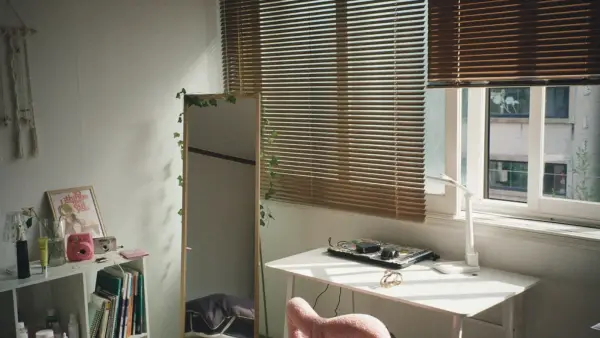
I shared a bedroom with two sisters until I was seventeen years old. Lauren was fourteen months older, Katie was three years younger, and the room was roughly the size of a generous parking space.
There was no privacy in that room. Not the kind built into walls and doors, anyway. Privacy was something you carved out of time - those twenty minutes after everyone else fell asleep but before your own tiredness won. That narrow window was everything. It was when I thought my actual thoughts. When my face could stop performing.
I learned something in that room that I’ve carried in my muscles ever since. I learned that my body could not truly let go until the space was verified empty. Not probably empty. Not almost empty. Empty.
Katie breathed loudly in her sleep, which was actually useful because it meant I always knew when she’d crossed the line from pretending to actually unconscious. Lauren was trickier. She’d lie still for twenty minutes and then suddenly say something like “Do you think Ryan Morrison likes me?” and my solitude would collapse.
So I developed a system. I’d wait. I’d listen. I’d check the quality of the silence - not just for sound, but for that particular density that a room has when every consciousness in it except yours has gone offline.
And when I was sure - truly sure - my body would release. The exhale. The shoulders. The three seconds of closed eyes.
I was eleven when that ritual started. I’m fifty-eight now. It hasn’t changed.
What the nervous system remembers
Here’s the thing about growing up without enough space: your body learns a specific definition of “safe” that has nothing to do with danger.
I was never unsafe in that bedroom. My sisters weren’t threats. My parents were kind, the house was stable, and no one was going to hurt me. But my nervous system didn’t care about any of that. It had its own criteria. Safe meant alone. Safe meant no one was about to need something from me - a response, an opinion, a performance of being awake and available.
A 2019 study published in the Journal of Research in Personality found that introverts don’t just prefer solitude - they show measurable physiological decompression when social stimulation is removed. Heart rate decreases, cortisol drops, and the parasympathetic nervous system activates in ways that don’t occur when other people are present, even if those other people are silent and making no demands whatsoever.
The researchers called it “restorative solitude.” I call it what my body has been chasing since middle school.
Because the issue was never the people. The issue was that my nervous system had learned to treat every human presence as an open loop. Someone is here. They might need something. Stay ready. And “stay ready” meant my shoulders stayed up, my breathing stayed shallow, and some part of my brain kept running a background process labeled “monitoring.”
The exhale happens when that process finally shuts down.
The rituals nobody talks about
I started paying attention after I noticed my own exhale, and I began asking other introverts from big families what their version looked like.
My friend Diane, who grew up one of five kids in a three-bedroom house, told me she does a specific thing with her hands every time her husband leaves for work. She spreads her fingers wide, like she’s releasing something she’d been gripping. She’s been doing it for thirty years and only became aware of it when her daughter pointed it out.
Another friend, Tom, said he walks a circuit of his apartment every time his last guest leaves. Living room, kitchen, bedroom, bathroom. He’s not checking for anything. He’s verifying emptiness. His body needs the confirmation before it will stand down.
These aren’t quirks. They’re not cute personality traits or funny habits. They’re the physical residue of childhoods where solitude was never guaranteed - where the body learned that relaxation required proof.
Susan Cain wrote about how introverts in overstimulating environments develop what she called “restorative niches” - physical or temporal spaces where they can return to baseline. What she didn’t quite name, but what I’ve come to understand, is that for those of us who grew up without reliable access to those niches, the body builds its own portable version. A breath. A gesture. A three-second ritual that says: the room is clear. You can come back now.
Permission is not the same as capacity
My house has three bedrooms, two bathrooms, a living room, a kitchen, and a study that is entirely mine. I have more private space at fifty-eight than I accumulated in the first seventeen years of my life combined.
And yet.
The exhale still happens. The shoulders still drop. The eyes still close. Because the ritual was never really about square footage. It was about permission.
When you grow up sharing space with people you love but whose presence keeps your nervous system on a low hum of alert, you learn that having space and feeling permitted to use it are two different things. The spare bedroom in my house has been empty for three years. I still don’t go sit in it while company is over. I still wait.
A 2021 study in Frontiers in Psychology examined what the researchers called “residual social monitoring” - the tendency of introverts to continue tracking social cues even when those cues are no longer present. Participants who scored high on introversion took significantly longer to physiologically return to baseline after social interaction, and the delay was more pronounced in those who reported childhood environments with limited privacy.
The body remembers what the mind has moved past. My mind knows the house is mine. My body still needs the exhale to believe it.
The all-clear that only you can give
My daughter asked me recently why I never seem to relax when people are visiting, even people I genuinely love.
I told her the truth, which is that I’m not not-relaxed. I’m just running two programs at once. There’s the one that’s enjoying the conversation, laughing at her stories, savoring the coffee. And there’s the older one - the one installed in a cramped bedroom in 1979 - that’s tracking how many people are in the house and calculating when I’ll get to exhale.
She looked a little sad when I said that, and I wanted to take it back. Not because it wasn’t true, but because she heard it as a burden and I meant it as a fact. The way you might say “I always sleep on the left side of the bed” or “I can’t eat cantaloupe.” It’s just how I’m built.
Daniel Goleman’s work on emotional self-regulation suggests that these kinds of automatic physiological responses aren’t flaws in the system. They’re evidence that the system worked. My nervous system developed a protocol for managing overstimulation when I was too young to manage it consciously, and it worked so well that it’s still running decades later, even though the conditions that created it have long since changed.
The exhale isn’t dysfunction. It’s loyalty. My body is still protecting eleven-year-old me, still running the old program, still waiting for the all-clear before it lets its guard down.
The sound of arriving
I don’t think I want the exhale to stop.
That surprised me when I first realized it. I thought noticing it would be the first step toward fixing it - toward training myself to relax in real time, to let my shoulders drop while people are still in the room, to breathe fully regardless of how many consciousnesses are present.
But that’s not what happened. What happened is that I started to feel grateful for it.
Because that exhale - that particular sound, that specific release - is the most honest thing my body does all day. It’s the moment where the performance ends and I start. Not the version of me that’s someone’s mother, someone’s wife, someone’s friend, someone’s colleague. Just me. The one who existed in that narrow window between everyone falling asleep and my own exhaustion winning.
She’s still in there. Fifty-eight years old and still waiting for the room to clear.
And every evening, when the last voice fades and the last door closes and the house settles into that particular density of silence that means I’m truly alone - she exhales.
Not because she’s tired.
Because she’s finally here.
If you have your own version of that exhale - a ritual your body performs when the space is finally yours - I want you to know something. It’s not a flaw. It’s not social anxiety or an attachment wound or evidence that you love people less than you should.
It’s your nervous system’s way of saying: I kept you safe in there. I kept watch. I rationed your solitude when there wasn’t enough to go around, and I built you a signal so you’d always know when you could stop holding.
You’re not broken for needing the room to empty before you can breathe.
You’re just someone whose body learned early that peace has a sound. And every time you make it, you’re coming home.