She is 59 and just realized she narrates everything she does out loud - 'I'm just going to move this over here,' 'Let me just grab that real quick,' 'I'll be right back' - not because she is talking to anyone in particular but because a girl who grew up in a house where sudden movements startled people and appearing in a doorway without warning could change the temperature of the entire room learned that a woman's body is only safe when it has been announced, and the woman who cannot cross her own kitchen at fifty-nine without a running commentary is not absent-minded but still making herself predictable for a room that stopped being dangerous thirty years ago
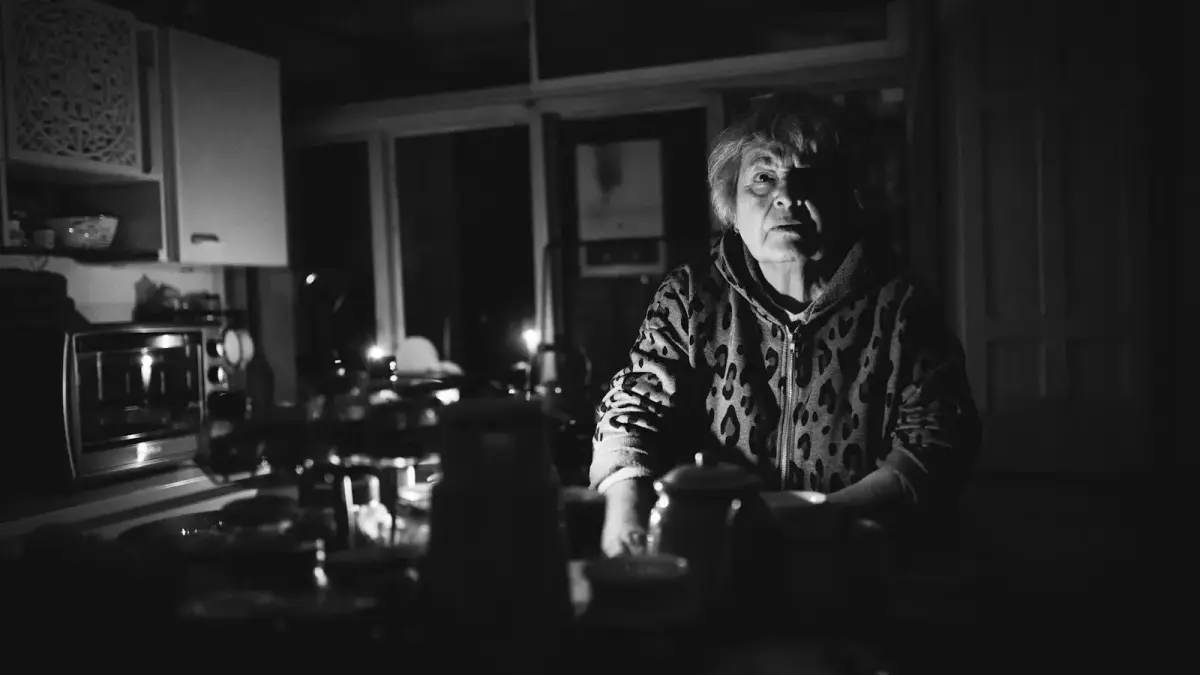
I was standing in my kitchen last Tuesday morning, alone, making coffee. Nobody else was in the house. Nobody else has been in the house for three years.
And I heard myself say, out loud, to absolutely no one: “I’m just going to move this over here.”
I was moving the sugar bowl. Six inches to the left. In my own kitchen. In my own home. And I announced it like I was requesting clearance from air traffic control.
I stood there with my hand on the sugar bowl and something shifted in my chest. Not a big emotional moment. More like a quiet click. The sound of a pattern finally becoming visible after fifty-nine years of being invisible.
Because it wasn’t just the sugar bowl. It’s everything. It has always been everything. “I’m just going to grab that.” “Let me just scoot past you.” “I’ll be right back, I’m just going to the bathroom.” I narrate every movement I make, in every room I enter, whether or not a single person is there to hear it. And until that Tuesday morning, I thought it was a quirk. Something endearing, maybe. A little scattered. A little chatty.
It is none of those things. It is the sound of a girl who learned, very early, that a body moving through a house without warning was a dangerous thing.
The house where silence was loaded
I grew up in a home where the air had weight. You could walk through the front door after school and know, before anyone spoke, what kind of evening it was going to be.
My mother was not cruel. I want to say that clearly because this is not a story about monsters. My mother was anxious, overwhelmed, raising three children mostly alone, and running on a nervous system that had been frayed long before I was born.
But in that house, stillness was never peaceful. Stillness was a held breath. And a sudden sound - a door closing too hard, a child appearing in the kitchen doorway without warning, a glass set down on the counter a little too loudly - could change everything.
Not violently. Not always. But the temperature would shift. The face would change. The energy in the room would go from neutral to charged, and you learned very quickly that your job, as a small person in that house, was to never be the thing that caused the shift.
So I started narrating.
“I’m just getting some water.” “I’m going upstairs now.” “I’m just going to sit over here.” Every movement announced before it happened. Every entrance into a room preceded by sound. I made myself predictable because predictable was safe, and safe was the only thing that mattered when you were eight years old and the weather inside your house changed faster than the weather outside it.
The word “just”
If you listen carefully to women who narrate their movements, you will notice one word more than any other.
Just.
“I’m just going to move this.” “Let me just grab that.” “Just going to scoot past you.” “I just need to get something from the other room.”
That word is doing enormous work. It is not filler. It is a minimizer. It shrinks the request. It makes the movement smaller, less intrusive, less likely to bother anyone. It says: I know I am taking up space right now, and I want you to know that I know, and I am making myself as small as possible while I do it.
A 2021 study published in the Journal of Personality and Social Psychology found that individuals raised in unpredictable home environments develop heightened self-monitoring behaviors that persist well into adulthood. They become expert readers of rooms, constantly scanning for shifts in mood, and they develop elaborate strategies for making their own presence less disruptive.
The word “just” is one of those strategies. It is an apology disguised as a conjunction. It says: I am sorry for having a body that needs to move through this space. I will try to need less room.
I have said the word “just” tens of thousands of times in my life. I have never once meant it casually.
The narration that followed me everywhere
The thing about survival behaviors is that they do not retire when the danger does. They just find new rooms to operate in.
At work, I narrated constantly. “I’m just going to step out for a minute.” “Let me just print this real quick.” “I’m just going to close this door - not because anything’s wrong, just for the noise.” I watched coworkers move through offices like they had a right to be there - standing up without explanation, walking to the printer without a soundtrack, leaving a room without telling anyone where they were going - and I genuinely did not understand how they did it.
How do you just stand up? How do you just walk somewhere? How do you move through a space without telling it you’re coming?
With friends, the narration softened into something that looked like politeness. “I’m just going to grab another drink, does anyone need anything?” “Let me just move my bag so you have more room.” “I’ll be right back, I just need to use the restroom.” Always smoothing. Always pre-explaining. Always making sure that my movement through any shared space was accompanied by enough context that no one would be startled, confused, or disrupted by my body doing what bodies do.
And then, alone in my kitchen at fifty-nine, narrating the relocation of a sugar bowl to an audience of exactly no one.
That is when I understood. The narration was never about being polite. It was never about being scattered or chatty or a little absentminded. It was about safety. It was about making sure every room I entered knew I was coming, and every room I left knew I was going, and every space I moved through had been given sufficient warning that a woman’s body was about to do something as radical as open a cabinet.
The nervous system that never got the memo
Dr. Bessel van der Kolk’s research on trauma and the body has shown that the nervous system stores survival responses long after the conscious mind has moved on. Your brain might know that the house you live in now is safe. Your body is not so sure.
This is why the narration continues. It is not a thought process. I do not decide to announce myself. I do not weigh the options and conclude that the empty kitchen needs to know I’m reaching for a mug. The narration is automatic, embedded in the same layer of response as flinching or pulling your hand from something hot.
A 2019 study in Frontiers in Psychology found that adults who grew up in emotionally unpredictable households show increased activity in brain regions associated with threat detection and self-regulation, even in objectively safe environments. Their nervous systems remain calibrated for a world that no longer exists. They are running old software in new rooms.
That is exactly what the narration is. Old software. A program that was written by a brilliant, terrified eight-year-old girl who figured out that if she made herself predictable enough, the room might stay calm. And it worked. That program kept her safe. It read the room and adjusted her presence and made sure she never became the unexpected thing that tipped the balance.
The problem is that the program never received the update that says: you are fifty-nine years old, you live alone, and the room is not going to change temperature because you opened a drawer.
What the narration really is
I used to feel embarrassed about it. The way I would catch myself talking to an empty car. Narrating my way through a grocery store. Telling my own bathroom mirror that I was “just going to wash my face real quick.”
I don’t feel embarrassed anymore.
Because when I look at it clearly, the narration is not a flaw. It is not a disorder. It is not evidence of being scattered or anxious or strange. It is the most sophisticated safety system a child could build with the materials she had available.
She didn’t have power. She didn’t have control over the adults in her house. She didn’t have the ability to make the moods stop shifting or the tension stop building. But she could control one thing: how her own body moved through space. She could make it gentle. She could make it announced. She could make it so thoroughly narrated that no one would ever be caught off guard by her existence.
That is not weakness. That is engineering. That is a small girl looking at an impossible environment and building, from nothing, a system that kept her safe enough to grow up and stand in her own kitchen fifty-one years later.
The system deserves respect, even as I learn to let it go.
Learning to move through a room in silence
I have been practicing something small. In the mornings, in my kitchen, when I am alone. I try to make coffee without narrating it. I try to open the cabinet and reach for a mug and set it on the counter without telling the room what I am doing.
It is surprisingly hard.
The impulse rises every time. The words gather at the back of my throat - “I’m just going to…” - and I have to consciously let them pass. It feels strange, almost reckless. Like walking through the house with the lights off. Like moving through the world without a safety net.
But there is also something underneath the strangeness. Something that feels like freedom. The freedom of a body that does not have to explain itself. The freedom of a woman who is allowed to exist in a room without a running press conference about her intentions.
I am fifty-nine. I have been narrating my way through every room I have entered for most of my life. And I am only now learning that I am allowed to move through my own home like someone who belongs there.
Not announced. Not explained. Not minimized with a “just.”
Simply here.
If you recognize yourself in this - if you are the woman who cannot walk past someone without explaining where you’re going, if you narrate your own movements to empty rooms, if the word “just” appears in nearly every sentence you speak - I want you to know something.
You are not scattered. You are not strange. You are not too much or too chatty or too anxious.
You are the girl who figured out how to survive a room that could change at any moment. And you did survive it. You are standing in your own kitchen, in your own home, in your own life. The room is safe now.
You are allowed to move through it quietly.