She is 59 and just realized she has never once taken a sick day without doing something productive - not the flu that kept her on the couch answering emails, not the surgery recovery where she reorganized the pantry from her wheelchair, not even the day she buried her father and still drove home to cook dinner for her family - because a girl who watched her mother push through a 102-degree fever to make sure everyone else was fed learned that a woman's pain is not a reason to stop but merely an obstacle to work around, and the woman at fifty-nine who answers work emails from the emergency room waiting area is not dedicated but still following a rule that was never spoken and never expires
The Flu That Wasn’t Really a Sick Day
I was thirty-seven the first time a doctor looked me in the eye and said, “You need to stay in bed for at least three days.”
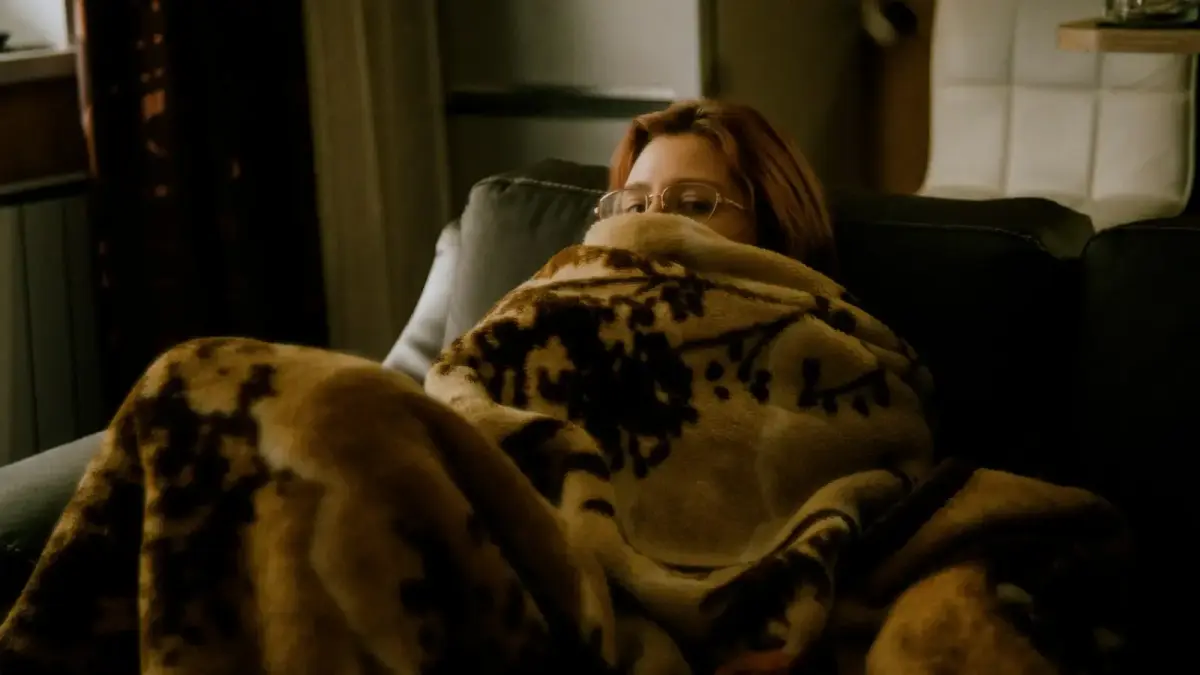
I nodded. I went home. I got under the covers with my laptop and answered fourteen emails before lunch. By two o’clock I had reorganized my entire inbox filing system, drafted a permission slip for my daughter’s field trip, and called the plumber about the kitchen faucet that had been dripping since September.
My fever was 101. My body ached in places I didn’t know had nerve endings. And somewhere between email number six and the plumber’s hold music, I remember thinking - not with frustration, not with resentment, but with something close to pride - “At least I’m not wasting the day.”
I didn’t question that thought. It felt as natural as breathing. A sick day was not a day of rest. It was a day of adjusted productivity. You simply moved your tasks from the office to the couch and congratulated yourself on your resilience.
I am fifty-nine years old, and I have never once experienced illness as permission to stop.
Every Sick Day Has a Project
When I had the flu in 2009, I answered emails from the couch for six hours straight. My husband brought me soup and Tylenol. I thanked him without looking up from the screen.
When I had knee surgery in 2015, I spent my recovery reorganizing the entire pantry from my wheelchair. I labeled every shelf. I sorted cans by expiration date. My physical therapist said I was healing well, and I remember thinking it was because I hadn’t let myself get lazy.
When my father died in 2019, I sat beside his body in the hospice room for exactly forty-five minutes. Then I drove two hours home, walked into my kitchen, and cooked a full dinner for my husband and adult children. Roast chicken. Green beans. The good plates. Someone asked if I needed to sit down and I said, “Sitting down is what I’ll do after I eat.”
I didn’t cry that night. I cleaned the kitchen instead. I scrubbed the stovetop until the burner grates shone, and when I finally went to bed at eleven, I remember feeling not grief but something like accomplishment. I had kept everything running. My father was gone, and dinner was still on time.
It has taken me twenty more years to understand what I was actually doing in that kitchen.
The Lesson She Taught Without Saying a Word
My mother was the kind of woman people called “strong” at her funeral, which is the word we use for women who suffered visibly and never stopped moving.
She had the flu once when I was nine - real flu, the kind that turns your face the color of wet cement. Her fever was 102. I know because she told my father that number while she was standing at the stove, stirring soup for my brother and me. He said she should go to bed. She said the soup needed ten more minutes.
She didn’t go to bed after the soup, either. She washed the dishes. She laid out our school clothes for the morning. She checked my homework folder.
I watched her do all of this from the hallway, and I absorbed a lesson that she never intended to teach and I never consciously decided to learn. The lesson was this: a woman who is sick is not a woman who rests. She is a woman who keeps going, only slower. Her pain is not a reason to stop. It is merely an obstacle to work around.
A 2021 study published in the Journal of Health Psychology found that women are significantly more likely than men to continue caregiving tasks while ill, and that this pattern intensifies in women who grew up watching their mothers model the same behavior. The researchers called it “inherited caregiving obligation” - the unconscious belief that being needed supersedes being unwell.
My mother didn’t tell me that my pain didn’t matter. She showed me that hers didn’t. And for a little girl watching her mother’s hands shake while she stirred that soup, the translation was instant and permanent: this is what women do. This is what love looks like. You keep going.
The Rule That Was Never Spoken
Here is what I understand now, at fifty-nine, that I could not have understood at thirty-seven on my couch with my laptop and my fever.
I was not being productive. I was being obedient.
Every email I answered from the couch was not efficiency. It was proof. Proof that I was still useful, still needed, still earning my right to take up space on that couch in the middle of a Tuesday. Every task I completed from my wheelchair was not determination. It was a toll I was paying for the privilege of being injured.
Because somewhere in the architecture of my childhood, a rule was written that no one ever said aloud. The rule was: rest is for people who have finished everything. And for women like my mother - and therefore for women like me - everything is never finished.
There is always another dish in the sink. Another email to answer. Another child to feed, another shelf to organize, another piece of someone else’s life to hold in place. And if you are lying down while any of that remains undone, you are not resting. You are failing.
A 2019 study in Psychological Science found that women report feeling significantly more guilt during periods of rest than men do, and that this guilt is strongly correlated with having internalized the belief that their value is tied to their usefulness to others. The researchers noted that this guilt often operates below conscious awareness - women feel anxious during rest without being able to articulate why.
I can articulate why now. The anxiety I feel when I am sick and not producing is not about the work itself. It is about the terrifying possibility that if I stop, I will discover that stopping was always an option - and that I chose suffering instead, not because I had to, but because I believed I was supposed to.
The Emergency Room and the Inbox
Two years ago, I was in the emergency room with chest pains that turned out to be a severe panic attack. My heart was racing. A nurse was attaching electrodes to my chest. And I was checking my work email on my phone.
My daughter saw me do it. She didn’t say anything sharp or disappointed. She just reached over and gently took the phone from my hand and set it face-down on the gurney. Then she held my hand and said, “Mom, you’re allowed to just be here.”
I cried harder than I cried the night my father died. Not because I was scared about my heart, though I was. But because some part of me - a part buried so deep I didn’t know it existed - heard those words and recognized them as something I had been waiting to hear for fifty years.
You’re allowed to just be here. Not producing. Not organizing. Not proving that your pain hasn’t made you useless. Just here. Just a person in a body that hurts, being held by someone who loves you regardless of whether dinner is on time.
That was the first moment I understood that what I had always called “staying strong” was actually something else entirely. It was staying useful. And those are not the same thing.
What She Gave You and What You Can Set Down
If you are reading this and you recognize yourself - if you have never taken a sick day that was actually a sick day, if you have reorganized closets through fevers and answered emails through grief and cooked full meals through heartbreak - I want you to hear something.
You are not broken. You are not a workaholic. You are not even particularly stubborn, though people have probably called you that with admiration in their voices.
You are a woman who learned, very young, what it looked like when a woman’s body was in pain and the world didn’t stop. You watched someone you loved push through it, and you understood - without anyone explaining it - that this was the price of being female and needed and good.
Dr. Kristin Neff’s research on self-compassion, published across multiple studies in the Journal of Personality and Social Psychology, has consistently found that women who struggle with self-care often have deeply internalized beliefs about worthiness that predate their adult lives. The pattern is not about discipline or habit. It is about identity. Resting feels dangerous because, on some level, resting means becoming the kind of woman who lets people down.
But here is what your mother probably never told you, because no one ever told her.
A woman in pain who rests is not letting anyone down. She is doing something radical. She is breaking a rule that was written in a language no one can read and enforced by a guilt no one can name.
The Sick Day She Never Took
I am fifty-nine years old. Last month I had a bad cold - nothing serious, just the kind that makes your head feel like it’s wrapped in wet cotton. And for the first time in my adult life, I did something I have never done before.
I stayed in bed. Just stayed there. No laptop. No phone. No reorganizing anything.
I slept until ten. I stared out the window at the oak tree in our backyard for a while. I ate toast that my husband brought me and I didn’t get up to wash the plate. I let it sit on the nightstand with crumbs on it, and I did not once reach for my phone to check if anyone needed me.
It was the hardest thing I have ever done. Harder than the knee surgery. Harder than the night my father died. Because every hour, something inside me whispered that I was wasting the day, that there were things to do, that the house was falling apart without me even though the house was perfectly fine.
But I stayed. And somewhere around three in the afternoon, lying in my bed doing absolutely nothing while the light moved across the ceiling, I felt something I had not felt in a very long time.
I felt like a person. Not a function. Not a role. Not a woman earning her right to occupy space. Just a person, in a body, resting because her body asked her to.
My mother never got to feel that. She pushed through every fever, every ache, every exhaustion, because the rule said she had to. She died at seventy-one, and I don’t think she ever once lay in bed in the middle of a Tuesday and simply let herself be still.
I can’t give her that day back. But I can stop pretending that her way of living was strength. It was survival. And the most loving thing I can do with what she taught me - all of it, the good and the inherited pain - is to set down the parts that were never meant for me to carry.
You are allowed to be sick and do nothing about it. You are allowed to let the dishes sit. You are allowed to take a sick day that is actually, fully, completely a day of being sick.
Not because you have earned it. Because you have always deserved it.