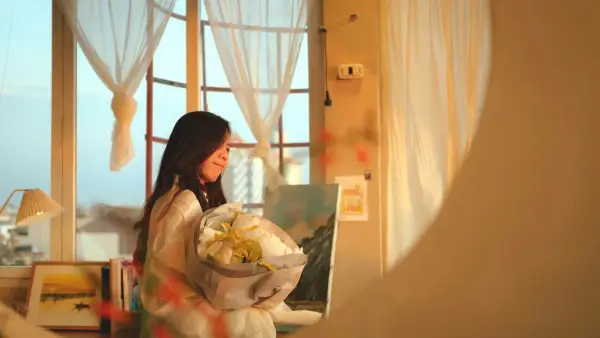
She's 60 and has realized she has never once in her life been the first person to sit down at her own dinner table - she has spent forty years serving plates, pouring drinks, fetching the forgotten napkin, going back for the salt, and by the time she finally sits the conversation is already underway and nobody notices she has arrived, because they never noticed she was missing, and the meal she made with her own hands is the one she always eats cold
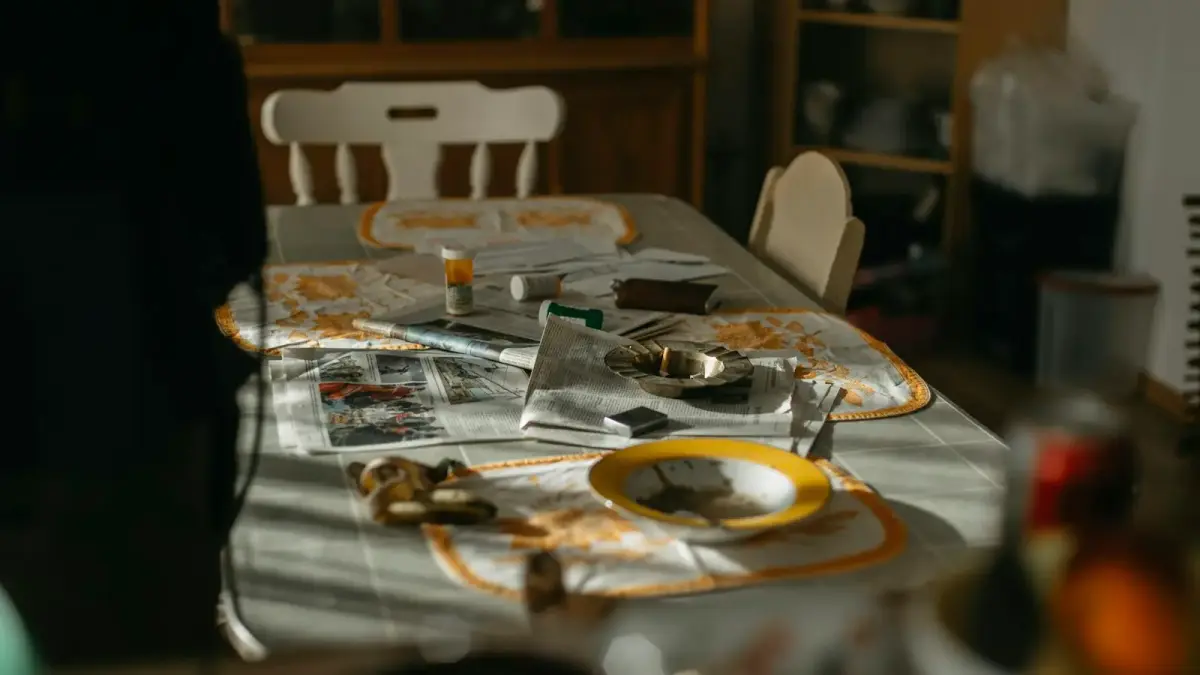
The first time I noticed it, I was fifty-eight.
Thanksgiving. The turkey was finished, the gravy was warm, the rolls were in the basket with the cloth folded just right. I had been in that kitchen since six in the morning.
My feet ached. My lower back had that deep, hot pulse it gets when I’ve been standing too long, and I ignored it the way I’ve always ignored it - by getting one more thing done.
I carried the last dish to the table, set it down between the cranberry sauce and the green beans, and looked up. Everyone was already seated. My husband, my two daughters, my son-in-law, my grandchildren.
They were laughing about something. Passing the bread. Someone had already started cutting into the turkey.
No one had waited for me.
I don’t mean they were being rude. I mean it didn’t occur to them. Not because they don’t love me - they do.
But because I had spent so many years being the woman who was always in the kitchen, always fetching something, always one trip away from sitting down, that my absence from the table wasn’t an absence at all. It was the normal state of things. My empty chair was just part of the furniture.
I pulled out my chair, sat down quietly, and started eating. The food was lukewarm by then. It usually is.
And something inside me cracked - not loudly, not dramatically. More like ice in early spring. A slow fracture along a line that had been forming for forty years.
The chair that was never warm
I started thinking about it after that Thanksgiving. Not obsessively, but persistently - the way your tongue keeps finding a chipped tooth.
How many meals had I cooked in forty years of marriage? I tried to do the rough math one morning. Even conservatively - even if I only counted dinners, even if I subtracted vacations and the odd night we ordered pizza - the number was somewhere north of twelve thousand.
Twelve thousand meals. And I could not remember a single one where I sat down first.
Not once. Not on my birthday. Not on Mother’s Day. Not on the Christmas where I had pneumonia and still made the ham because my husband didn’t know where I kept the roasting pan, and it felt easier to just do it myself than explain.
It wasn’t just the cooking. It was the whole invisible choreography of the meal. Setting the table. Filling water glasses. Remembering that one child doesn’t like her food touching and another needs a smaller fork. Getting up mid-meal for the ketchup, the butter, the thing someone forgot they wanted until they saw what was on the plate.
A 2005 study published in the American Sociological Review found that women in heterosexual partnerships spend, on average, nearly twice as many hours on household labor as their partners - but what struck me most was the study’s distinction between visible and invisible work. Visible work is what you can see: mopping a floor, mowing a lawn. Invisible work is the anticipation, the planning, the emotional tracking of everyone’s needs before they voice them. The researchers called it “cognitive labor,” and it landed in my body like recognition, not information.
I had been doing cognitive labor since I was twenty-two years old. I just called it dinner.
The girl who learned the equation
I didn’t arrive at this by accident. Nobody does.
I grew up watching my mother do exactly what I would later do - cook the meal, serve the meal, eat the meal last, eat it cold. She stood at the counter some nights, eating standing up, because by the time she finished cleaning the stove there was no point sitting down when she’d just have to get up again to clear the plates.
I remember thinking, at eight or nine, that this was just what women did. Not in a resentful way. In the way you understand gravity. It was a fact of the world.
What I internalized was something more specific than duty. It was an equation: being useful equals being loved. If I served well enough, if I anticipated needs before anyone had to ask, if I made the whole machinery of family life run without friction - then I had earned my place at the table. Even if I never actually got to enjoy it.
Arlie Hochschild identified this pattern decades ago in her landmark research on emotional labor. She described how women are socialized not just to do the work, but to manage the feelings around the work - to make the labor look effortless, to absorb frustration without showing it, to treat their own exhaustion as a private matter. It wasn’t enough to cook the meal. You had to look happy doing it. You had to make everyone feel that it was easy. That you wanted to.
And I did want to. That’s the part that makes it complicated. I loved feeding my family. I loved the smell of garlic in the pan, the way my daughter used to sit on the counter and watch me chop onions, the sounds of everyone settling in around a table I had set with care. I wasn’t performing a role I hated. I was performing a role I loved so thoroughly that I forgot I was also disappearing inside it.
What the cold meal actually means
The cold meal is not just a cold meal.
It is every warm thing you gave away before you gave anything to yourself. It is the version of your energy, your patience, your attention that everyone else got fresh - while you survived on the leftovers.
I think about the conversations I entered late. Forty years of arriving at the table after the first joke has been told, after the opening topic has been chosen, after the rhythm of the evening has already been set by people who didn’t have to work for the right to participate. I never got to start a conversation at dinner. I only ever got to join one, mid-stream, slightly out of breath, still thinking about whether the oven was off.
A 2020 study in the journal Sex Roles found that the more invisible household labor a woman performed, the lower her reported sense of personal identity outside her family role. The researchers noted something heartbreaking: many of the women in the study didn’t describe their experience as unfair. They described it as normal. They had so thoroughly absorbed the expectation that they couldn’t see it as a choice - it was simply who they were.
That was the part that got me. Not the injustice of it. The invisibility of it. The way it wove itself into my identity so completely that I couldn’t tell the difference between who I was and what I did.
I was the woman who cooked. I was the woman who served. I was the woman who knew where the good napkins were and which burner ran hot and how long the rice needed before it stuck. I was competent and reliable and warm and organized, and I was so good at all of it that no one - including me - thought to ask what I might be if I stopped.
The moment of reckoning
I’m not angry.
People expect me to be angry when I talk about this. They expect bitterness, maybe a speech about ungrateful husbands and oblivious children. But that’s not what this is.
This is grief.
Grief for the twenty-two-year-old bride who set the table for the first time in her new apartment and instinctively stood back to let her husband sit down first. Not because he asked. Because it never occurred to her not to.
Grief for the young mother who ate standing at the kitchen counter, swaying a baby on one hip, spooning lukewarm pasta into her mouth between bites she was cutting for a toddler, and who thought, this is just what it is. This is motherhood.
Grief for the forty-year-old woman who hosted every holiday, every birthday, every Sunday dinner - who spent hours on meals that she tasted only after they’d gone cold - and who felt, somewhere beneath the exhaustion, a flicker of something she couldn’t name. Not resentment. Something quieter. A low, steady ache, like a sound you stop hearing because it’s been there so long.
That flicker was me. The part of me that existed before I became useful. The girl who had a name before she had a purpose.
I grieved for her because she never got to sit down.
What I’m learning now
I’m sixty now, and I’m learning something that should be simple but isn’t.
I’m learning to sit down first.
Not always. Not perfectly. Not without a voice in the back of my head saying, But the rolls aren’t on the table yet. But I’m learning. Last Sunday, I finished the roast, set it on the counter, and sat down at my own table while it was still too hot to carve. I just sat there. I poured myself a glass of water and I drank it.
My husband came in and looked at me with the mildly confused expression of a man encountering a new species. “Aren’t you going to plate it?” he asked. And I said, very gently, “In a minute. I’m sitting down.”
He plated it himself. It was fine.
Research on self-compassion by Kristin Neff, published in the Journal of Personality and Social Psychology, has found that women who practice treating themselves with the same care they extend to others report significant increases in well-being - but that the biggest barrier isn’t willingness. It’s belief. Most caregiving women intellectually understand they deserve rest. They simply don’t believe it in their bodies. Their nervous systems were trained on the opposite premise: you rest when everyone else is settled, and everyone else is never quite settled.
I know that training. I know it the way I know how to brown butter without burning it - instinctively, in my hands, below the level of language.
But I am sitting down now.
Not because my family finally told me to. Not because someone apologized. Not because I read an article that gave me permission - though maybe you’re reading this one, and maybe it’s doing something like that for you.
I’m sitting down because at sixty, I finally understood something about that cold meal.
The meal was never the point. The table was never the point. The point was that I made myself into the infrastructure of my family’s comfort, and infrastructure doesn’t get to eat first. Infrastructure doesn’t get a chair. Infrastructure just holds everything up until someone notices a crack and wonders when that happened.
The crack happened at Thanksgiving, two years ago. And I’ve been slowly, carefully, learning how to sit with it. How to let the table be imperfect. How to let someone else get the salt.
If this is your table too
You might be reading this and seeing your own kitchen. Your own table. Your own empty chair with the placemat you picked out yourself and the napkin you folded while everyone else washed their hands.
I want you to know something. The meal you ate cold was not a small thing. The years you spent standing were not nothing. The way you tracked every preference, every allergy, every fork and glass and forgotten condiment - that was not just domestic labor. That was love expressed in the only language you were taught.
But love is not supposed to leave you hungry.
You are allowed to sit down. You are allowed to eat while the food is warm. You are allowed to be the first person at your own table, not because you’ve earned it through some new act of self-improvement, but because you were always allowed, and no one told you, and so you stood.
You stood for a very long time.
And if you’re sixty, or fifty-five, or seventy-two, and you’re only now realizing this - that is not a failure. That is a woman waking up inside a life she built with her own hands, looking around at the beautiful, imperfect structure of it, and saying, very quietly, for the first time: I’d like to sit down now.
The chair is yours. It always was.