She's 60 and just realized she takes her grocery cart down every single aisle, even the ones she doesn't need anything from, because a girl who grew up in a house where someone was always talking discovered that a grocery store on a Tuesday morning was the only place she could be surrounded by people and completely alone at the same time
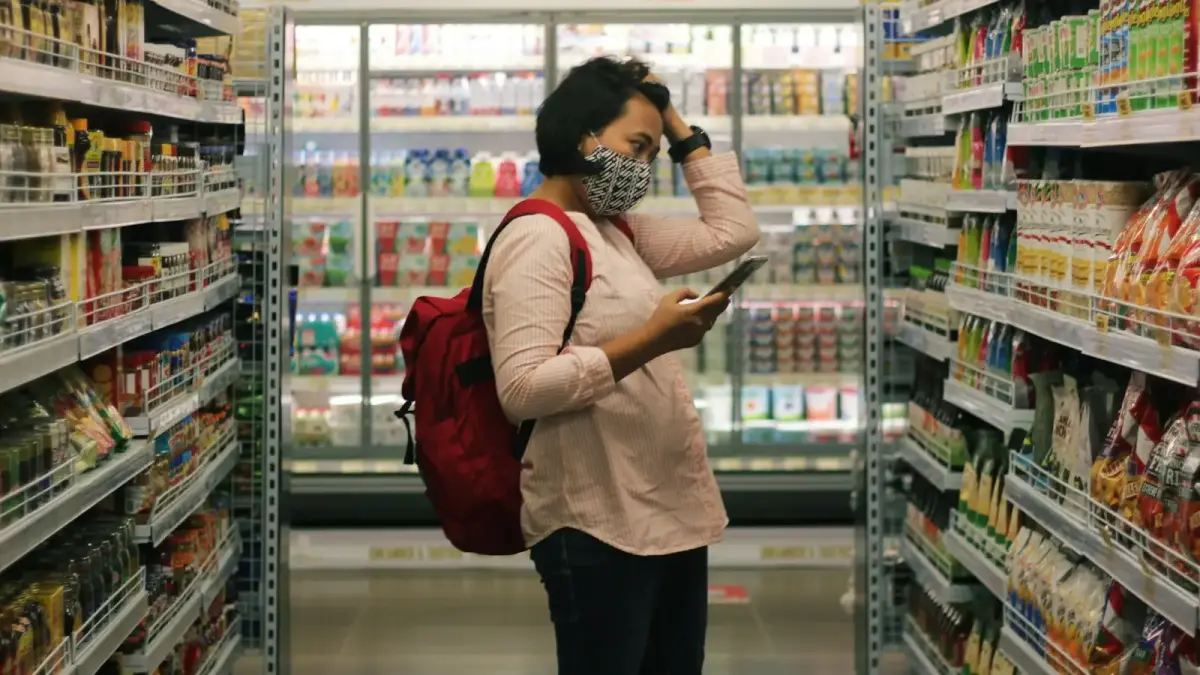
I know a woman who maps her Tuesday mornings around a grocery store the way other people plan vacations.
She doesn’t make a list. She used to, years ago, but the list made the trip efficient, and efficiency was the enemy of whatever she was actually doing there. Now she drives to the store at 9:15, after the before-work rush and before the lunch crowd, and she pushes her cart through every single aisle. Cleaning supplies she doesn’t need. Pet food, and she doesn’t have a pet. The international section, where she picks up a jar of something she’ll never open just to read the label.
Her husband asks why it takes her ninety minutes to buy what could be gathered in twenty.
She’s never had a good answer for him. Not because she doesn’t know, but because the answer sounds strange when you say it out loud.
She’s not shopping. She hasn’t been shopping for years. She’s been performing the only version of solitude that never required an explanation.
The girl in the loud house
She grew up in a home with four siblings, two parents who talked over each other, a television that was never off, and a phone that rang during dinner. There was always someone in the next room. Always a voice calling her name, asking where she put something, wondering if she was hungry, checking whether she’d finished her homework.
Her mother called her “the quiet one.” But it was never about being quiet.
It was about needing a particular kind of space - the kind that didn’t exist in a house where every room had an audience. She shared a bedroom until she was sixteen. The bathroom had a line. The backyard was where her brothers played ball. Even reading felt public, because someone would inevitably walk by and ask what the book was about.
She learned to be present without being available. She learned that the body can sit in a room full of people while the mind builds a small, private country inside itself. She learned this the way all quiet children in loud families learn it - not as a skill, but as survival.
What she didn’t learn was how to be alone. Not truly alone. Because truly alone meant someone would come looking for her, and the looking always came with a question, and the question always required a response, and the response pulled her back into the current of the household.
She never got to practice solitude. She only got to want it.
The aisle where nobody knows your name
A 2022 study published in the Journal of Research in Personality found that introverts don’t necessarily want less social contact - they want more control over the kind of social contact they have. The distinction matters enormously. It’s not that she wants to be away from people. It’s that she wants to be near people who aren’t going to need anything from her.
The grocery store is perfect for this.
Nobody in the cereal aisle is going to ask how she’s feeling. Nobody by the produce is going to tell her about their day and wait for her to respond with the right amount of enthusiasm. The woman reaching for the same brand of olive oil isn’t going to touch her arm and say, “You seem tired.”
She is visible but un-addressed. Present but unclaimed.
This is the part that’s hard to explain to people who didn’t grow up in houses like hers. Private solitude - being alone in a room with the door closed - still carries the echo of someone about to knock. It still holds the faint tension of knowing that the quiet will be interrupted, that someone will eventually need you to come back.
Public solitude is different. Public solitude is being surrounded by strangers who have their own errands and their own thoughts and absolutely no investment in yours. It’s the freedom of being seen without being known.
The grocery store never asks how you’re doing.
Ninety minutes of nothing
Her route is always the same. She starts with produce because that’s where the light is best - those wide, open coolers with the mist rolling over the lettuce. She takes her time with the apples. Not choosing the best ones. Just standing there.
Then she moves to bakery, where she breathes in the bread smell and sometimes buys a single croissant she’ll eat in the car before she drives home.
Aisle by aisle, she walks. She reads labels she’s read before. She compares prices she already knows. She picks things up and puts them back. She does this slowly, deliberately, with the unhurried pace of a person who has nowhere else to be - which, technically, she does. But the places she needs to be all contain people who know her name.
What she’s doing in those ninety minutes is something she could never do as a child and still struggles to do as an adult: she is occupying space without owing it to anyone.
She is not a wife in those aisles. Not a mother. Not a sister, not a friend, not a neighbor, not a woman who should probably call someone back. She is a person with a cart, moving through fluorescent light, and that is all anyone expects of her.
Psychologist Susan Cain wrote about how introverts often feel most like themselves in environments where the social script is simple and predictable. The grocery store has the simplest script of all. You walk. You look. You choose. You leave. Nobody grades your performance. Nobody notices if you linger.
The walk in the woods she never takes
Her daughter once suggested she try hiking. “You’d love it, Mom. Just you and the trees.”
She tried it once. Drove to a trail, laced up sneakers she bought for the occasion, and made it about half a mile before she turned around. It wasn’t the walking. It was the aloneness. Too much of it. Too quiet. Too still. The kind of solitude that turns inward and starts asking questions you don’t want to answer on a Wednesday morning.
The woods demand something of you. They ask you to be present with yourself, with your thoughts, with the accumulated weight of six decades of being the quiet one in every room. That’s meditation, not rest.
The grocery store asks nothing. It offers structure without expectation. It gives her walls and aisles and soft music and the low hum of other people living their lives nearby, and all of that creates a container for the particular kind of silence she actually needs.
A 2019 study in Frontiers in Psychology found that environments with moderate ambient noise and social presence - coffee shops, libraries, public markets - often reduce feelings of loneliness more effectively than complete isolation. The researchers called it “social ambient presence.” She would just call it Tuesday.
What her husband doesn’t understand
He’s a good man. He’s been a good man for thirty-seven years. But he grew up an only child in a quiet house, and solitude for him means fishing or sitting in the garage with a beer. He doesn’t understand why she needs to be around people to feel alone. He doesn’t understand why being alone in their house - while he’s at work, while nobody’s there - doesn’t give her the same thing.
It doesn’t, though. The house is full of her. Her dishes, her routines, her responsibilities, the to-do list on the counter, the phone that might ring. The house is where she is someone. The grocery store is where she is no one.
That difference matters more than she’s ever been able to articulate.
She’s tried. She’s said things like, “I just like taking my time,” and “I like looking at what’s new,” and once, when she was feeling brave, “It’s my time.” He accepted all of these. He didn’t push. But she could tell he filed it under the category of things about her he loves without understanding, and maybe that’s fine. Maybe that’s what thirty-seven years of marriage actually is - loving the parts you can’t explain.
The woman who was never shopping
She’s sixty now. Her children are grown. The house is quieter than it’s ever been, and she still drives to the grocery store on Tuesday mornings at 9:15 and walks every aisle.
Because the need was never about noise level. It was about the kind of space her nervous system learned to crave when she was eight years old and sharing a bedroom and hearing her name called from three rooms away. It was about discovering that some people need to be around others to feel safe enough to be alone with themselves.
A 2021 study published in the Journal of Personality and Social Psychology found that the need for solitude doesn’t diminish with age - it actually becomes more refined. People don’t just want to be alone. They want to be alone in specific ways, in specific places, under specific conditions that they’ve spent a lifetime unconsciously designing.
Her condition is fluorescent lighting and the quiet squeak of a cart wheel and the woman two aisles over debating between brands of pasta sauce.
Her condition is being surrounded by people and completely, beautifully, unreachably alone.
She doesn’t need a cabin in the mountains. She doesn’t need a meditation retreat or a solo trip to a country where no one speaks her language. She needs aisle seven on a Tuesday, and the particular mercy of a place that sees her without seeing her.
The girl who grew up in the loud house figured it out. Not by leaving the crowd, but by finding the one crowd that would let her disappear inside it.
And the woman who spends ninety minutes buying what could be gathered in twenty was never wasting time. She was finally, quietly, taking it back.