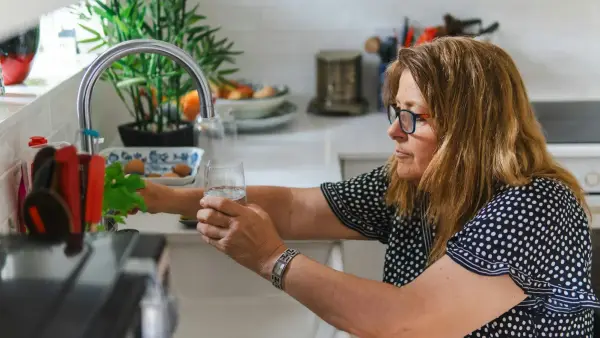
She is 61 and just realized she has spent her entire life arranging rooms - as a girl it was the dollhouse her aunt gave her, the tiny furniture she repositioned for hours, the curtains she made from scraps of fabric, and as a woman it is her own house, the throw pillows placed just so, the reading lamp angled to fall perfectly across the chair, because a girl who never had a single corner that was entirely hers learned to build perfect spaces in miniature first and in full scale later
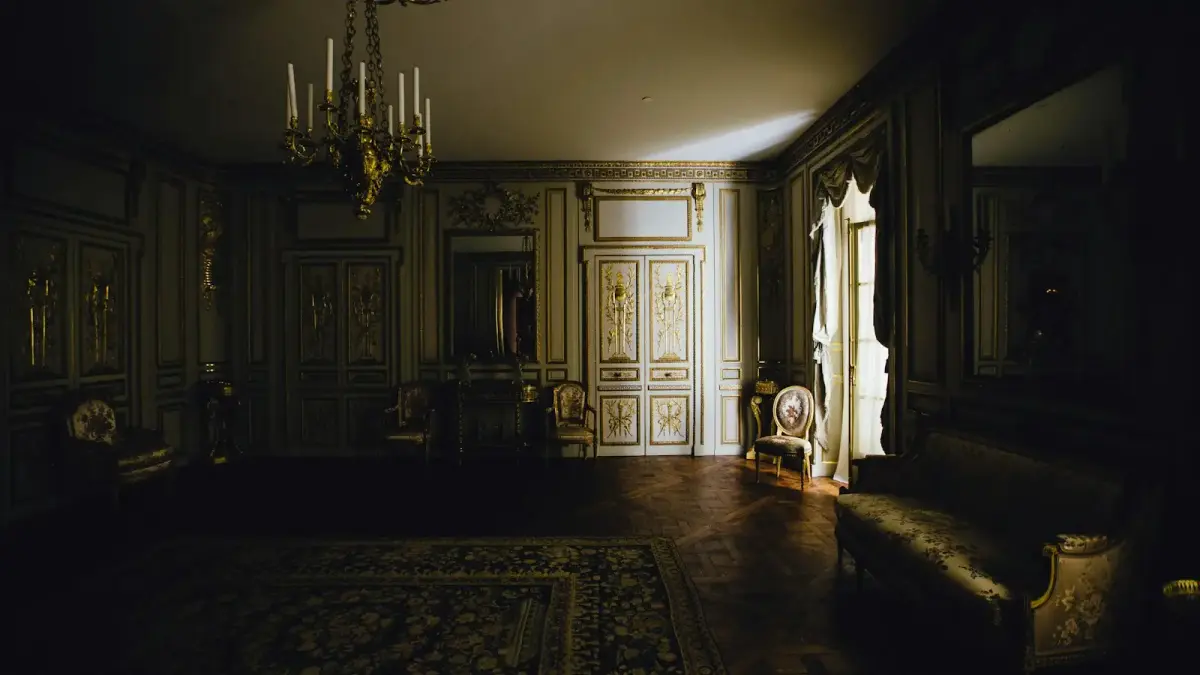
I rearranged my living room last Tuesday for no reason at all.
That is not entirely true. There was a reason - I just could not name it at the time. The couch had been against the east wall for three months, which is long enough for me to start feeling a kind of quiet agitation, like something is slightly crooked in a painting no one else can see. So I moved it. Then I moved the lamp. Then I adjusted the angle of the reading chair so the afternoon light would fall across the left armrest instead of the cushion, because I like to rest my hand there while I read, and I wanted the warmth to land exactly where my skin would be.
My daughter watched me from the kitchen doorway and said, “Mom, you just moved that last season.”
She said it gently. She was not criticizing. But there was something in her voice - a familiar blend of affection and bewilderment - that made me stop and look at what I was doing. Really look at it.
I was sixty-one years old, standing in my own living room, positioning a chair by a window so the imaginary person who lived in my body could finally look out at the morning. And I realized I had been doing this my entire life.
The dollhouse on the dresser
When I was seven, my aunt gave me a dollhouse.
It was not expensive. The wood was thin, the paint was already chipping at the corners, and one of the hinges on the front panel did not close properly. But I loved it with a ferocity that I think confused the adults around me, because I was not a child who played with dolls. I did not make up stories for the tiny people who were supposed to live inside. I arranged the rooms.
I would spend hours - actual hours, the kind that made my mother tap on the bedroom door and ask if I was still alive in there - positioning a miniature chair by a miniature window. I made curtains from scraps of fabric I found in my mother’s sewing basket. I angled a tiny lamp made of a bead and a toothpick so it would cast the right kind of light across a bedroom no bigger than my palm.
I shared a room with two sisters. There was no corner of that room that was mine. My clothes lived in a shared dresser. My books sat on a shared shelf. Even my pillow smelled like someone else’s shampoo half the time because my younger sister would migrate to my bed in the night and I would wake up on the edge, holding on.
The dollhouse was the first space that belonged to me entirely. And I did not play in it. I designed it. I perfected it. I made it the kind of room where a person could sit down and feel, without anyone having to say it, that someone had thought about them before they arrived.
When arranging becomes a language
I did not understand what I was doing until decades later.
A 2011 study published in the Journal of Environmental Psychology found that people who experienced a lack of personal space in childhood often develop what researchers call “place identity” behaviors in adulthood - a heightened need to shape and control their physical environments as an expression of selfhood. The study noted that this was not about control in the anxious sense. It was about authorship. People who never had a room of their own as children often become adults who arrange rooms with unusual care, because the room is not just a room. It is a sentence. It is the first sentence they were ever allowed to write about who they are.
I read that study three years ago, and I sat at my kitchen table - which I had set for dinner even though I was eating alone - and I cried.
Not because it was sad. Because it was the first time anyone had described what I do without calling it fussy.
That is the word I have heard most often. Fussy. Particular. “Oh, you know Julia, she cannot leave a room without straightening something.” People say it with a smile, and I smile back, and I let them believe it is a quirk rather than a cathedral I have been building since I was seven.
The girl who furnished in miniature
The British psychoanalyst Donald Winnicott wrote about something he called “potential space” - the psychological area between a child and the external world where creativity and selfhood begin to form. He believed that children who are given enough room, both literally and figuratively, develop a secure sense of who they are. And children who are not given that room find other ways to build it.
I think the dollhouse was my potential space.
I think every throw pillow I have ever positioned on a couch is my potential space.
I think the woman who walks into a hotel room and immediately moves the desk chair to face the window before she even sets down her suitcase is not being particular. She is answering a question that was asked when she was very young, a question she has been answering in every room she has ever entered since: what would this space look like if someone had built it just for me?
My mother loved us. I want to be clear about that. She was not neglectful. She was outnumbered. Three girls in a two-bedroom apartment, and she was doing her best with what she had, which was not much. There was no cruelty in the fact that I never had my own room. There was just an absence - a shape where a room should have been - and I filled it the only way I knew how.
First in miniature. Then in full scale.
The architecture of self-worth
Here is what people do not understand about women who arrange rooms.
It is not about the room. It is about the belief - the almost physical, almost religious belief - that you are the kind of person for whom a room should be arranged. That your comfort matters enough to angle a lamp. That your body deserves a chair positioned so the light hits your hands while you read. That you are worth the ten minutes it takes to set a table with a cloth napkin and a glass of water with ice even when no one else is coming to dinner.
A 2019 study in Frontiers in Psychology explored the relationship between home environments and self-concept, and found that people who actively curate their living spaces report higher levels of self-compassion and identity clarity. The researchers described the home as a “mirror of the self” - not in the narcissistic sense, but in the developmental sense. The way you arrange a room tells you who you think you are. And the act of arranging it tells you that you believe you are someone worth arranging it for.
I did not always believe that.
There were years - long years, the ones when my children were small and my marriage was loud and I was sleeping on whatever edge of whatever bed was left - when I stopped arranging. I stopped noticing whether the light was right. I stopped setting the table. I ate standing up at the kitchen counter with a fork in one hand and a dish towel over my shoulder, and I did not think about where the chair should go because I had stopped sitting down.
That was not efficiency. That was disappearance. I had stopped building rooms for myself because I had stopped believing I was the kind of person who deserved one.
Coming back to the chair by the window
I started again after my divorce.
The first night alone in my apartment - the one I had chosen myself, the one with the bay window that got morning sun - I did not unpack my clothes or make the bed. I pulled a chair to the window. I sat down. I looked out at the street below, where someone was walking a dog in the last light of the evening, and I felt something I had not felt in years.
I felt like the person who lived here had been expected.
That is what arranging a room is, when you have spent your whole life doing it. It is not decoration. It is not fussiness. It is the act of expecting yourself - of walking into a space and preparing it for your own arrival, as though you are a guest worth preparing for.
Psychologist Mihaly Csikszentmihalyi, known for his research on flow and creativity, wrote extensively about the relationship between people and their domestic objects. He found that the objects people arrange in their homes are not status symbols or clutter. They are “vessels of meaning” - physical anchors for memory, identity, and continuity. The woman who places a reading lamp at a precise angle is not being rigid. She is placing herself in the room. She is saying, with the quiet grammar of furniture and light, I am here, and I matter enough to be comfortable.
The rooms we build now
I am sixty-one, and my apartment is small.
One bedroom. A living room with the bay window. A kitchen that is barely big enough for a table, but I put one there anyway, because I believe in sitting down to eat. The table has a cloth I bought at a flea market, pale blue with tiny white flowers, and I iron it every Sunday even though no one sees it but me.
I still rearrange. I still move the couch when the season changes. I still angle the reading lamp and adjust the throw pillows and stand in the doorway of my own living room and look at it the way I used to look into the dollhouse - not playing, but designing. Making sure the imaginary person who lives here would feel, upon walking in, that someone had thought about her.
The difference is that the imaginary person is no longer imaginary.
She is me. She was always me.
The girl who shared a bedroom with two sisters and never had a corner that was entirely hers learned to build rooms in miniature because that was the only scale available to her. The woman who cannot leave a room without straightening something is not anxious and not controlling and not fussy. She is still furnishing the first room that was ever entirely her own. She just builds them at full size now.
If you recognize yourself in this - if you are the person who sets the table even when you are eating alone, who moves the chair closer to the window, who notices when the light in a room is not quite right and fixes it before anyone else even registers the discomfort - I want you to know something.
You are not being difficult.
You are building the room you were promised as a child but never given. And every time you angle that lamp, every time you smooth that tablecloth, every time you stand in the doorway and look at the space you have made and feel something quiet settle in your chest - that is not a quirk.
That is you, arriving home.