She's 61 and just realized she has never once received a gift without immediately calculating what she owes in return - not a quick thank you but a full accounting, a mental ledger that starts the moment the wrapping paper comes off - because a girl who watched her mother accept a bag of groceries from a neighbor and then spend the entire next week repaying what was never a debt learned that a woman who receives without earning it back is a woman who now owes
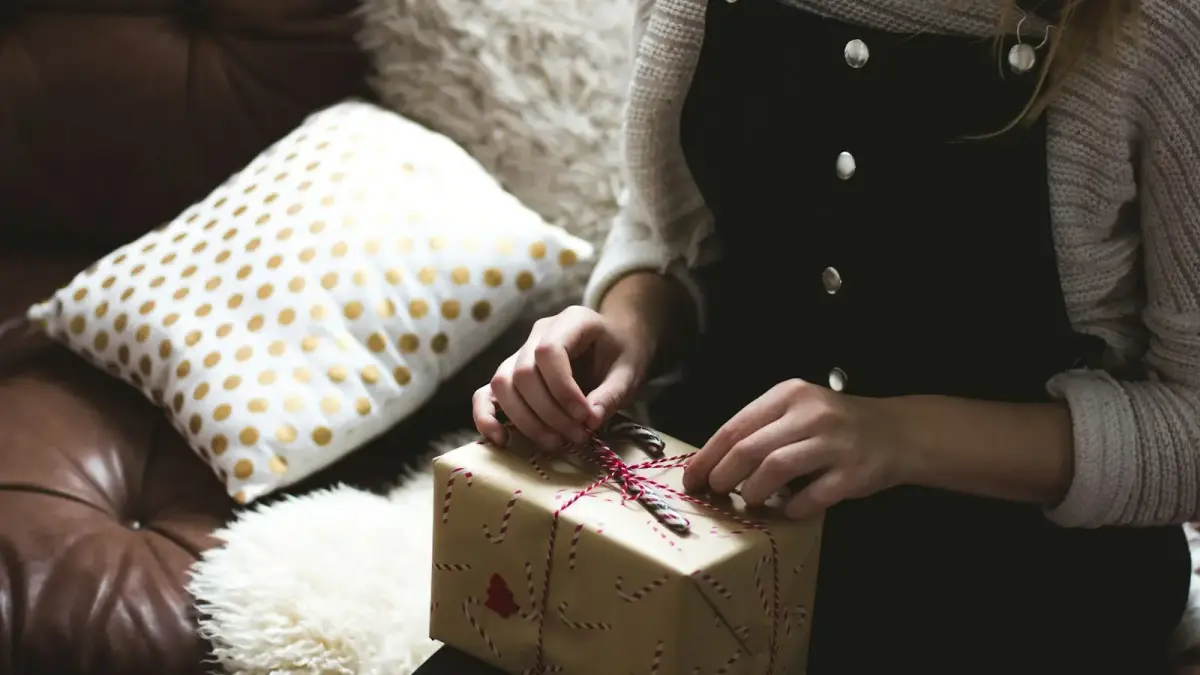
My friend Linda turned sixty-one last month. Her daughter surprised her with a weekend trip to a coastal inn - the kind with white curtains and breakfast brought to the room on a tray. Linda told me about it over coffee, and I watched her face do something I recognized immediately.
She wasn’t describing the trip. She was describing the math.
“The room must have been at least two-fifty a night,” she said, stirring her coffee without drinking it. “Plus the dinner reservation. Plus she took off work.”
“I’m thinking maybe I pay for her car insurance for a few months, or - do you think that’s too obvious? Maybe I just increase what I give her at Christmas.”
She hadn’t told me whether the inn was beautiful. She hadn’t mentioned the ocean or the breakfast or whether she slept well for the first time in months. She had gone straight to the ledger - the invisible one she has carried since she was nine years old, the one that tracks every kindness received and immediately begins calculating what is owed.
I know that ledger. I kept one for forty years.
The girl who watched her mother bake for a week
Linda grew up in a house where money was tight in the way that nobody talked about directly but everybody understood. There was food on the table, but it was the same food every week.
The coats lasted two winters. The car made sounds it shouldn’t have made.
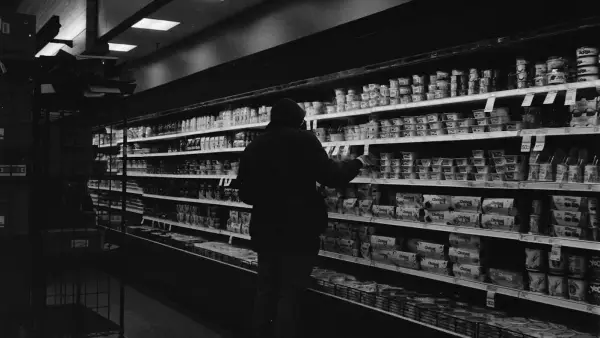
One October, a neighbor brought over two bags of groceries. Not charity, exactly - she said she had bought too much at the store and didn’t want it to go to waste. Linda’s mother thanked her warmly, set the bags on the counter, and waited for the neighbor to leave.
Then she spent the next seven days repaying it.
She baked a casserole and brought it over Tuesday. She offered to watch the neighbor’s dog that Thursday.
She showed up Saturday with a bag of hand-me-down clothes her kids had outgrown, folded neatly, as though she’d been meaning to bring them over for weeks. By the following Monday, Linda’s mother had transformed two bags of groceries into a full week of labor - and only then did something in her shoulders relax.
Linda was nine. She didn’t understand the economics.
But she understood the lesson perfectly: when someone gives you something, you owe them. And you keep owing them until you have given back more than you received.
A 2019 study published in the Journal of Personality and Social Psychology found that people who grew up in economically precarious households often develop what researchers call “reciprocity hypervigilance” - an automatic, anxiety-driven need to immediately balance any social exchange. It isn’t generosity. It’s defense.
The child learns that accepting help without repaying it exposes the family to judgment, to pity, to the unbearable vulnerability of being seen as people who need.
Linda’s mother wasn’t being kind when she baked those casseroles. She was erasing evidence.
The ledger that never closes
Here is what the ledger looks like at sixty-one.
A friend offers to pay for lunch. Linda insists on splitting it, or she grabs the check entirely, leaving a tip so large it borders on performance. She cannot allow someone to feed her without feeding them back, because somewhere in her nervous system, a girl is still watching her mother calculate the cost of two bags of groceries.
Her husband buys her flowers on a random Tuesday. She doesn’t put them in a vase and sit with the beauty of being thought of for no reason.
She goes to the store that afternoon and buys him a new shirt. Not because she wanted to. Because the flowers created a debt, and the debt created an itch she couldn’t stop scratching until it was settled.
A colleague sends a card when Linda’s father dies. Linda sends a card back two weeks later - for no occasion, just a note that says “thinking of you” - because even grief condolences register as a kindness received, and a kindness received is a balance owed.
The ledger never closes because the ledger was never designed to close. It was designed to keep her safe. As long as she owes no one anything, no one can look at her the way people looked at her mother - with pity, or worse, with the quiet satisfaction of someone who now has leverage over a family that needed help.
The cost of never receiving
There is a specific kind of exhaustion that comes from never letting anything land.
I don’t mean Linda is ungrateful. She is one of the most thoughtful people I know.
She remembers birthdays. She sends flowers when someone is sick. She shows up with food when there’s been a loss.
People describe her as incredibly generous, and she is - but her generosity has an engine underneath it that has nothing to do with love and everything to do with arithmetic.
The cost is this: Linda has never, in sixty-one years, simply received something.
She has never opened a gift and felt only the warmth of being thought of. She has never let a friend pay for dinner without the small hum of anxiety that starts in her chest and doesn’t stop until she has found a way to pay it back.
She has never been surprised by someone’s kindness and just - sat in it. Let it be. Let it mean that she is loved without conditions, without invoices, without the silent expectation that love received must be love returned in equal or greater measure.
Dr. Brene Brown writes extensively about the difficulty of receiving - how for many people, vulnerability isn’t about sharing your pain but about accepting someone else’s care. Linda can give endlessly. Giving costs her nothing, emotionally.
It’s receiving that terrifies her, because receiving means admitting she needed something, and needing something means being the woman with the grocery bags on her counter and a week of repayment ahead of her.
What she’s really paying back
The thing about the ledger is that it was never about the gifts.
Linda isn’t calculating the cost of a birthday weekend or a lunch or a bunch of flowers. She is calculating the cost of being seen as someone who needs. She is repaying the debt of vulnerability - the exposure that comes from letting someone do something for you without immediately proving you could have done it for yourself.
A 2021 study in Frontiers in Psychology examined what researchers called “receptivity shame” - the discomfort some individuals feel when receiving help, gifts, or compliments. The study found that this shame was most pronounced in people who grew up in families where accepting help was implicitly or explicitly linked to social status.
The message wasn’t “don’t accept help.” The message was “if you accept help, you are now less than the person who gave it.”
Linda’s mother didn’t teach her that lesson with words. She taught it with casseroles and borrowed-dog-walking and neatly folded hand-me-downs delivered the moment the debt felt settled. She taught it with the visible relief on her face when she had finally given back enough to erase the fact that she had needed something in the first place.
And Linda learned it the way children learn everything important - not through instruction but through observation. Through the feeling in the room. Through the tension in her mother’s jaw when she accepted those groceries and the softening that only came a week later, when the neighbor owed her instead.
The generosity that isn’t generous
People call Linda generous. They’re not wrong, exactly. She gives constantly, abundantly, often more than the situation requires.
But I want to be honest about what that generosity actually is, because I know it from the inside.
It is preemptive debt repayment. It is getting ahead of the ledger so that when someone does give her something, she has already banked enough credits to absorb it without the anxiety spike. It is the adult version of her mother’s casseroles - a way of ensuring that no one can ever look at her and think she took more than she gave.
This kind of generosity is exhausting in a way that real generosity isn’t. Real generosity flows outward because there’s overflow. This generosity flows outward because there’s fear - fear of being in someone’s debt, fear of being seen as needy, fear that accepting a gift without immediately returning it will reveal something about her that she has spent sixty-one years trying to hide.
She isn’t generous. She’s solvent. She keeps her emotional accounts balanced to the penny, and she calls it thoughtfulness, and everyone around her believes it, because who would argue with a woman who always gives more than she gets?
The gift she has never given herself
Here is what I want Linda to know, and what I want you to know if your hands are already fidgeting with the math.
The neighbor who brought those groceries in October of 1974 was not keeping score. She bought too much food, or she saw a family that could use some help, and she carried two bags across the yard.
That was the entire transaction. It was complete the moment she set them on the counter.
Everything that happened after - the casseroles, the dog-walking, the hand-me-downs, the week of quiet labor to erase the evidence - was Linda’s mother’s addition to a story that was already finished.
The gift was given. It did not require repayment. It did not create a debt.
It did not diminish anyone. A woman helped another woman, and that was all.
Research by psychologist Adam Grant suggests that the healthiest relationships operate on what he calls “generalized reciprocity” - a system where people give without tracking, receive without calculating, and trust that the balance works itself out over time.
Not in a ledger. Not in a week. Over the long, imprecise, beautifully uneven course of a life.
Linda has never let herself live in that system. She has spent sixty-one years in a closed loop of give-and-repay, give-and-repay, never once allowing herself to simply be someone who is loved enough to receive without conditions.
The gift she has never given herself is the simplest one. Permission to be given to.
Permission to hold a birthday present and feel only the warmth of a daughter who wanted her mother to rest in a room with white curtains and breakfast on a tray. Permission to let the flowers sit in the vase without buying a shirt.
Permission to let the lunch be someone else’s treat and feel nothing but grateful.
You are not in anyone’s debt. You were never in anyone’s debt. The groceries were a gift, and your mother’s frantic week of repayment was a wound, not a lesson - even though it taught you everything you know about receiving.
You are sixty-one years old, and you are allowed to let someone love you without doing the math.