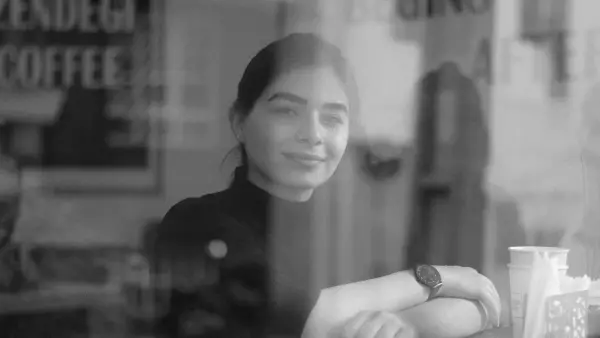
She is 61 and just realized she still cuts fruit into small pieces for every person who walks through her door - not an apple left whole on the counter, not a bag of grapes set out still on the vine, but a plate of carefully sliced pieces arranged the way her grandmother arranged them every afternoon without announcement or expectation - because a girl who watched a woman peel oranges at the kitchen table every day at three o'clock without anyone asking or thanking her learned that love does not announce itself, it arrives peeled, sliced, and placed within arm's reach of anyone who happens to be near
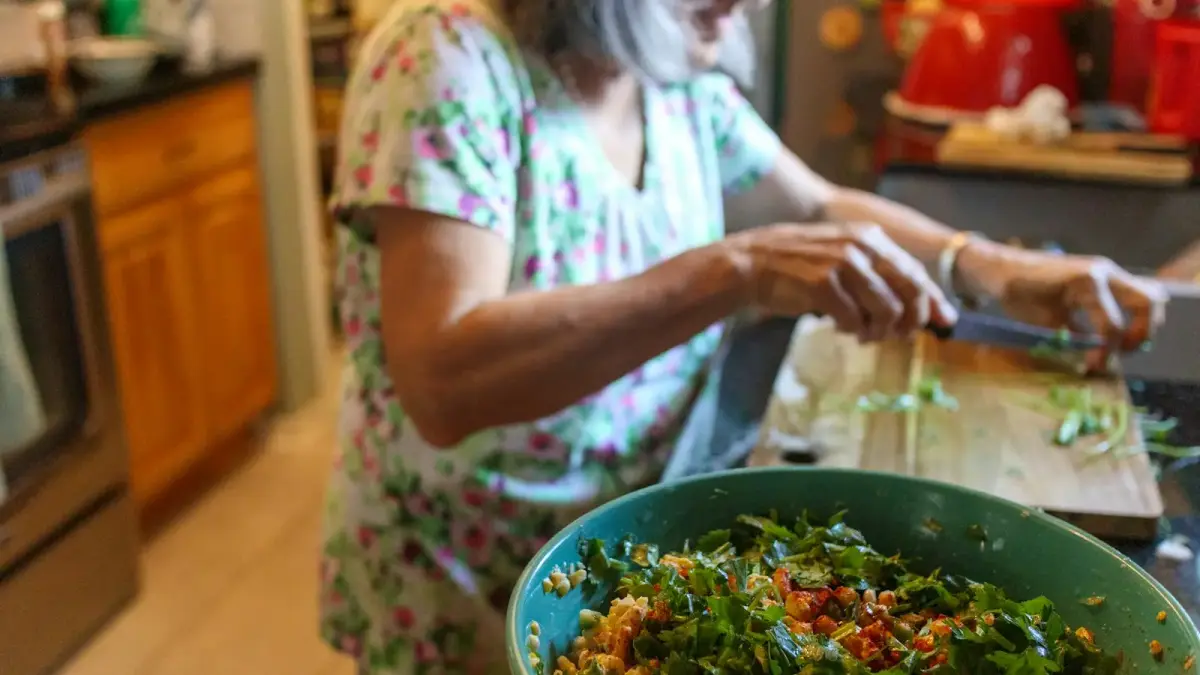
The other day I watched my mother reach for the cutting board before my niece had even finished taking off her shoes.
She didn’t say hello first. She didn’t ask how the drive was. She reached for the paring knife the way some people reach for a light switch when they enter a dark room - without deciding to, without thinking about it, the way your body does something it learned so long ago the instructions have dissolved into instinct.
By the time my niece made it to the kitchen, there was already a plate of sliced pears on the table. Thin, even slices fanned out in a half-circle. No one asked for them. No one mentioned them. My niece ate three pieces while she talked about her new apartment, and my mother listened and nodded and never once drew attention to the plate she had prepared in the sixty seconds between hearing the front door and seeing a face she loved.
I have watched this woman do this exact thing for forty years. And I have done it myself, without realizing, for at least twenty.
The Moment She Saw It
My mother told me about this realization over the phone, almost embarrassed, like she had caught herself doing something strange. She is 61. Her adult children are in their thirties and forties. Her friends are grown women with their own kitchens and their own fruit.
And still - every single time someone walks through her front door, she is at the counter within minutes, slicing.
Not setting out a bowl of whole apples. Not pointing someone toward the fruit basket and saying help yourself. She slices. She arranges. She places the plate where the person will see it without having to look for it.
“I didn’t even know I was doing it until your cousin said something,” she told me. “She said, ‘You always do that.’ And I looked down and I had already peeled two oranges.”
She laughed when she told me, but there was something underneath the laugh. Recognition. The startled feeling of discovering a pattern you have been living inside of for decades without ever naming it.
Because it wasn’t her idea. It was her grandmother’s.
Three O’Clock at the Kitchen Table
Every afternoon at three, my great-grandmother placed a plate of sliced fruit on the kitchen table.
This was not a special occasion. It was not a snack with fanfare. There was no announcement - no “I made you something” or “come sit down.” The plate simply appeared. Apples cut into thin wedges with the skin still on. Oranges peeled in one long spiral and separated into sections. Pears sliced and arranged so they wouldn’t brown too quickly.
My mother remembers this the way some people remember a lullaby - not the specifics of any single afternoon, but the cumulative feeling of thousands of them. The light coming through the kitchen window. The sound of the knife against the wooden board. The quiet certainty that someone had thought of you before you arrived and prepared something with their hands.
My great-grandmother was not a woman who said I love you. She was not a hugger. She did not write cards or give compliments easily. She was a product of her generation in that way - emotionally reserved, practically fluent.
But every day at three o’clock, there was fruit on the table. And a girl sitting in that kitchen absorbed a message that went deeper than any words could reach: love does not announce itself. It arrives peeled, sliced, and placed within reach.
What Psychology Knows About Inherited Rituals
There is a name for what my mother inherited, though my great-grandmother would never have used it.
A 2019 study published in the Journal of Family Psychology found that caregiving behaviors are transmitted across generations not primarily through explicit instruction but through what researchers call “procedural encoding” - the body learns the gesture before the mind learns the reason. Children who repeatedly witness a specific caregiving act absorb it as a template for how care is supposed to look and feel.
This means my mother did not decide to cut fruit for people. Her body decided for her, decades ago, in a kitchen that no longer exists, watching hands that have been still for thirty years.
Psychologist Susan Cain has written about how the quietest forms of love are often the most structurally sound - they don’t depend on mood or motivation, they simply repeat, day after day, until they become architecture. My great-grandmother built something architectural. She built a ritual so consistent and so wordless that it passed through a generation without anyone noticing it was being handed down.
And this is the part that gets me: my mother didn’t teach me to do it either. I just do it. When a friend comes over, I am at the counter before I’ve consciously registered that I want to offer something. My hands reach for the knife. I cut whatever is there - strawberries, melon, an apple - into pieces small enough that someone can eat them without effort, without commitment, without having to decide they’re hungry.
I learned this the same way my mother learned it. Not through words. Through watching.
The Language That Lives in Your Hands
There is something specific about caregiving that happens through the hands.
It is different from verbal affection, which requires you to choose words and assemble them and push them out of your mouth toward another person. It is different from physical affection, which requires a certain courage, a willingness to close the distance between your body and someone else’s.
Preparing food with your hands for someone who didn’t ask for it - that lives in a quieter category altogether. It is care that doesn’t need a response. It doesn’t need to be acknowledged. It doesn’t even need to be noticed.
A 2021 study in Frontiers in Psychology examined what researchers called “non-verbal caregiving rituals” in multigenerational families and found that these rituals carried emotional significance that often exceeded verbal expressions of love. Participants who described feeling most loved by a family member frequently cited not what that person said, but what that person did with their hands - meals prepared, clothes folded, hair brushed, fruit cut.
My mother’s hands know something her conscious mind only recently caught up to. They know that when someone you love walks through the door, you prepare something. You don’t wait to be asked. You don’t make it about yourself. You simply place it where they can reach it and step back.
Why She Never Stopped
Here is what I find most remarkable about this: my mother is 61 years old, and her grandmother has been gone for over three decades.
No one is watching anymore. No one is modeling the behavior. The original kitchen table was given away years ago. The paring knife her grandmother used is probably in a landfill somewhere.
And still, her hands reach for the cutting board.
This is what happens when love gets encoded in the body rather than the mind. The mind forgets. The mind gets distracted, gets tired, gets cynical. But the body keeps performing the ritual because the body does not operate on memory the way the mind does. The body operates on pattern.
Daniel Goleman’s work on emotional intelligence touches on this - the idea that our deepest emotional knowledge often lives below conscious awareness, in habits and reflexes and automatic responses that we enact before our thinking brain has time to weigh in. My mother’s fruit-cutting is not a decision she makes. It is an emotional reflex. It is her body’s way of saying what her grandmother’s body said every afternoon at three: you are here, and I noticed, and here is proof.
It doesn’t matter that her children are adults now. It doesn’t matter that the neighbor only stopped by for five minutes. It doesn’t matter that no one asked.
That was never the point.
The Women Who Love Like This
I think about all the women I know who love like this. Quietly. Through their hands. Through acts so small and so routine that they become invisible.
The mother who folds your laundry even though you are forty-two. The aunt who always has a container of something ready for you to take home. The grandmother who peels your orange because she noticed you don’t like getting the pith under your nails.
These women are not performing domesticity. They are performing a love language that predates the concept of love languages by centuries. They are carrying forward a tradition so old and so quiet that most people never even recognize it as a tradition.
And the daughters who inherited it - the women who find themselves at the kitchen counter with a knife in their hand before they’ve formed the conscious thought “I should offer something” - they are not stuck in some outdated role. They are fluent in something most people spend their whole lives trying to learn: how to love someone without making it about yourself.
My mother didn’t realize she was doing it until her cousin pointed it out. I didn’t realize I was doing it until I watched my mother realize she was doing it. And now I notice it everywhere - the quiet women at every gathering who end up in the kitchen not because they were told to be there, but because their bodies carry an instruction that says this is how you greet someone. This is how you say welcome. This is how you tell a person they matter without burdening them with the weight of your feelings.
A Plate No One Asked For
My mother called me again last week. She said she had been thinking about it more - about the fruit, about her grandmother, about the way certain kinds of love skip the brain entirely and live in the muscles.
“I think what gets me,” she said, “is that she never once said ‘I made this for you.’ She never drew attention to it. It was just there. And I think that’s what made it so powerful. It wasn’t a gift. It wasn’t a gesture. It was just - the way the kitchen worked.”
I thought about that for a long time after we hung up.
The way the kitchen worked. As if love were not an event but a room temperature. As if care were not something you perform but something you set, the way you set a thermostat - and then the house just stays warm, and no one thinks about why.
If you are someone who does this - who cuts the fruit, who folds the towels, who prepares the plate before anyone asks - I want you to know something. You are not fussing. You are not hovering. You are not stuck in a role that the world has outgrown.
You are fluent in a language that most people barely know exists. And somewhere, years ago, someone stood at a counter and translated it into your bones with nothing but a paring knife and a plate and the quiet, radical belief that love should arrive already within reach.