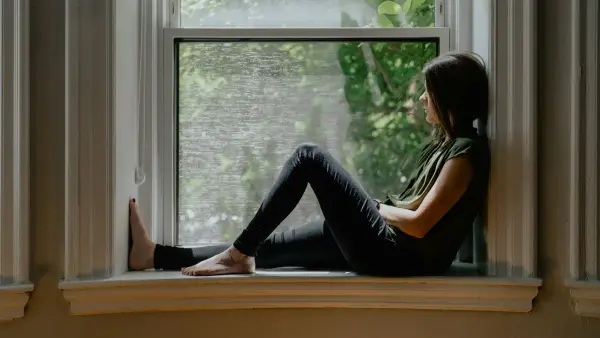
She's 61 and just realized she still uses her maiden name when making restaurant reservations - even though she has been married for thirty-seven years and signs everything else with her married name - because a girl who watched her mother disappear into the word 'Mrs.' learned that a name can be the first thing you lose and the last thing you notice is gone
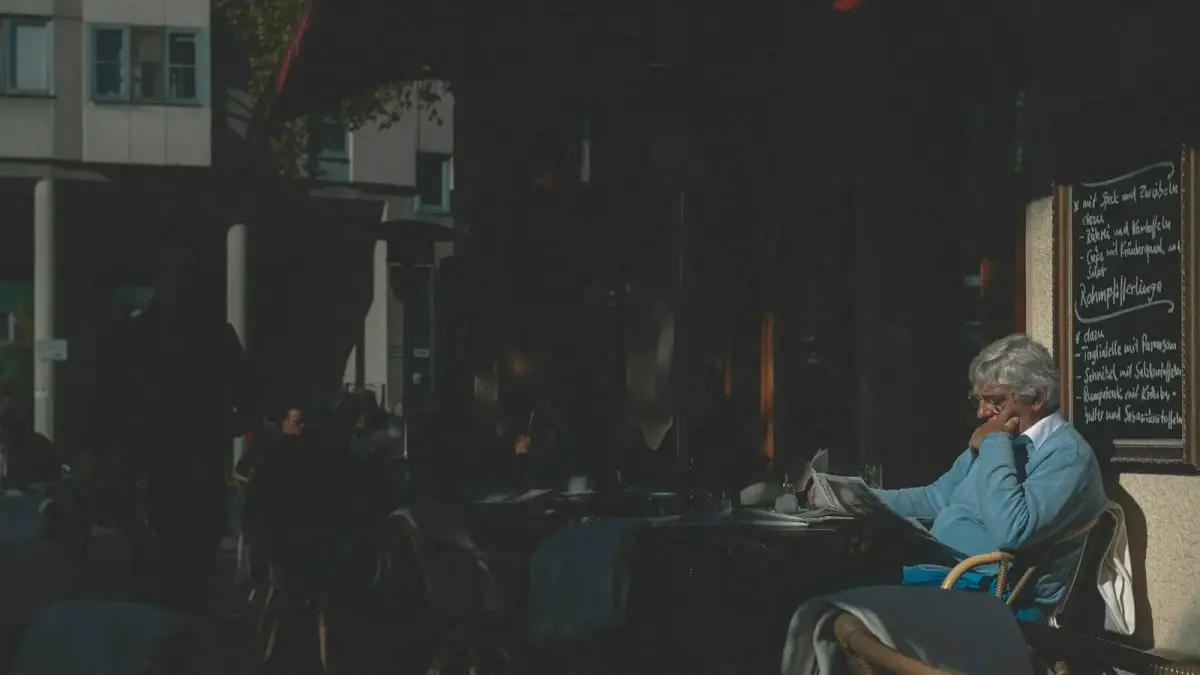
Last Saturday evening, she picked up her phone to make a reservation at the Italian place on Elm Street. Nothing fancy. A booth for two, seven-thirty.
“Last name?” the hostess asked.
And without a single beat of hesitation, she said it. Her maiden name. The name that has not appeared on a single piece of her mail in thirty-seven years. The name that is not on her driver’s license, her mortgage, her insurance card, or her children’s birth certificates. The name she has not written on a check or typed into a form since she was twenty-four years old and standing in a courthouse hallway in a cream-colored dress she can still see when she closes her eyes.
She hung up and sat there for a full minute. Not upset. Not confused. Just startled - the way you are startled when you catch your reflection in a window and realize the person looking back at you is older than the person you carry around in your head.
She had been doing this for years. Maybe decades. And she had never once noticed.
The Name on the Reservation
Here is what she knows now, at sixty-one, that she could not have explained at thirty or forty.
The reservation was never about the restaurant.
It was a room. A small, quiet, private room inside her life where a person she used to be was still allowed to exist. A room where nobody called her “Mrs.” or “Mom” or “Grandma” or “the emergency contact listed on file.” A room where a twenty-three-year-old woman with a ponytail and a used Toyota and a whole life she had not lived yet could still answer when someone asked her name.
She did not build this room on purpose. She did not even know it was there. It built itself the way the body builds calluses - slowly, without permission, in response to a pressure she never consciously named.
A 2019 study published in the Journal of Marriage and Family found that over 70 percent of women in heterosexual marriages in the United States still take their husband’s last name. The researchers noted that for many women, the decision is not experienced as a loss at the time. It feels like a beginning. It feels like a merging, a joining, a we.
The loss comes later. Not all at once. Not dramatically. It comes the way a creek erodes a riverbank - so gradually that you do not notice the ground is gone until you are standing on the edge of something that used to be solid.
The Woman Who Became “Tom’s Wife”
She watched it happen to her mother first.
Her mother had been a person. A full, complicated, specific person with a name and a laugh and a way of telling stories that made everyone at the table lean in. She had opinions about local politics and strong feelings about the way the neighbors trimmed their hedges. She read mystery novels and underlined passages she liked.
And then - not overnight, but steadily, like a tide pulling back - she became Tom’s wife.
Not to herself, necessarily. Maybe inside her own head she was still the same person. But to the world, she was Tom’s wife. She was the kids’ mom. She was the woman who brought the potato salad to the block party every year and always knew where the scissors were.
Her name stopped mattering. Not because anyone was cruel. Not because her father was a bad man. He loved her mother deeply, in his way. But the world does not need a woman’s name the way it needs a man’s. The world needs her function. Her role. Her usefulness.
And a girl who is nine or twelve or fifteen watches this happen and stores it somewhere deep, in a place she cannot access with language. She does not think, “I will lose my name someday.” She thinks nothing at all. She just watches.
Dr. Harriet Lerner, a clinical psychologist who has written extensively about women’s identity, has noted that the name change in marriage is one of the most normalized acts of identity surrender in Western culture. It is the one thing we ask women to do that we would never ask men to do, and we have made it so ordinary that questioning it feels radical.
The girl at nine did not question it. She just noticed.
The Things You Keep Without Knowing You Are Keeping Them
There is a particular kind of self-preservation that does not announce itself. It is not a rebellion. It is not a protest. It is not a decision you make in a moment of clarity and then defend with arguments.
It is the hand that reaches for the light switch in the dark. The foot that finds the top step without counting. The mouth that says a name - your first name, your real name, the name you heard your mother call down the hallway when dinner was ready - before the thinking brain can catch up and correct it.
She signed her married name on thirty-seven years of documents. She introduced herself by her married name at every parent-teacher conference, every neighborhood gathering, every doctor’s office. She became that name. She lived inside it. She built a family, a home, a history inside it.
But some part of her - the part that operates below decision-making, below intention, below the story she tells about herself - kept the other name alive.
Not in a drawer. Not in a journal. Not in a locket.
In a restaurant reservation.
A 2022 study published in Frontiers in Psychology explored the concept of “identity residue” - the fragments of former selves that persist in small behaviors long after a person’s conscious identity has shifted. The researchers found that these residues often surface in low-stakes, routine moments. Not in crises. Not in arguments. In phone calls to restaurants and the way you sign for a package when nobody is watching.
What a Name Holds
A name is not just a label. Anyone who has ever introduced themselves at a party knows this. A name is a container for a self.
Your maiden name holds the person you were before you merged your life with someone else’s. It holds the apartment you could barely afford. The job you were not sure you could do. The friendships that felt enormous. The version of your body that had not yet carried children or weathered loss or learned to be tired in a way that sleep cannot fix.
It holds the person who had not yet been defined by her relationship to other people.
She loves her husband. She wants to be clear about this. She loves her children. She does not regret the life she built. She would not trade the thirty-seven years.
But she misses the girl who walked into a room and was just herself. Not someone’s mother. Not someone’s wife. Not the one who remembers everyone’s allergies and knows when the car insurance is due and always has tissues in her purse.
Just her. With a name that belonged to nobody else’s story.
Adam Grant has written about how the roles we inhabit can slowly become cages - not because the roles are wrong, but because we forget there is a person underneath them. The role becomes so familiar that we mistake it for identity. And the real self - the one the role was supposed to serve - gets quieter and quieter until we can barely hear her.
The woman at sixty-one who says her maiden name to a hostess is not confused about who she is. She is the only person in the world still keeping that name alive.
The Reservation That Is Not Nostalgia
People might hear this story and think it is about nostalgia. A woman looking backward. A woman longing for her youth.
It is not.
Nostalgia is wanting to go back. This is something different. This is evidence that she never fully left.
There is a part of her that has been carrying her own name through thirty-seven years of marriage the way you carry a candle through a house during a power outage. Carefully. Quietly. Not to make a statement. Just to keep the light from going out.
She is not yearning for the past. She is honoring something in herself that survived the beautiful, exhausting, identity-reshaping experience of building a life with another person. Something small. Something that asks for almost nothing. A table for two at seven-thirty on a Saturday evening, under a name that no one in her current life ever uses.
It is not a secret. Her husband has probably heard her say it on the phone. He probably did not notice. Because this is the thing about the ways women preserve themselves - they are so quiet that no one hears them. They are so small that no one sees them. And that is exactly how they survive.
The Girl Who Is Still There
She is sixty-one now. Her knees ache when it rains. She takes two medications she did not take at fifty. She has a granddaughter who looks so much like her that it makes her chest tight in a way she cannot explain.
And somewhere inside her - in the part of her that is not a grandmother or a wife or a mother or a retired school counselor with a full calendar of appointments that belong to other people - there is a girl with a ponytail sitting in a used Toyota, flipping through radio stations, not yet knowing what her life will become.
That girl has a name.
Not Mrs. anything. Not Mom. Not Grandma. Not the emergency contact on file.
Just a name. Her name. The one she was born with. The one her mother gave her before the world started asking her to answer to other things.
And when the phone rings and the hostess asks, “Last name?” - that girl answers.
She has been answering for thirty-seven years. She has been quietly, stubbornly, beautifully keeping herself alive in the only space no one thought to look.
A reservation is just a reservation. A table. A time. A name.
But sometimes, a reservation is the last room in your life that belongs entirely to you. And you are not ready to give it up.
You do not have to be ready. You are allowed to keep the rooms that keep you. You are allowed to answer to the name that still feels like yours. You are allowed to have been someone before you became everyone else’s someone.
That is not confusion. That is not nostalgia.
That is a woman who never stopped existing, even when the world stopped asking for her.