She's 62 and still adds a coin to the collection she started when she was nine - her grandfather handed her a 1964 penny on her birthday and said 'that's your birth year, now you have to find one for every year after' - and fifty-three years later the felt-lined case in her closet holds a coin for every year she has been alive, because a girl nobody noticed growing up taught herself to keep quiet evidence of her own existence, one small copper proof at a time that she was here and the years counted
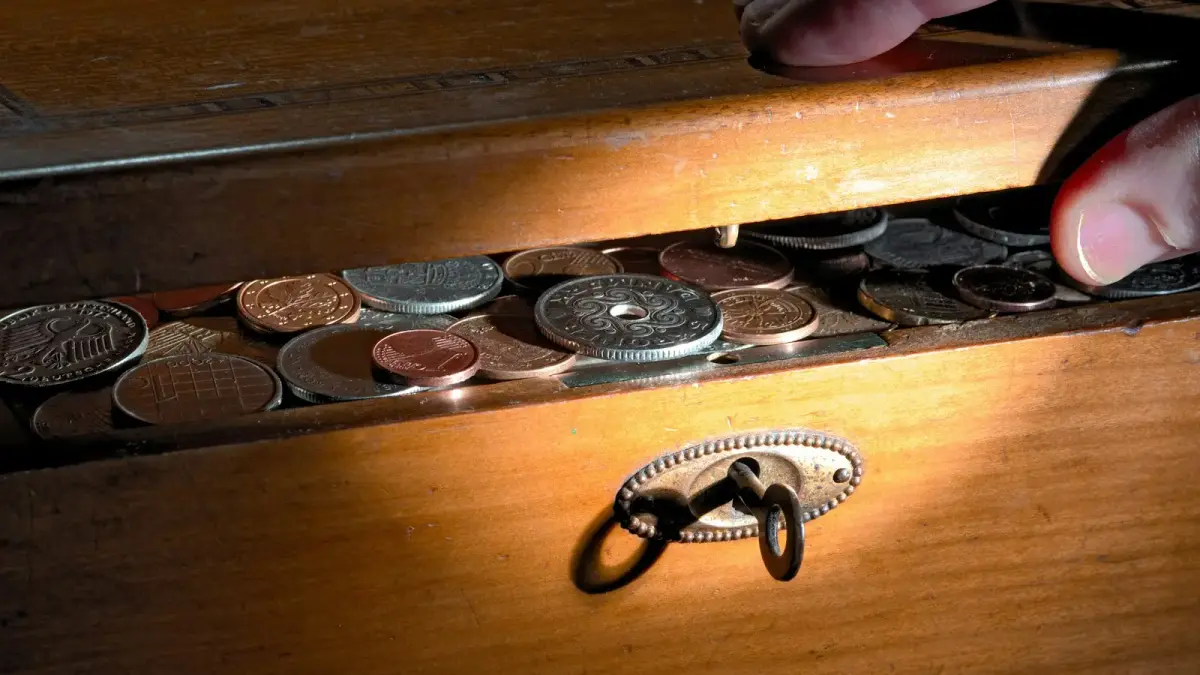
The Penny That Started Everything
I know a woman - I’ll call her Ruth, because she asked me not to use her real name, though the story is entirely hers - who keeps a felt-lined case on the top shelf of her bedroom closet.
It’s not locked. It’s not hidden. It just sits there behind a stack of folded quilts, unassuming and easy to miss.
Inside are sixty-two coins. One for every year she has been alive.
The first one she didn’t find herself. Her grandfather pressed it into her palm on her ninth birthday - a 1964 Lincoln penny, dull and warm from his pocket. “That’s your birth year,” he told her. “Now you have to find one for every year after.”
She doesn’t remember what else happened that birthday. She doesn’t remember the cake or whether there were other gifts. But she remembers the weight of that coin in her hand, and the feeling - new and startling for a girl who spent most of her childhood trying not to take up space - that someone had just told her the year she arrived on this planet was worth marking.
The Girl Who Was Easy to Miss
Ruth was the middle of five children. Not the oldest, not the baby. Not the loudest, not the funniest.
She was the one who could sit through an entire family dinner without speaking and no one would notice. The one whose teachers wrote “a pleasure to have in class” on every report card, which she later understood was code for “so quiet we sometimes forgot she was here.”
She wasn’t neglected. Not in any way that would show up on a form or trigger a phone call. Her parents were decent, busy, stretched thin. They fed her and clothed her and drove her to school.
But there is a particular kind of invisibility that settles over a child who learns early that the world doesn’t stop when she enters a room. It’s not dramatic. It’s not tragic in any obvious way. It’s just the slow, accumulating understanding that your presence is something other people are not especially keeping track of.
A 2019 study published in the Journal of Personality and Social Psychology found that children who perceive themselves as less “noticed” by caregivers often develop what researchers call compensatory self-monitoring - a heightened internal awareness of their own experiences, as if they’re keeping their own attendance record because no one else is taking roll.
Ruth didn’t know any of that when she was nine. She just knew that her grandfather had handed her a penny and given her a job. Find one for every year. Keep count.
So she did.
Fifty-Three Years of Counting
The early coins came from change jars and sidewalk cracks. She’d check the dates on every penny that passed through her hands - at the grocery store, in her school cafeteria, in the cup holder of her mother’s station wagon.
Some years were easy. 1973 pennies were everywhere when she was nine. Some years took months.
She kept them in a small velvet pouch at first, then a tin box, and eventually the felt-lined case her husband gave her for their twentieth anniversary - the only person she’d ever told about the collection who didn’t respond with a polite, slightly puzzled smile.
“He didn’t ask why,” she told me. “He just found me a nicer place to keep them.”
There are years in that case that hold more than copper. The 1986 coin is the year her grandfather died. The 1992 coin is the year her first daughter was born. The 2003 coin is the year she almost left her marriage and didn’t, and the 2004 coin is the year she was glad she’d stayed.
She doesn’t label them. She doesn’t need to. She picks up a coin and her thumb knows which year it is by where it sits in the case, and her body remembers the rest.
Why We Keep Things
There’s a name for what Ruth has been doing all these years, though she’d probably wave it off if you told her.
Psychologists call it object-mediated self-continuity - the use of physical things to maintain a felt connection between who you were, who you are, and who you’re becoming. It’s one of the quietest and most powerful ways humans hold themselves together across time.
A 2020 study published in Cognition found that people who kept meaningful personal objects reported a stronger sense of identity coherence - the feeling that the person they are today is genuinely connected to the person they were ten, twenty, forty years ago. The objects weren’t valuable in any market sense. They were valuable because they served as physical bridges between versions of the self that might otherwise feel disconnected.
Ruth’s coins are not rare. Most of them are worth exactly one cent. A few of the older ones might fetch a quarter from a generous collector.
But their value was never monetary. Their value is existential.
Each one says: this year happened. I was in it. I found the proof.
The Grandfather Who Taught Her to Count Herself
What strikes me most about Ruth’s story is not the collection itself. It’s the moment it began.
A nine-year-old girl who had already internalized that she was easy to overlook. A grandfather who saw her clearly enough to give her something no one else had thought to offer - a reason to pay attention to her own timeline.
He didn’t say “you’re special.” He didn’t deliver some grand speech about self-worth. He handed her a penny and gave her a task.
But embedded in that task was a radical instruction: your years matter. Keep track of them. Don’t let them pass uncounted.
Psychologists who study intergenerational attachment have long noted that it often takes just one person - one adult who reflects a child’s existence back to them with warmth and intention - to fundamentally alter that child’s relationship with their own sense of mattering. A 2015 study in Developmental Psychology found that children who identified even a single “felt-significant” adult in their lives showed markedly higher self-continuity and identity stability well into adulthood.
Ruth’s grandfather died when she was thirty-one. She found his coin - 1986 - within a week.
“I sat in the parking lot of a gas station and cried,” she said. “Not because the penny meant he was gone. Because the penny meant I was still doing the thing he’d started. And that meant some part of him was still keeping track of me.”
The Quiet Act of Self-Witnessing
Here is what I want you to hear, because I think it matters.
Ruth’s collection is not a hobby. It is not a quirk. It’s not something to smile at and call “sweet” and move on from.
It is a fifty-three-year practice of self-witnessing. A girl who understood - before she had the words for it - that if nobody else was going to keep careful track of her, she would keep careful track of herself.
Not loudly. Not with grand gestures or public declarations. With pennies. With a felt case. With the quiet annual ritual of finding a small copper circle stamped with the right year and placing it beside the others.
Researchers who study the psychology of collecting have drawn a sharp line between accumulation and narrative construction. Accumulation is about having. Narrative construction is about meaning.
A 2018 study published in the Journal of Consumer Research found that people who organized personal collections chronologically - by year, by era, by life chapter - reported significantly higher levels of what the researchers termed “autobiographical coherence.” They weren’t just keeping objects. They were building a physical record of their own story, one that they could hold in their hands and say: this is real. I was there. The time wasn’t wasted.
That is exactly what Ruth has been doing since 1973.
The Weight of Being Counted
Ruth told me something near the end of our conversation that I haven’t been able to stop thinking about.
She said that every year, when she finds her new coin, she holds it for a moment before she puts it in the case. She doesn’t say anything. She doesn’t perform any ritual. She just holds it and feels the fact of another year completed.
“It’s like clocking in,” she said. “Except nobody’s paying me and nobody cares. But I care. And that turned out to be enough.”
I think about all the quiet children who grew into quiet adults. The ones who learned early that the world wasn’t going to make a fuss about them, so they’d better learn to make a small, private fuss about themselves.
I think about the ways we teach ourselves to matter when no one else is doing the teaching. The rituals we build. The objects we keep. The tiny systems of self-evidence we construct out of whatever is available - a penny, a journal, a photograph, a line drawn on a doorframe to mark how tall we’ve gotten.
These aren’t hobbies. They’re survival strategies dressed up as ordinary life.
One Small Copper Proof at a Time
Ruth is sixty-two now. She has two adult daughters who know about the collection but don’t fully understand it, and a husband who does.
She has sixty-two coins in a felt-lined case in her closet. Sixty-two years, accounted for. Sixty-two small circles of copper that say, in their quiet metallic way: she was here. She counted. It mattered.
Next year she’ll find another one. She’ll hold it in her palm the way she held that first penny in 1973, when a grandfather looked at a girl the world kept overlooking and said the most important thing anyone had ever said to her.
Your birth year. Your years. Find one for every year after.
If you recognize something in Ruth’s story - if you’ve ever kept something small and seemingly meaningless because it was really evidence of your own existence - I want you to know that what you’ve been doing is not silly. It’s not trivial.
It’s the work of someone who decided, a long time ago, that they were going to count themselves even if nobody else did.
And that might be the bravest quiet thing a person can do.