She's 63 and Just Realized She Has Never Once Sat Down at a Gathering Without First Offering Her Chair to Someone Else - Standing at Her Own Dinner Parties, Perching on Couch Arms at Family Events, Hovering in Kitchen Doorways at Holidays - Not Because She's Selfless but Because a Girl in a Crowded House Decided the Person Standing Would Always Be Her
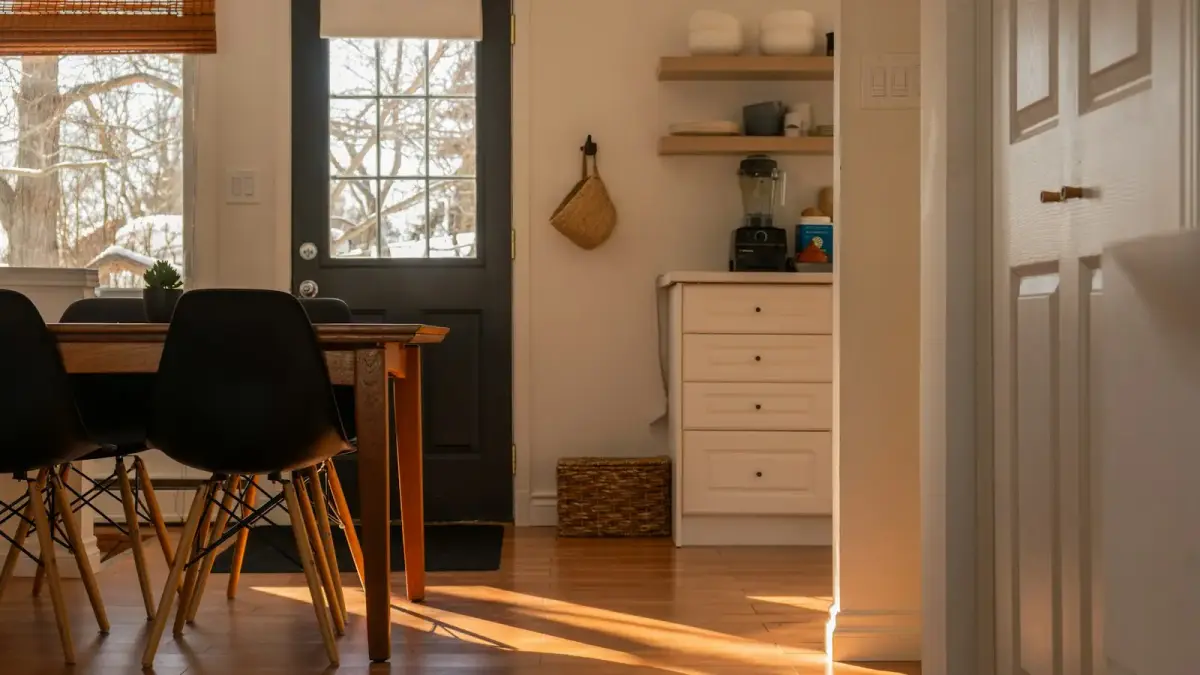
I noticed it at my own birthday dinner last spring. Twelve people around my dining table, candles lit, everyone laughing, and I was leaning against the kitchen counter eating off a paper plate because I’d given my seat to my nephew’s girlfriend.
It wasn’t a sacrifice. It didn’t even register as a choice. My body just did it - the same way it has done it at every Thanksgiving, every backyard barbecue, every baby shower, every holiday meal for as long as I can remember.
I am sixty-three years old, and I have never once sat down at a gathering without first scanning the room to make sure everyone else had a place.
The Math I Learned Before I Could Do Math
I grew up in a three-bedroom house with six people. My parents, my grandmother, and three kids. We had four chairs at the kitchen table. Four. For six.
This wasn’t poverty. It was just the ordinary arithmetic of a full house. Someone was always eating at the counter. Someone was always standing. Someone was always waiting for a spot to open up.
And somewhere before my tenth birthday, I made a decision I didn’t know I was making. I decided the someone standing would be me.
It wasn’t dramatic. Nobody asked me to. My parents didn’t assign it. I just started doing it - hovering near the table instead of sitting, eating faster so I could clear my plate and free up space, drifting to the edges of rooms so other people could fill the center.
By the time I was twelve, it was invisible. By the time I was thirty, it was personality.
What Selflessness Looks Like When It’s Actually Fear
For decades, people called me generous. Thoughtful. “Such a good hostess.” I believed them. I built an identity around it.
I was the woman who insisted you take the last piece. The one who stood on the bus so a stranger could sit. The one who ate in the kitchen at her own Christmas party while everyone else clinked glasses in the dining room.
I thought I was being kind. I thought this was what a good person looked like.
But last spring, standing in my kitchen holding that paper plate while my own birthday dinner hummed in the next room, something cracked open. I wasn’t being kind. I was being invisible. And I was doing it on purpose - not because I wanted to disappear, but because I believed, somewhere in my bones, that there was never enough room for me.
That my presence in a chair meant someone else had to stand. That taking up space was the same thing as taking something away from someone else.
A 2019 study published in the Journal of Personality and Social Psychology found that children who grow up in resource-scarce environments often develop what researchers call “accommodating self-erasure” - a pattern of preemptively removing themselves from competition for limited resources. Not because they don’t want things, but because they learned early that wanting things created conflict or discomfort for the people they loved.
I read that and felt my chest tighten. That was me. That was exactly me.
The Girl Who Made Herself Small
Here’s the thing about growing up in a full house. You learn to read a room before you learn to read a book.
You learn which parent is tired. You learn which sibling needs attention. You learn how to fold yourself into the smallest possible version so the ecosystem stays balanced.
Psychologist Gabor Mate has written extensively about how children adapt to their environments not by changing the environment but by changing themselves. The child doesn’t think, “There aren’t enough chairs.” The child thinks, “I’m the kind of person who doesn’t need a chair.”
That reframe is everything. It turns deprivation into identity. It turns a household logistics problem into a core belief about your own worth.
I didn’t grow up thinking I was less than. I grew up thinking I was the kind of person who stands. That it was noble. That it was chosen. That it made me good.
But you can’t choose something at nine years old and call it a choice at sixty-three. At some point, the thing you decided becomes the thing that decides for you.
Every Room I’ve Ever Entered
Once I saw the pattern, I couldn’t unsee it.
The way I always choose the worst seat in a restaurant - the one by the kitchen door, the one with the wobbly leg - and then insist I prefer it. The way I hover at parties instead of settling in. The way I perch on the arm of the couch instead of sitting on the cushion, as if I’m ready to spring up the moment someone more deserving arrives.
The way I’ve spent sixty-three years communicating to every room I walk into: don’t worry, I won’t take up much space.
A 2021 study in Frontiers in Psychology found that adults who exhibited chronic self-minimizing behaviors - consistently choosing the smallest portion, the worst seat, the least comfortable position - often traced those patterns back to early childhood experiences of perceived scarcity. The researchers noted something I found devastating: most of these adults described their behavior as preference rather than pattern. They genuinely believed they liked the worst seat.
I genuinely believed I liked standing.
The Difference Between Generous and Gone
There’s a version of this story where I’m the hero. The selfless matriarch. The woman who always puts others first. And I won’t pretend there isn’t real generosity woven into who I am. I do care about other people’s comfort. I do notice when someone needs something.
But there is a difference between generosity and disappearance. Generosity says, “I have enough, and I want to share.” Disappearance says, “I was never supposed to have any.”
Brene Brown talks about the difference between fitting in and belonging. Fitting in is about assessing a situation and becoming who you need to be to be accepted. Belonging is showing up as you are and being seen.
I have spent my life fitting in. Literally fitting myself into the leftover spaces - the kitchen doorway, the folding chair, the gap between the counter and the fridge. I made myself fit by making myself small. And everyone praised me for it because a woman who makes herself small is so easy to be around.
Nobody ever said, “Julia, sit down. There’s room for you.” Because I never gave them the chance. I had already decided there wasn’t.
What Sixty-Three Teaches You
I’m not angry about this. That might surprise you, but I’m not.
I’m tender about it. I’m tender toward the nine-year-old girl who looked at a table with four chairs and six people and thought, “I’ll fix this by removing myself from the equation.” That was brilliant, actually. That was a child solving an impossible problem with the only tool she had - herself.
But I’m sixty-three now. I have a dining table that seats twelve. I have more chairs than I have people to fill them. The scarcity ended decades ago, and I’m still standing in the doorway like I’m waiting for permission to come in.
Susan Cain, in her work on quiet temperaments, reminds us that the behaviors we develop in childhood aren’t flaws to be fixed. They’re adaptations that worked. The question isn’t whether they were smart - they were. The question is whether they still serve us.
Standing doesn’t serve me anymore. It just keeps me from being fully present at my own life.
Sitting Down on Purpose
Last week, I hosted a small dinner. Six friends, my dining room, a pot of soup.
When everyone arrived, I did something I’ve never done before. I sat down first. I chose a seat - not the worst one, not the one nearest the kitchen, not the folding chair I keep in the hallway. A real seat. At the head of my own table.
My hands were shaking. I want you to know that. I am a grown woman, and my hands were shaking because I sat in a chair at my own dinner party.
Nobody noticed. Nobody had to stand. There were plenty of seats. There have been plenty of seats for forty years.
I sat there, and I ate my soup while it was still hot, and I listened to my friends talk, and I thought about that little girl in the crowded kitchen, and I wanted to tell her something I wish someone had said a long time ago.
There is room for you here. There has always been room. You don’t have to earn a seat by standing long enough. You don’t have to prove you deserve space by refusing to take any.
You were never the extra person. You just counted wrong.