She is 64 and just realized she has never once finished a book she started purely for herself - not the novel her friend pressed into her hands at lunch, not the memoir she bought at the airport with her own money, not the poetry collection she carried home from the bookstore like something precious and placed on her nightstand where it waited and waited - because a girl whose mother looked up from her ironing and said 'you are just sitting there doing nothing' learned that a book in a woman's hands is not rest but evidence of someone who has forgotten she has somewhere more useful to be
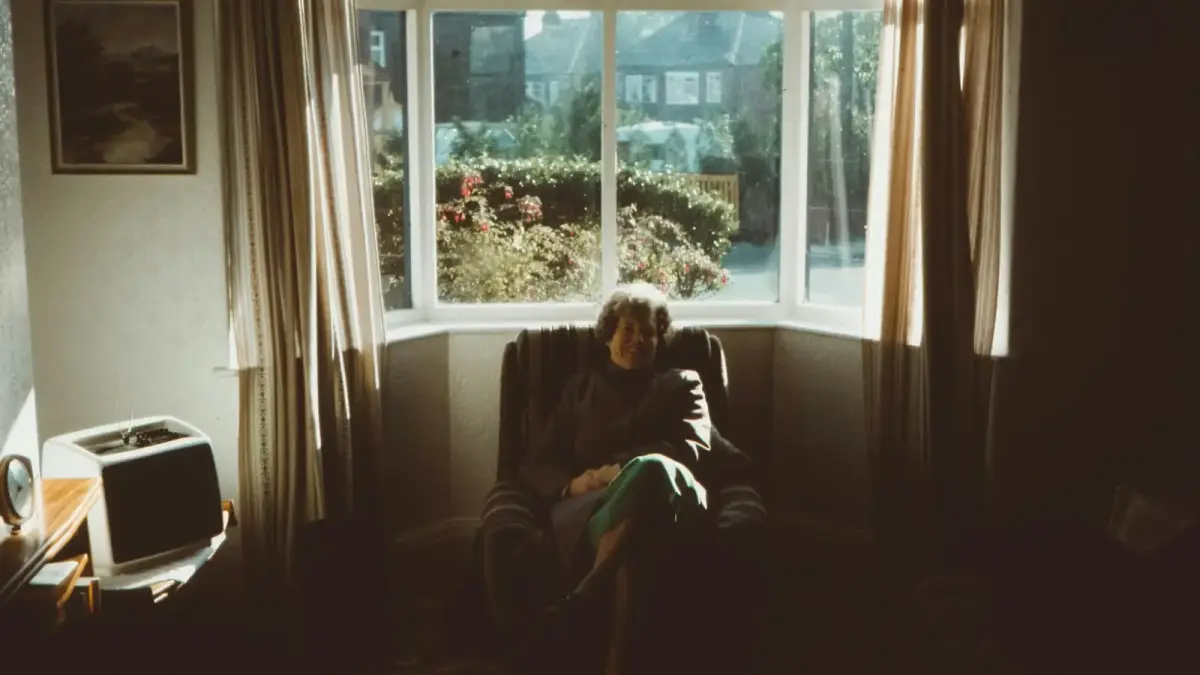
I found the bookmark last Tuesday. Page 37 of a novel I bought in March. A beautiful novel, one I’d been excited about for weeks before I ordered it. I remember the feeling of cracking the spine for the first time, pulling a blanket over my legs, settling into the couch with that particular kind of anticipation that only a new book gives you.
I made it to page 37.
Not because the writing was bad. Not because I lost interest. I stopped because somewhere around page 30, I noticed the laundry basket in the hallway. And once I noticed it, I couldn’t un-notice it. The book went down. The laundry got folded. And I never picked it up again.
This has been the pattern of my entire reading life. I am not someone who doesn’t love books. I am someone who loves books and cannot seem to let herself have them.
I am 53 years old and I have written about women’s inner lives for two decades. But it took a conversation with my friend Linda - who is 64 and staring at a shelf of novels with bookmarks all frozen between pages 30 and 60 - to understand what we’re actually looking at when we look at that shelf.
We’re not looking at unfinished books. We’re looking at a record of every time a woman chose duty over desire and didn’t even realize she was choosing.
The Shelf That Tells the Truth
Linda showed me her nightstand. Three books stacked neatly, a reading light positioned just so, a pair of glasses folded on top. It looked like a magazine photo of someone’s cozy reading corner.
She hadn’t touched any of them in months.
“I keep buying them,” she told me. “I get so excited. I read the first chapter and I think, this is the one I’ll finish. And then I just… don’t.”
She said it like a confession. Like she was admitting to some personal failing - a lack of discipline, a short attention span, something wrong with her brain.
But there is nothing wrong with Linda’s brain. Linda raised three children, managed a household budget down to the cent for forty years, coordinated every holiday, every school event, every medical appointment for an entire family. Linda’s brain is extraordinary. Linda’s brain just never learned that it was allowed to be used for her own pleasure without guilt.
A 2016 study published in the Journal of Personality and Social Psychology found that women consistently report higher levels of guilt when engaging in leisure activities compared to men - even when they have objectively earned that rest. The researchers called it “contaminated leisure.” The rest is there, technically available, but it’s been poisoned by the feeling that you should be doing something else.
Linda doesn’t have a reading problem. She has a permission problem.
The Mother at the Ironing Board
When I asked Linda when she first remembered feeling guilty about reading, she didn’t hesitate.
“My mother,” she said. “I was maybe ten. Sitting on the couch with a library book. She looked up from her ironing and said, ‘You’re just sitting there doing nothing.’ Not angry. Just… stating a fact. Like reading was the same as staring at a wall.”
That sentence landed in a ten-year-old girl’s body and never left.
Linda’s mother wasn’t cruel. She was a product of her generation - a woman who had been taught that her value lived in her productivity. A woman whose hands were never still. Ironing, cooking, mending, wiping counters, folding, sorting, preparing. Rest was what happened when you were sick. Leisure was what other people had.
And when her daughter sat quietly with a book, she didn’t see a child engaged in imagination and learning. She saw a child who had forgotten the fundamental rule: a woman in motion is a woman earning her place.
Gabor Mate has written extensively about how children absorb not just what their parents say, but what their parents model. Linda’s mother never sat down with a book herself. She never modeled that a woman could be still and still be valuable. The absence of that example spoke louder than any words could have.
So Linda learned. She learned it the way we all learn the deepest lessons - not through lectures, but through observation. Through the small, repeated message that a woman sitting quietly is a woman wasting time.
Every Bookmark Is a Surrender
Here is what I want you to see about that stack of unfinished books.
Each one represents a moment where you wanted something purely for yourself. Not for your family. Not for your job. Not to become a better person or learn a useful skill. You wanted to sit in a chair and disappear into a story because it would feel good.
And each bookmark represents the exact moment that wanting became too much to bear.
Page 40. That’s about when the guilt catches up to most women I’ve talked to. The first chapter is exciting enough to override it. The novelty carries you. But by chapter three, the voice kicks in. The one that sounds like your mother. Or your grandmother. Or just the ambient noise of a culture that has always been more comfortable with women in service than women at rest.
You put the book down. You don’t make a conscious decision to stop reading. You just… notice something that needs doing. The dishes. The email you forgot to send. The birthday card you haven’t mailed. And the book goes facedown on the nightstand, and you tell yourself you’ll pick it up tomorrow.
Tomorrow becomes next week. Next week becomes the new book you buy because maybe this one will be different.
It’s never different. Because the book was never the problem.
The Economy of a Woman’s Attention
There’s a term in psychology called “cognitive labor” - the invisible work of noticing what needs to be done, planning how to do it, and tracking whether it got done. Research by sociologist Allison Daminger, published in the American Sociological Review in 2019, found that women carry a disproportionate share of this labor even in relationships where physical tasks are split evenly.
This means that even when you sit down to read, your brain is still running the household management software in the background. It’s scanning for undone tasks. It’s calculating tomorrow’s logistics. It’s holding the family’s entire operational architecture in active memory.
Reading requires you to shut that software down. To stop monitoring. To let the household run unsupervised in your mind for an hour.
For many women, that feels as dangerous as leaving a stove on.
Not because anything bad will actually happen. But because you were trained - by your mother, by her mother, by a culture that called women’s rest laziness for centuries - to believe that your attention is not yours to spend freely. Your attention is a resource that belongs to other people. To use it on yourself, on a novel, on something with no productive output, feels like stealing.
You are not a slow reader. You are a woman who has been taught that her attention is not her own.
The Bookstore Ritual
I want to talk about the buying, though. Because it matters.
Linda still goes to bookstores. She still picks up novels and reads the back covers with genuine excitement. She still carries them to the register with that warm, hopeful feeling. She still places them on her nightstand with care.
This is not irrational behavior. This is a woman practicing desire.
Every book she buys is an act of believing - even briefly - that she deserves an afternoon in a chair with a story. The purchase is the permission slip she writes herself. The fact that she can’t cash it in doesn’t mean the wanting isn’t real.
A 2021 study in Frontiers in Psychology found that the anticipation of a pleasurable experience activates many of the same neural reward pathways as the experience itself. Linda’s brain lights up when she buys the book. The wanting is its own kind of nourishment, even when the having remains out of reach.
That shelf isn’t a monument to failure. It’s a monument to a desire that refuses to die no matter how many times it gets interrupted.
What a Daughter Inherits
I asked Linda if her own daughter finishes books.
She got quiet.
“She reads on her phone,” Linda said. “In bed. After the kids are asleep. She told me once she feels guilty about it, like she should be cleaning up the kitchen instead.”
Three generations. Same sentence. Same guilt. Different ironing board.
This is how it moves through families. Not as a dramatic trauma. Not as abuse. As a whisper. As an atmosphere. As the quiet, persistent teaching that a woman’s stillness is a woman’s failure. A girl watches her mother never sit down, and she learns the lesson without anyone saying a word.
Susan Cain, in her work on introversion and quiet temperament, has written about how the need for solitary, reflective time is not laziness but a fundamental human requirement for psychological health. Women who never grant themselves that solitude don’t become more productive. They become more depleted. They become women who buy books they can’t finish and don’t understand why.
The Girl on the Couch Wasn’t Doing Nothing
I need to say this to you directly, because I think you need to hear it.
That girl on the couch with the library book? She wasn’t doing nothing.
She was building her interior world. She was developing empathy by living inside fictional lives. She was growing the part of her brain that understands nuance, complexity, and the full range of human emotion. She was doing some of the most important work a person can do.
And she was told it didn’t count.
If you are the woman with the nightstand full of unfinished books, I want you to know something. The problem was never your discipline. It was never your attention span. It was never that you don’t really like reading.
The problem is that somewhere deep in your body, a ten-year-old girl is still hearing her mother’s voice. Still putting the book down. Still getting up to fold the laundry.
You are 64 years old. Or 55. Or 47. Or 72. And the laundry will still be there in an hour.
Pick up the book.
Not because finishing it will make you a better person. Not because reading is productive or educational or improving. Pick it up because you want to. Because wanting things for yourself is not selfish. Because a woman in a chair with a novel is not doing nothing.
She is doing the thing she was never allowed to do. She is sitting still and letting that be enough.