8 things the last generation of women who kept a physical address book by the telephone - names written in pencil because people move, phone numbers crossed out and rewritten three times, and a few entries in someone else's handwriting because the person who lived at that address died and the book is the last place her hand still touches yours - do that reveal how their generation understood the difference between knowing someone and having access to them, according to psychology
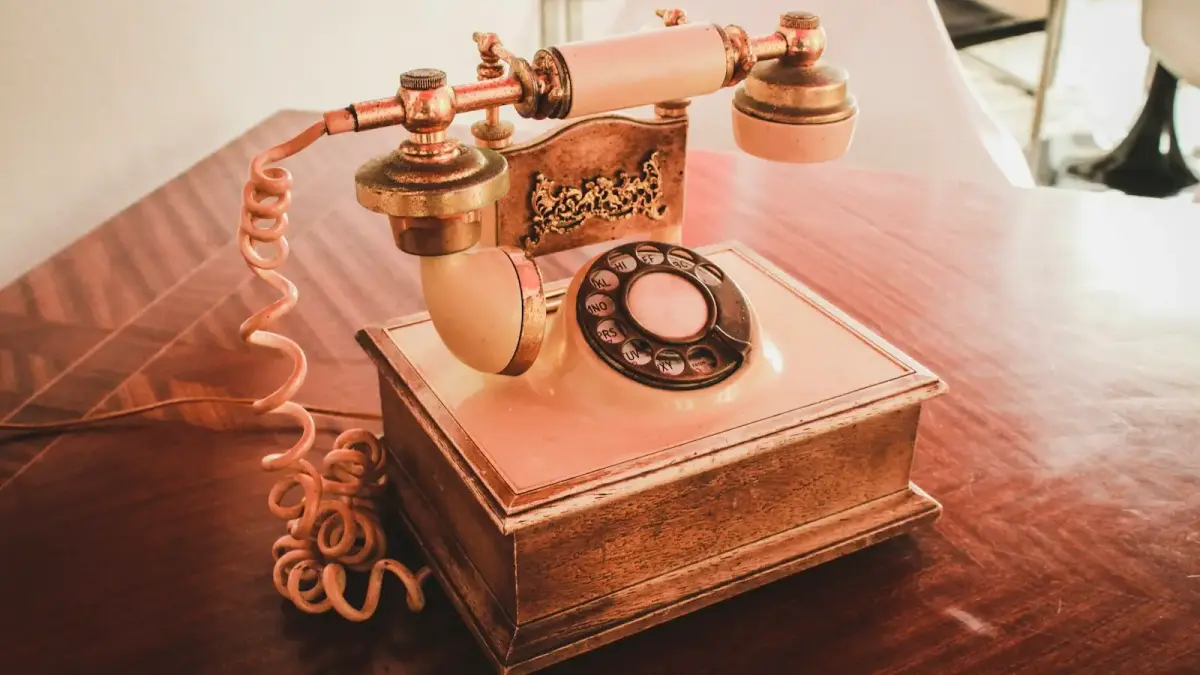
My mother’s address book sat on the telephone table in the hallway for thirty-one years. It was small, burgundy, and held together with a rubber band she replaced every few years when the old one snapped.
After she died, I picked it up and opened it to the M’s. There was my college address - the first apartment, the one with the mice - written in her careful print. Below it, crossed out with a single line, was my second address. Then my third. Then the one I live in now, squeezed into the margin because she’d run out of room.
Her handwriting was on every page. Except three entries under R, written in a looser, rounder script I recognized immediately. My aunt. Who had been dead for nine years. And there she was, still holding a pen on page forty-seven of my mother’s address book.
I closed the book and sat on the hallway floor for a very long time.
If you grew up in a house where a woman maintained one of these books - updated it in pencil, mourned over it in private, carried it to the new house every time the family moved - then you already know what I’m about to say. That book was never about addresses. It was a map of every person she’d ever decided to keep.
Here are eight things the women who maintained those books did that reveal something psychology is only now catching up to - a way of understanding connection that had nothing to do with access and everything to do with attention.
1. They wrote in pencil because they understood that impermanence was part of the deal
Not pen. Pencil. Because people move. Because phone companies change area codes. Because the daughter who lived on Maple Street last year lives on Oak now, and you need to be able to erase and rewrite without making a mess.
This was not a trivial choice. It was a philosophy about relationships that most of us have never been taught - that connection requires constant updating, and the updating is part of the love.
A 2019 study published in the Journal of Personality and Social Psychology found that relationship maintenance behaviors - small, unglamorous acts of keeping up - were stronger predictors of relationship longevity than emotional intensity. The women with the pencil-written address books understood this instinctively. You didn’t love someone once. You loved them again every time you picked up the eraser and rewrote their new number.
2. They kept entries for people who had died because erasing a name felt like a second loss
This is the one that undoes me every time.
Open any address book that belonged to a woman of that generation and you’ll find them - entries for people who no longer have addresses. No line through the name. No correction. Just a person who still exists on page twelve, between Margaret and the dentist.
Nobody told these women to do this. There was no grief counselor suggesting it, no article recommending it. They simply could not bring themselves to erase a name, because somewhere in their bodies they understood that the book was the last physical location where that person still lived.
Psychologist Robert Neimeyer’s research on continuing bonds has shown that maintaining symbolic connections to the deceased - keeping their possessions, speaking to them, preserving their place in daily life - is not denial. It is one of the healthiest forms of grief processing available to us. These women were doing cutting-edge grief psychology with a number two pencil in 1987.
3. They knew whose handwriting was whose, because someone else’s script in the book was a form of intimacy
My mother could tell you which entries were written by my father, which by her sister, and which by a neighbor who had come over to help her update after they’d both moved in the same year.
The handwriting of someone else in your personal address book meant that person had sat at your table, held your pen, and added themselves to your world in their own hand. It was a small act of trust - here is where I live, written in my own script, given to you because I want you to be able to find me.
We don’t have this anymore. Contact information arrives pre-formatted, identical, stripped of any evidence that a human being chose to share it with you specifically. The address book preserved the fingerprint of every exchange. You could see who gave you their number eagerly, in big loopy letters, and who wrote it small and careful, like they weren’t sure they wanted to be found.
4. They memorized the important numbers even though the book was right there
Ask any woman who kept one of these books and she’ll tell you - she didn’t need it for her sister’s number. Or her best friend’s. Or her mother’s. Those numbers lived in her body, in her fingers, in the pattern her hand made on the rotary dial without looking.
The book was a backup. The real directory was internal.
A 2021 study in Frontiers in Psychology on cognitive offloading found that when we store information externally - in phones, in apps, in the cloud - our brains literally stop encoding it. The researchers called it the “Google effect.” We don’t remember what we know we can look up.
The women with the address books lived before the Google effect. They carried their most important people inside their own memory, and the act of remembering was itself a form of devotion. You memorized the number because the person mattered enough to live inside your mind, not just inside a book.
5. They treated the book as a living map of their entire social world
The address book wasn’t organized by importance. It was organized alphabetically, which meant your cardiologist lived two pages from your college roommate, and the plumber was right next to your late husband’s cousin who you still sent Christmas cards to.
This was, without anyone meaning it to be, a complete map of one woman’s social universe. Every relationship she maintained, every professional she trusted, every person she’d decided was worth the ink - all in one place, all weighted equally by the alphabet.
There was something democratic about it. Something that refused to sort people into categories the way our phones do now - favorites, recents, contacts you haven’t called in a year that your phone suggests you delete. The address book said: if I wrote you down, you belong here. There is no algorithm deciding whether you deserve to stay.
6. They performed the ritual of asking for addresses at gatherings, and it meant something
You’ve seen this if you’re old enough. Two women at a church potluck or a retirement party, one of them pulling a small piece of paper from her purse and saying, “Before I forget - give me your new address.”
This was a ritual. It was a woman saying, in front of everyone, I intend to stay in contact with you. I am going to write you into my book when I get home tonight. You are going to exist in my hallway.
The asking was public and deliberate. It required you to announce your intention to maintain the relationship, and it required the other person to hand over something personal - the place where they sleep at night, the numbers that ring inside their kitchen. It was an exchange of vulnerability dressed up as logistics.
We’ve lost this ritual entirely. Now we say “I’ll find you on Facebook” and never do. The address book women didn’t have that escape hatch. When you asked for an address, you meant it. The book was going to hold you accountable.
7. They updated the book like a living document, because relationships required active maintenance
The book was never finished. It couldn’t be. People moved, married, divorced, changed their names, added a second phone line for the teenager, cancelled the second line when the teenager left.
Maintaining the book was a practice - something you did on a Sunday afternoon or after a phone call when someone mentioned they had a new number. It was slow, manual, and constant. And it meant that every time you touched the book, you were thinking about the people inside it.
Psychologist John Gottman’s decades of research on lasting relationships has consistently shown that it’s not grand gestures that sustain connection - it’s what he calls “turning toward” - the small, repeated acts of noticing, responding, and staying present. Erasing a number and writing the new one was a micro-turn-toward. It took thirty seconds. It said: I am still paying attention to where you are in the world.
The women who kept these books were performing relationship maintenance as a physical practice, the way someone tends a garden. Not because it was exciting, but because things that aren’t tended die.
8. They lived with the grief of a full book and fewer and fewer people to call
This is the entry nobody talks about. The book that gets heavier even as it gets quieter.
A woman at seventy-five opens her address book and sees pages full of names, full of lives she was part of, full of numbers that now ring to disconnected lines or belong to someone else. The handwriting of people whose hands no longer work. The addresses of houses that have been sold by the children who inherited them.
The book becomes, at a certain point, more memorial than directory. And still she keeps it. Still she does not throw it away or replace it with a new one. Because a fresh book with only the living in it would be too thin. It would tell the truth about how many people she has outlived, and some truths are easier to carry when they’re buried between pages of the dead and the living together.
This is what the address book understood that our phones never will - that your people don’t disappear in one moment. They disappear in the slow accumulation of crossed-out numbers and unchanged entries and pages you stop turning to because there’s no one left on the other side.
If you recognize any of this - if you can picture the book, or the table it sat on, or the woman who kept it - then you already understand something that no contact management system will ever replicate.
Those women were not performing an outdated task. They were practicing a form of love that required their hands, their memory, their attention, and their willingness to keep showing up for people who kept moving through the world.
The book was never about the addresses. It was about the act of writing someone down and deciding, again and again and again, that they were worth the pencil lead.
If you still have one of those books - in a drawer, in a box, in the back of a closet you haven’t opened since the funeral - don’t throw it away. It’s the last place where someone’s love for you is written in their own hand. And there is nothing on your phone that will ever mean the same thing.