8 things people who always arrive everywhere at least fifteen minutes early and then sit in the car before going inside - who park and turn off the engine and stay in the seat watching other people walk toward the door, who check their phone without reading anything, who wait until their breathing has settled before reaching for the handle - do without realizing it, according to psychology
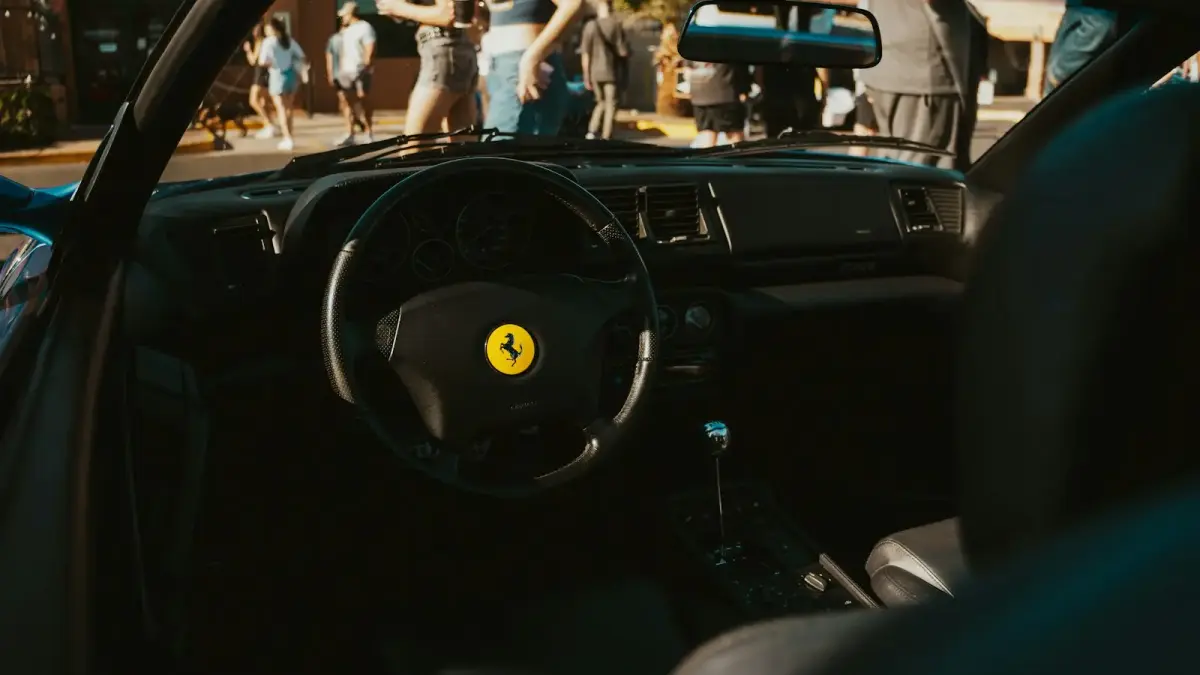
I got to a dinner party last Saturday at 5:43. The reservation was at 6:00. I pulled into the lot, turned off the engine, and sat there with my hands still on the steering wheel like the car might change its mind and take me home.
I wasn’t early because I’m organized. I wasn’t early because I respect other people’s time more than most. I was early because something in my body refuses to walk into a room that’s already happening without me.
So I sat there. I opened my phone. I scrolled without reading a single word. I watched a couple walk toward the restaurant door, and I studied the way the woman laughed before they went inside - how easy it looked, how unrehearsed. I adjusted my jacket. I checked my reflection in the rearview mirror, not out of vanity but out of something closer to inspection. And then, when my chest finally stopped doing that thing it does, I took one long breath, opened the door, and went in.
If you know this ritual - if you have performed some version of it in parking lots and driveways and side streets your entire adult life - you are not just punctual. You are someone whose nervous system learned early that rooms are safer when you arrive before they’re ready for you.
Here are 8 things you do without realizing it, and what psychology says about every single one.
1. You rehearse the room before you enter it
You don’t just think about where you’re going. You build the room in your mind before you arrive. You picture the layout. You imagine where people might be standing, where the noise will be loudest, where there might be a quiet corner you can orbit toward if the energy gets too dense.
This isn’t overthinking. A 2021 study published in Psychological Science found that people with high sensory-processing sensitivity - a trait identified by psychologist Elaine Aron - tend to mentally simulate environments before entering them. Their brains run a kind of preview, scanning for social and spatial information ahead of time.
You’re not being neurotic. You’re doing reconnaissance. You learned, probably before you had the words for it, that walking into a room unprepared felt like being thrown into water before you’d taken a breath.
2. You watch other arrivals to calibrate the energy
This one is so automatic you might not even realize you’re doing it. You sit in the car and watch other people walk toward the door. Not because you’re interested in them, exactly, but because their body language tells you what kind of room you’re about to enter.
Are people walking quickly? It might be loud in there. Are they lingering outside, talking in small groups? That means a slower start - you might have more space. Is someone arriving alone, looking a little uncertain? That’s a person you might stand near.
You’re reading the room before you’re in it. You’re gathering data from the lobby. This is what psychologist Daniel Goleman would call a form of social intelligence - the ability to sense the emotional temperature of a group before joining it. Most people walk through doors without thinking. You walk through doors with a full weather report.
3. You check your phone as a grounding ritual, not because you’re actually reading anything
Open the phone. Scroll. Tap something. Read nothing. Close the phone. Open it again.
You’ve done this so many times that it probably feels like a habit. But it’s not distraction. It’s regulation. Your body is using the familiar texture of the screen, the repetitive motion of scrolling, the low-stakes visual input to bring your nervous system down from wherever it climbed on the drive over.
A 2019 study in the Journal of Experimental Social Psychology found that repetitive, low-demand behaviors - including phone scrolling - can function as self-soothing mechanisms in anticipation of social stress. The researchers called it “digital pacification,” and they found it was especially common in people who score high on introversion scales.
You’re not addicted to your phone. You’re using it the way a child uses a blanket. You’re holding something familiar while your body decides it’s safe to let go.
4. You adjust your appearance as armor, not vanity
The mirror check before getting out of the car. The collar adjustment. The quick pass through your hair. The way you pull your sleeves down or smooth your shirt like you’re preparing for inspection.
This isn’t about looking good. This is about looking ready.
Susan Cain, in her research on introversion and public self-consciousness, described how many introverts experience social settings as a kind of performance. The appearance check before entry is the costume check before the curtain rises. You’re not fixing your hair. You’re putting on the version of yourself that can handle what’s on the other side of that door.
There’s a tenderness in this that most people don’t see. You care so much about being present for the people you’re about to see that you need a moment to assemble yourself first. The adjusting isn’t shallow. It’s a form of respect - for them, and for the version of you that has to show up and stay.
5. You time your entrance to avoid being first or alone
Here’s the paradox. You arrive early so you won’t be late. But you also don’t want to be the first one through the door. So you sit. You wait. You watch the clock. You calculate the exact moment when enough people will have arrived that your entrance won’t be noticed, but not so many that the room has already formed into groups you’ll have to break into.
A 2020 study in Frontiers in Psychology found that individuals with higher social monitoring tendencies - people who habitually track the social dynamics around them - often engage in what the researchers called “entrance timing,” deliberately choosing when to join a group to minimize social exposure.
You’ve been doing math in parking lots for years. Not the kind you learned in school. The kind your nervous system invented to keep you from standing alone in a doorway while a room full of people turns to look.
6. You mentally map the exits before you’ve even gone in
You know where the bathroom is before you’ve seen it. You’ve already identified the back door, the patio, the hallway that leads somewhere quieter. Not because you’re planning to leave - you probably won’t - but because knowing you can leave is the only reason you’re able to stay.
Gabor Mate has written about how early experiences of feeling trapped - in overwhelming households, in overstimulating environments, in rooms that demanded more than a child’s nervous system could give - create adults who need to know the way out as a condition of going in. It’s not flight. It’s the reassurance that flight is possible.
This is the quiet architecture of your social life. You don’t avoid rooms. You just need to know that the room isn’t a cage. And once you know the exits, you can be the warmest, most present person in it.
7. You run the “who will be there” inventory
Before you leave the car, you go through the list. Not a guest list - a nervous system list. Who will be there. What their energy is like. Who will want to talk at length. Who will ask questions you don’t have rehearsed answers to. Who makes you feel at ease. Who makes you feel like you’re performing.
A 2022 study in the Journal of Research in Personality found that people who score high on neuroticism and introversion often engage in “social forecasting” - mentally previewing the interpersonal dynamics of an event before it happens. This isn’t anxiety exactly. It’s preparation. It’s the mind’s way of building a map so the body doesn’t have to navigate blind.
You know who drains you. You know who fills you back up. And you run that inventory in the car, in the quiet, before the noise starts, because once you’re inside there’s no time to think - only to react. The car is where you get to think.
8. You do the exhale - the particular one before you open the door
This is the one that breaks my heart a little, because it’s so small and so necessary and nobody ever sees it.
It’s the breath you take right before your hand reaches for the door handle. Not a deep breath on purpose. Not a meditation technique. Just a long, slow exhale that your body produces on its own, like a signal passing between your lungs and your legs that says: okay. You can move now.
Research on vagal tone - the activity of the vagus nerve that regulates your parasympathetic nervous system - suggests that this kind of exhale is the body’s way of shifting from a state of alert readiness into a state of social engagement. A 2018 study published in Psychophysiology found that higher vagal tone is associated with better emotional regulation in social contexts, and that the body often produces a spontaneous deep exhale at the transition point between anticipation and action.
You’ve been doing this your whole life. That exhale is your body’s way of saying: I’ve scanned the room, I’ve checked the exits, I’ve run the list, I’ve looked in the mirror, I’ve held the phone, I’ve watched the door. I’m ready now.
Not fearless. Just ready.
And here’s what I want you to hear, if you’ve read this far and recognized yourself in every single paragraph. The car ritual is not a flaw. It’s not a sign that socializing is too hard for you or that you’re somehow less equipped for the world than the people who park and walk straight in without a second thought.
It’s a sign that you take the world seriously. That you feel it fully. That you refuse to show up to your own life on autopilot.
The girl who was rushed into rooms before she was ready grew up to be a woman who gives herself the thing no one gave her as a child - time. Time to arrive. Time to breathe. Time to choose the moment she walks through the door.
That’s not weakness. That’s the kind of self-knowledge most people never develop.
So sit in the car as long as you need to. The room can wait. You’ve already done the hardest part - you showed up.

