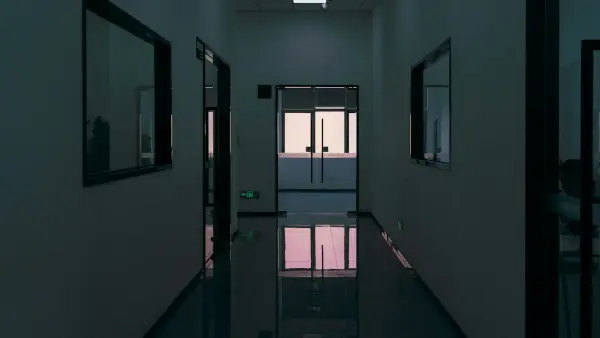
8 things people who always arrive everywhere fifteen minutes early - who sit in the parking lot with the engine running, who would rather wait alone in a lobby than walk in after everyone has already settled, who feel a specific kind of dread at the thought of an entrance that requires navigating a room of people who are already talking - do without realizing it, according to psychology
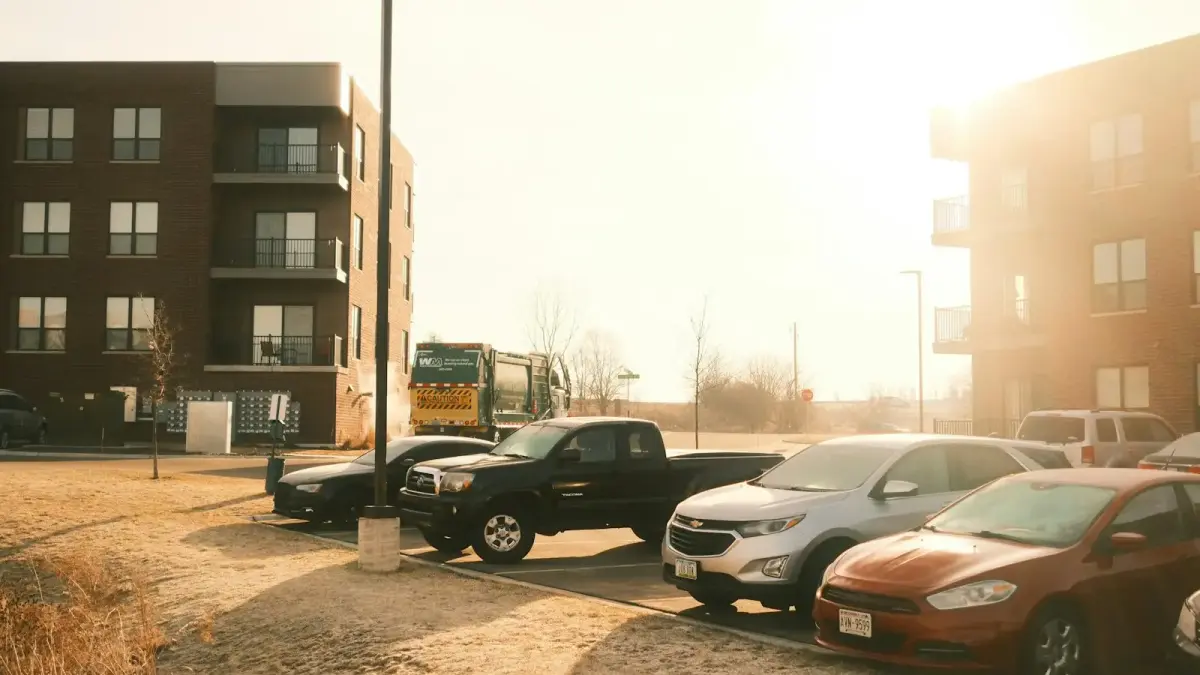
8 Things People Who Always Arrive Fifteen Minutes Early Do Without Realizing It
I got to the restaurant forty minutes before my reservation last Tuesday.
I knew I was early. I drove past the entrance, looped around the block twice, then parked three rows back from the door where I could see people arriving without being seen myself. I scrolled through my phone. I checked my teeth in the rearview mirror. I reread the confirmation email I had already read four times.
And then I walked in - exactly twelve minutes before my friend was supposed to arrive - and felt something that I can only describe as the opposite of dread. The hostess looked up. The dining room was mostly empty. I picked my seat. I arranged my coat. I ordered water.
By the time my friend showed up, I looked relaxed. Settled. Like I had been there for hours and wasn’t thinking about it at all.
She will never know what it cost me to look that effortless.
If you recognize yourself in any of this - if you have ever sat in a parking lot with the engine running, watching the clock like it was a countdown to something dangerous - then you already know that this has nothing to do with punctuality. It never did. Here are eight things you do without realizing it, and why every single one of them makes perfect sense.
1. You Perform the Parking Lot Ritual
You arrive. You park. And then you sit there.
Engine running, heat or air conditioning humming, phone in your hand but not really looking at it. You are doing something far more important than scrolling. You are transitioning. You are moving from the version of yourself who exists alone in a car - unobserved, unperformed, safe - to the version who will walk through a door and become a person in a room full of other people.
A 2019 study published in the Journal of Research in Personality found that individuals high in introversion require significantly more “transition time” between solitary and social states. The researchers called it regulatory decompression. You have been calling it “just sitting in the car for a minute.”
This ritual is not wasted time. It is your nervous system doing exactly what it needs to do before it can tolerate being perceived.
2. You Mentally Map the Room Before You Enter It
You don’t just walk into places. You scan first.
Where is the door? How many people are already inside? Is there a coat rack or will you have to carry everything? Where will you sit? Where are the bathrooms? Is there a spot near the wall where you can position yourself without having your back to the open room?
This is not paranoia. This is spatial intelligence operating at a level most people never have to access because most people don’t experience a room as something that needs to be solved before it can be enjoyed.
You process environments the way other people process spreadsheets - with a systematic thoroughness that looks effortless from the outside but requires enormous cognitive energy. And you do it every single time you walk into a coffee shop, a party, a meeting room, a dentist’s office. Every room. Every time.
3. You Feel a Specific and Private Relief When You Are the First One There
There is a feeling - and I don’t think there’s a word for it in English - that happens when you walk into an empty room and realize you are the first person to arrive.
It is not smugness. It is not superiority. It is relief so physical it almost has a texture. Your shoulders drop. Your breathing changes. You realize you were holding tension in your jaw that you didn’t know was there.
Because being first means you don’t have to navigate anything. You don’t have to read a room. You don’t have to find the gap in a conversation, the empty chair between people who are already deep in discussion, the spot where you can exist without displacing anyone. You get to be the room. And then everyone else arrives into you.
Daniel Goleman’s work on emotional intelligence describes this pattern beautifully - people with high social awareness often experience social environments as requiring constant real-time processing. Being first eliminates the processing. You aren’t reading the room. You are the room.
4. You Experience Genuine Anxiety When Traffic Threatens Your Buffer
Other people get annoyed by traffic. You get something closer to panic.
Not because you’re worried about being late in the way that responsible adults worry about being late. You are worried about losing your margin. That fifteen-minute cushion is not a preference - it is architecture. It is the structure your entire social experience is built on.
When traffic eats into your buffer, you aren’t just recalculating arrival time. You are recalculating everything. Will the room already be full? Will people look up when I walk in? Will I have to stand in a doorway scanning for a familiar face while strangers register my presence?
A 2020 study in Frontiers in Psychology found that anticipatory social anxiety - the distress experienced before a social event even begins - is a stronger predictor of avoidance behavior than anxiety during the event itself. Your buffer isn’t about the event. It’s about the anticipation of the event. And when traffic steals it, you lose the only tool you had for managing the before.
5. You Watch People Who Arrive Late With a Kind of Bewildered Envy
You don’t judge them. Not really. Not morally.
But you study them with a fascination that borders on disbelief. They walk in twenty minutes late, scan the room with a casual sweep, spot their group, slide into a chair, and start talking. No preliminary breathing exercises. No mental floor plan. No coat strategy. They just - arrive. And they’re fine.
How? How do you just walk into a room that is already happening and not feel like you have interrupted something? How do you make an entrance without experiencing it as a disruption? How is the door not the hardest part?
You are not angry at these people. You are something closer to amazed. The way someone who studied for forty hours watches a classmate flip through the textbook five minutes before the exam and get an A. It is not resentment. It is genuine confusion about how their nervous system allows them to do something that yours has classified as fundamentally unsafe.
6. You Put More Planning Into Your Departure Time Than Anyone Would Believe
People think punctuality is simple. Set an alarm. Leave on time. Arrive.
But for you, the calculation started hours ago. Maybe days ago. You mapped the route. You accounted for traffic - not average traffic, but worst-case traffic for this specific day, this specific time, this specific highway on-ramp that backs up on Thursdays for reasons nobody has ever been able to explain.
You factored in parking. Not just “is there parking” but “where will I park relative to the entrance” and “will I have to walk past outdoor seating where people might see me arriving.” You thought about what you’d wear while walking from the car. You thought about whether you’d need an umbrella and whether carrying an umbrella would make you look like you were trying too hard.
Susan Cain, whose book Quiet revolutionized how we think about introversion, has described this kind of preparation as the hidden labor of highly sensitive people. It looks like type-A planning from the outside. From the inside, it is just the minimum viable preparation required to feel like a normal person doing a normal thing.
7. You Cannot Enjoy the Event Until You Have Found Your Spot
You arrived. You scanned the room. You chose your position.
But the event hasn’t started for you yet. Not really. Not until you’ve settled. And settling is not just sitting down - it is achieving a specific state of spatial security that most people achieve automatically and you achieve through deliberate effort.
Your spot needs to meet criteria that you have never articulated to anyone because articulating them would sound absurd. You need to be able to see the entrance. You need something solid behind you - a wall, a high-backed chair, a bookshelf. You need enough space that no one will accidentally brush your arm. You need to not be blocking a pathway.
Once you’ve found it - once you’re in your spot, with your drink, with your coat arranged, with a clear sightline to the door - something clicks. The room becomes tolerable. Then enjoyable. Then sometimes even wonderful.
But not before. Never before. The spot comes first. Everything else is built on top of it.
8. You Always Know Where the Exits Are
This is the one that makes people raise their eyebrows. But you cannot help it.
Every room you walk into, one of the first things you register - before you notice the lighting or the music or who else is there - is how to leave. Not because you plan to leave. Not because you want to leave. But because knowing you can leave is the thing that allows you to stay.
A 2017 study published in Psychological Science examined what researchers call “perceived escape availability” and found that simply knowing an exit exists reduces physiological stress responses in socially anxious individuals by a significant margin. The door doesn’t have to be open. You just have to know it’s there.
This is not a disorder. This is not something wrong with you. This is your nervous system doing brilliant, invisible, unacknowledged work to keep you functional in environments that demand more of you than they demand of most people. You are not scanning for exits because you are afraid. You are scanning for exits because your brain learned - probably very early, probably before you had language for it - that the only way to walk into a room is to already know how to walk out of it.
Here is what I want you to know, if you are someone who does all of this without ever having named it.
You are not high-maintenance. You are not difficult. You are not “too much” for showing up early and needing a minute in the car and choosing your chair carefully and glancing at the exits before you can settle in and be present.
You are a person whose nervous system processes social environments with an extraordinary level of depth and detail. That processing takes energy. That energy needs management. And every single one of these habits - the parking lot ritual, the room scan, the buffer, the spot - is management. It is you, taking care of yourself so quietly that no one ever notices you’re doing it.
The people who walk in late and slide right into conversation - they are not better than you. They are not braver. Their systems just run on different fuel.
Yours runs on preparation. On forethought. On the small, invisible rituals that turn a threatening room into a manageable one.
And that is not a flaw. That is engineering.