8 things people who always need to know the plan before they can relax - who ask 'what time are we leaving' the moment they arrive somewhere, who check the restaurant menu online before going, who feel a physical wave of unease when plans change without warning - do without realizing it, according to psychology
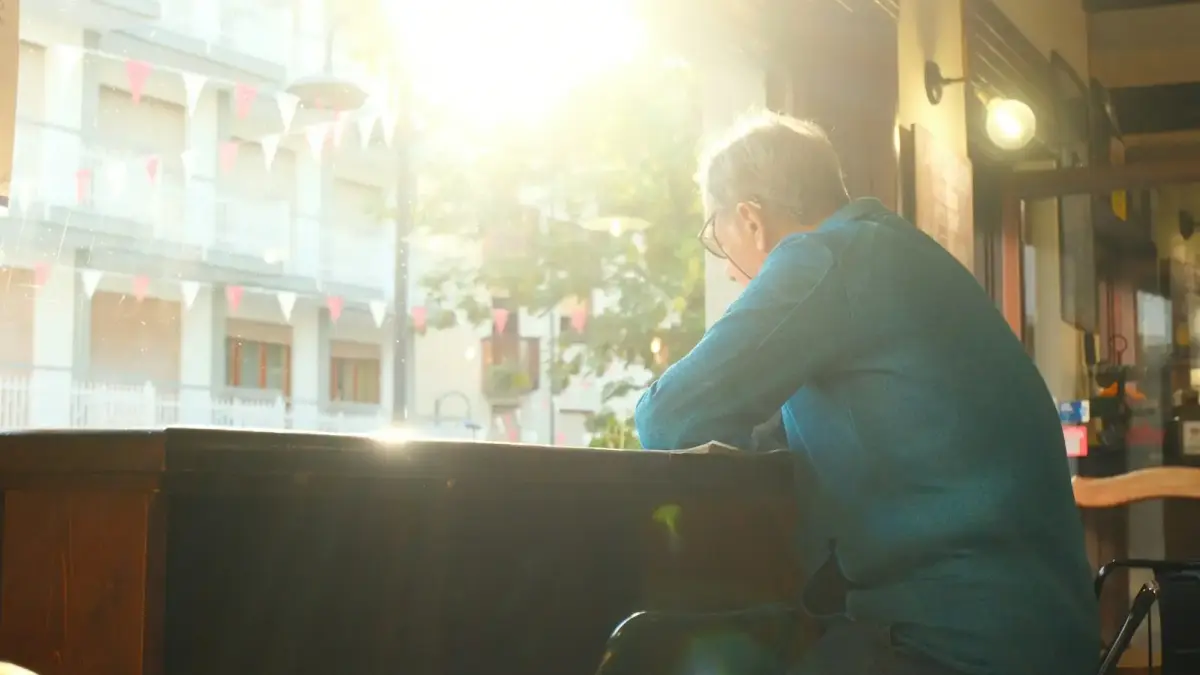
I remember the exact moment someone made me feel small for it.
We were heading to a friend’s lake house for the weekend - six of us crammed into two cars - and I asked, casually I thought, “So what’s the plan when we get there? Are we eating first or going straight to the water?” The car went quiet. Then someone in the back seat laughed and said, “Dude, just relax. We’ll figure it out when we get there.”
I smiled. I nodded. And I spent the next forty-five minutes of that drive with a low hum of tension in my chest that I couldn’t name.
It took me years to understand what that feeling was. It wasn’t anxiety, exactly. It wasn’t control. It was my body trying to do the only thing it had ever learned to do in uncertain situations - map the territory before stepping into it. Because somewhere in my history, not knowing what came next didn’t mean adventure. It meant danger.
If you are the person who checks the restaurant menu online before you go, who asks “what time are we leaving” before you’ve even taken your coat off, who feels a genuine physical unease when plans shift at the last second - this is not a personality flaw. This is a form of intelligence your nervous system built when you were too young to call it anything.
Here are eight things you probably do without realizing it, and what psychology says they actually mean.
1. You mentally rehearse events before they happen
You don’t just show up to things. You arrive in your mind first - sometimes hours earlier, sometimes days. You picture the room, the people, the likely flow of conversation. You think about where you’ll sit, what you might order, how long it will probably last.
This isn’t overthinking. A 2016 study published in Psychological Science found that mental simulation - the act of rehearsing future events in detail - is one of the brain’s most sophisticated planning tools, and people who engage in it consistently show higher emotional regulation during stressful encounters. Your brain is not spinning. It’s preparing.
The people who can “just show up” and feel fine? They probably grew up in environments where showing up unprepared was safe. Yours taught you something different. And the skill you built from that lesson is still running in the background, quietly, every single day.
2. You ask logistical questions that other people find unnecessary
“What’s the parking situation?” “Is there a dress code?” “Will there be food, or should I eat before?” “What time does it actually start - not what time does the invite say, but what time are people really getting there?”
These are not the questions of someone who is difficult. These are the questions of someone whose comfort depends on predictability. You are not trying to control the event. You are trying to build enough of a mental framework around it that your body will let you enjoy it.
Most people don’t realize that what they call “going with the flow” is actually a luxury. It requires a baseline sense of safety that some of us never got installed.
3. You need transition time between activities
You can’t go from work to a dinner party in ten minutes. You can’t leave the gym and immediately walk into a family gathering. There has to be a gap - a drive, a shower, a few minutes sitting in the car doing nothing. Something that lets your nervous system shift gears.
Dr. Stephen Porges’ polyvagal theory explains this clearly. The autonomic nervous system doesn’t switch states like a light switch. It transitions. And for people whose systems run a little hotter - who learned early to stay vigilant - those transitions need more space, more time, more gentleness than the average person requires.
You are not being slow. You are being honest about what your body needs to feel safe enough to be present.
4. You feel a physical reaction when plans change without warning
Someone texts, “Actually, we’re going somewhere else instead.” Or your partner says, “Oh, I forgot to mention - my parents are coming too.” And something in your chest drops. Your stomach tightens. Your jaw sets.
That’s not drama. That’s your nervous system registering a threat - not because the new plan is dangerous, but because the map you built just got torn up. And for a nervous system that learned to survive by mapping, losing the map feels exactly like losing control.
A 2019 study in Frontiers in Psychology found that individuals with heightened intolerance of uncertainty show measurable physiological stress responses - increased cortisol, elevated heart rate - when faced with unexpected changes to planned activities. Your body isn’t overreacting. It’s doing precisely what it was trained to do.
5. You over-prepare for things that don’t require preparation
You pack three days of supplies for a day trip. You arrive twenty minutes early to everything. You bring snacks to places that will have food. You charge your phone to 100% before leaving even if you’ll be gone for an hour.
People joke about this. They call it “being extra” or “being a mom friend.” But the root of it is simpler and sadder than that. You learned, somewhere along the way, that no one else was going to make sure things were okay. So you became the person who made sure things were okay. And you never stopped.
Over-preparation is not anxiety performing as competence. It is competence that was born from anxiety. There is a difference, and it matters.
6. You struggle to relax in someone else’s unstructured space
An open-ended invitation terrifies you. “Come over whenever.” “We’ll just hang out.” “No plans, just vibes.” These phrases, which are meant to sound welcoming, land in your body like an assignment with no rubric.
You need edges. A start time, an end time, a rough idea of what “hanging out” actually involves. Not because you can’t be spontaneous - you can, when you’ve had time to prepare for the spontaneity - but because your version of relaxation requires a container. Without the container, there is no relaxation. There is just floating, and floating has never felt safe.
Research from psychologist Dr. Dan Siegel at UCLA suggests that the brain requires a sense of coherence - a narrative structure - to move into states of rest and integration. For some people, that coherence comes naturally. For you, it has to be built. And you’ve been building it your whole life.
7. You are the person everyone relies on but nobody checks on
You know the reservation time. You know the parking situation. You have the tickets, the directions, the backup plan. You are the one who texts “what should I bring” and actually brings it.
And because you do all of this so seamlessly, people assume it’s effortless. They assume you enjoy it. They assume that you are naturally organized rather than strategically vigilant, and that the planning brings you pleasure rather than peace.
No one asks the planner if they’re okay. No one asks the person who always has the answer if they ever wish someone else would hold the map for a while. You became dependable because dependability was the only currency that bought you safety. And now everyone spends it without ever asking where it comes from.
8. You confuse preparation with peace, and exhaustion with calm
Here is the one that might sting.
You believe that if you plan thoroughly enough, the anxiety will go away. That if you know every detail, check every variable, pack every bag perfectly, you will finally feel the thing other people seem to feel when they say “I’m relaxed.”
But it never quite gets there, does it? The preparation takes the edge off, but it doesn’t fill the hole. Because the hole was never about the plan. It was about the feeling you were trying to create with the plan - safety, predictability, the sense that nothing bad would come out of nowhere.
A 2021 study in the Journal of Research in Personality found that individuals with high need-for-structure traits often conflate the reduction of distress with the presence of well-being. In other words, you mistake the absence of panic for the presence of peace. And because you’ve been running this pattern since childhood, you might not even know what actual relaxation feels like. The version you know has always had a clipboard in its hand.
I want to say something to you, if this is you.
You are not rigid. You are not controlling. You are not “too much” for needing the information that lets your body stand down.
You are someone who grew up in a world where the rules kept changing, and instead of falling apart, you became the person who learned the rules faster than anyone else in the room. That is not a flaw. That is an extraordinary adaptation.
But you deserve more than adaptation. You deserve to sit somewhere, without a plan, without a timeline, without knowing exactly when you’re leaving - and feel okay anyway. Not because you mapped it. Because you’re safe.
That feeling might take a while. It might take practice, therapy, patience, and a few people who understand that when you ask “what time are we leaving,” you are not being annoying. You are asking to be let in. You are asking for the one thing your childhood didn’t give you freely - the knowledge that what comes next won’t hurt.
And that’s not something to fix. That’s something to honor.