8 things people who always arrive exactly on time - not five minutes early, not fashionably late, but precisely on the minute, as though their body has an internal countdown calibrated to the second - do without realizing it, according to psychology, because a child who learned that lateness triggered consequences and earliness meant sitting alone in someone else's space calculating how to be invisible developed a relationship with time that was never about punctuality but about navigating the narrow window between two different kinds of danger
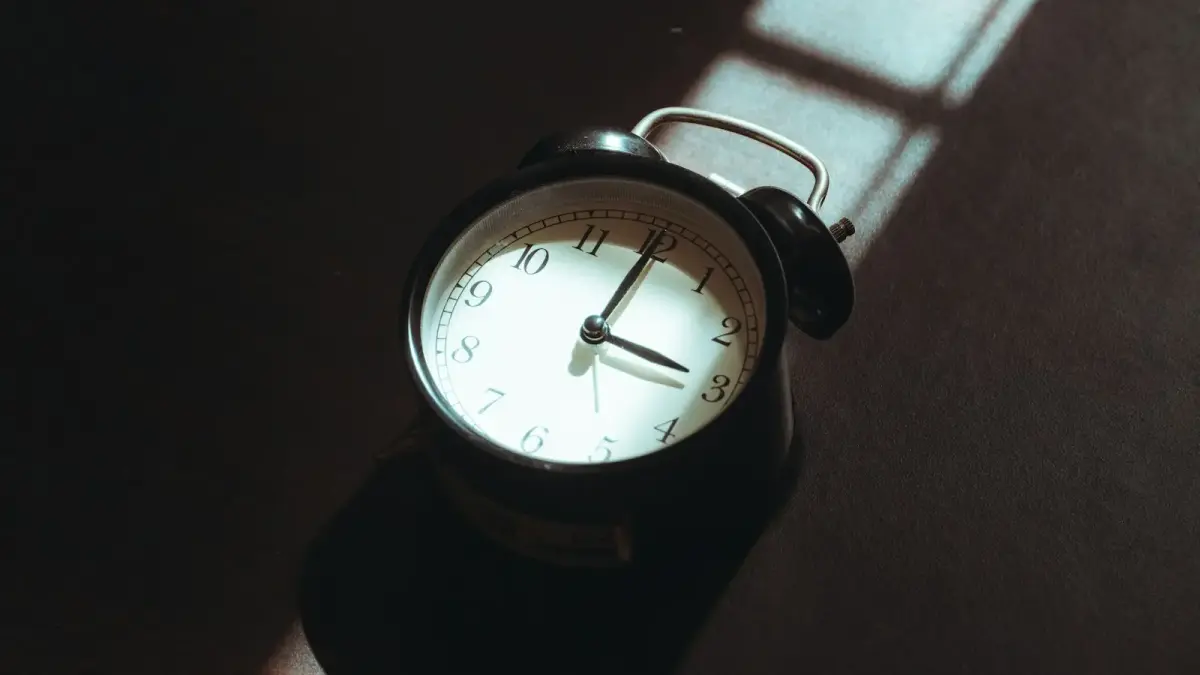
I was sitting in my car outside a restaurant last Tuesday, engine off, watching the clock on my dashboard tick from 6:57 to 6:58.
I’d been there for four minutes already. I knew exactly how long it took to walk from my parking spot to the front door - forty seconds, maybe forty-five if someone was coming out and I held the door. I knew that putting my phone in my bag and unbuckling my seatbelt would take another ten seconds. I had calculated all of this before I even pulled into the lot.
At 6:59, I opened the door. At 7:00, I walked in. My friend was already seated, and she smiled and said, “You’re always right on time.”
She meant it as a compliment. But something about the way she said it - like it was a quirky personality trait, a charming habit - made my chest tighten. Because I know what lives underneath that precision. It isn’t discipline. It isn’t respect for other people’s schedules. It’s something I learned when I was very young, in a house where showing up at the wrong moment meant something entirely different than it does now.
If you recognize yourself in this, if you’ve ever circled a block to avoid arriving three minutes early, if the idea of being late to anything sends a jolt through your body that feels wildly disproportionate to the situation - you’re not rigid. You’re not controlling. You learned to read time the way other children learned to read faces. And here’s what that looks like in adulthood.
1. You pre-calculate every journey down to the minute, and then you add a silent buffer that nobody knows about
You don’t just estimate travel time. You build a layered calculation that accounts for traffic patterns, parking availability, walking distance from car to door, and the likelihood of encountering a slow elevator. You’ve done this so many times it barely registers as conscious thought anymore.
But underneath the math, there’s a second layer - a private buffer of five to ten minutes that you never tell anyone about. You arrive in the vicinity early, then you manage the remaining time in your car, on the sidewalk, around the corner. A 2019 study published in the Journal of Research in Personality found that individuals with heightened conscientiousness paired with anxiety traits tend to engage in excessive pre-planning as a way to manage perceived environmental threats. You’re not planning a commute. You’re planning an approach.
The buffer isn’t about being prepared. It’s about having space to regulate before you walk in.
2. You experience a physical response to lateness that has nothing to do with manners
When you realize you might be late - even by two minutes, even to something that genuinely doesn’t matter - your body responds before your mind catches up. Heart rate spikes. Jaw tightens. A flush of heat moves through your chest.
This isn’t about disrespecting someone’s time. This is your nervous system firing a warning that was installed decades ago, in a kitchen or a car or a hallway where a raised voice was the price of poor timing.
You might have spent years thinking you were just “a punctual person.” But punctual people don’t feel their pulse in their throat because they hit a red light on the way to a casual brunch.
3. You sit in parking lots, lobbies, and hallways doing invisible emotional math
This is the part nobody sees. The four minutes in the car. The slow walk around the building. The sudden interest in your phone while you stand near the entrance, watching the time tick toward the exact right moment to walk in.
You’re not killing time. You’re managing exposure. Being early means being visible in someone else’s space before you’ve been invited in. It means sitting at a table alone, looking available, looking like you need something. For a child who learned to minimize their footprint, who understood that taking up space before it was offered could shift the entire energy of a room, early feels almost as dangerous as late.
A 2021 study in Frontiers in Psychology found that adults who grew up in unpredictable home environments often develop hypervigilant time-monitoring behaviors - not because they value punctuality, but because they learned that timing was a variable they could control when almost nothing else was.
4. You cannot “just be late” even when the stakes are zero
Your partner says, “Relax, it doesn’t matter if we’re a few minutes late.” And intellectually, you know they’re right. It’s a backyard barbecue. Nobody is taking attendance. Nobody will notice.
But your body doesn’t believe your brain. Your body still lives in the version of reality where timing was a test you couldn’t afford to fail.
So you move faster. You get quieter. You start calculating alternative routes. And if you do arrive late - even five minutes, even to something where people are still putting out plates - you feel a hot wave of something that isn’t embarrassment. It’s older than that. It’s the feeling of having made yourself visible in the wrong way at the wrong time.
5. You notice other people’s lateness with a precision that surprises even you
You know exactly when someone was supposed to arrive and exactly when they actually did. You don’t necessarily say anything. You might not even feel angry. But you notice.
You notice because you were trained to track the emotional temperature of a room by the timing of arrivals and departures. Who came home late. Who didn’t show up when they said they would. Who walked in with a face that meant the evening had already shifted.
Daniel Goleman’s research on emotional intelligence describes this kind of social monitoring - the constant scanning of environmental cues - as a hallmark of people who learned early that reading the room wasn’t a skill but a survival mechanism. You don’t track other people’s timing to judge them. You track it because, for a long time, other people’s timing determined how safe you were.
6. You have a phantom internal countdown that runs beneath everything you do
There’s a clock running in the back of your mind that has nothing to do with your watch or your phone. It tracks how long you’ve been somewhere, how long until the next thing, how many minutes remain before you need to start the process of leaving.
This countdown runs during conversations, during dinners, during movies. It runs when you’re enjoying yourself. It runs when there’s genuinely nothing to be on time for.
You might call it “being aware of time.” But there’s a difference between awareness and surveillance. Awareness lets you glance at a clock and adjust. Surveillance means the clock never stops ticking in the back of your skull, and the penalty for ignoring it feels like something physical - a tug in your chest, a tightening behind your eyes.
7. You feel a strange guilt about rest that you’ve never been able to fully explain
This one might seem unrelated, but it’s the same architecture. If time is something you must manage perfectly - if every minute has a correct way to be spent - then unstructured time becomes threatening.
Sitting on the couch on a Saturday with nothing planned doesn’t feel like relaxation. It feels like you’re failing at something you can’t name. Like you should be doing something, preparing for something, getting ahead of something that hasn’t happened yet.
A 2020 study published in Psychological Science found that individuals with childhood histories of emotional unpredictability often struggle with what researchers call “rest resistance” - an inability to tolerate unstructured time because their early environments taught them that stillness was a precursor to disruption. You don’t struggle to relax because you’re a workaholic. You struggle to relax because relaxation requires trusting that nothing bad will happen while you’re not watching.
8. You’ve built an entire identity around reliability, and it quietly exhausts you
People describe you as dependable. The one who’s always there, always on time, always prepared. They say it with admiration. And you smile, because it’s better than the alternative - better than being the person who lets people down, who triggers that flash of disappointment you know so well because you spent years watching for it on someone else’s face.
But the truth is, being perfectly reliable is a full-time job. It requires constant calculation, constant monitoring, constant low-level vigilance. You’re not just showing up on time. You’re showing up on time while simultaneously managing the invisible math of approach angles and parking buffers and how long it takes to walk from the elevator to the conference room.
And sometimes - maybe more often than you’d admit - you’re tired. Not from the schedule. From the engine that runs beneath it. From the part of you that still believes the margin for error is exactly zero.
Here’s the thing I want you to sit with, if any of this felt like reading your own private operating manual.
You developed an extraordinary skill. You learned to read time, space, and emotional atmosphere with a precision that most people never need to develop. You built an internal system so sophisticated that it runs without conscious effort, calculating and adjusting and protecting you before you even realize it’s working.
That system kept you safe. And it still runs, even though the danger has mostly passed.
You don’t need to dismantle it. You don’t need to force yourself to be late to things as some kind of exposure therapy. But you might consider, gently, that the clock in your head is allowed to be wrong sometimes. That arriving three minutes early and sitting with the discomfort of being visible in someone else’s space - just sitting with it, breathing through it - is not the emergency it once was.
You were never just punctual. You were a child who found the only safe window in a world of bad timing, and you’ve been climbing through it ever since.
That’s not a flaw. That’s the kind of intelligence that deserves to finally rest.