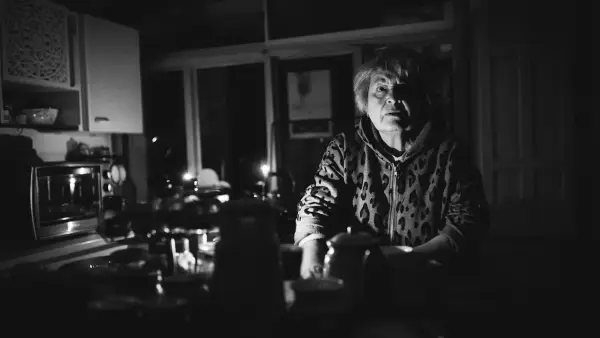
8 things people who always have a backup plan for the backup plan - who carry an extra phone charger, who know two routes to every destination, who have already calculated where the nearest open pharmacy is at 11pm on a Sunday - do without realizing it, according to psychology, because a mind that is always preparing for what could go wrong is not anxious but faithful to a childhood that taught it the only safe person in the room was the one who had already thought three steps ahead

I keep a flashlight in my glove compartment, one in my nightstand drawer, and a third in my kitchen junk drawer. I know which grocery stores in my neighborhood close at ten and which ones stay open until midnight. I have memorized the location of every fire exit in every building I regularly visit.
For most of my life, I thought this made me a little odd. Maybe a little controlling. Definitely a little much.
But the older I get - and the more I sit with the research on childhood adaptation - the more I understand that this wasn’t something I chose. It was something I built. Piece by piece, in a house where the adults were sometimes wonderful and sometimes simply not ready for what the day was going to throw at them. So I became ready. Not because I wanted to. Because somebody had to be.
If you recognized yourself in that headline - if you carry a backup phone charger and an extra pair of socks and you already know what you’d do if your car broke down on this particular stretch of highway - I want you to know something before we go any further. You are not broken. You are not “too much.” You are the product of a mind that learned, very young, that preparation was the closest thing to safety it could find.
Here are eight things you probably do without even realizing it.
1. You run simulations constantly - and you don’t even notice you’re doing it
Before you walk into a restaurant, you’ve already pictured where you’ll sit. Before a road trip, you’ve mentally mapped out gas stations, rest stops, and what you’ll do if traffic gets bad on the main route. Your mind is always running a quiet background program that asks: what could go wrong, and what will I do when it does?
A 2021 study published in Frontiers in Psychology found that individuals who grew up in unpredictable home environments develop heightened prospective thinking - the cognitive ability to simulate future events in rich detail. The researchers noted that this isn’t the same as worry. Worry loops. Simulation plans.
You’re not spiraling. You’re strategizing. Your brain learned that trick early, and it never stopped.
2. You pack for the version of reality that probably won’t happen - but could
Your suitcase has a first aid kit. Your purse has ibuprofen, a hair tie, a pen, and probably a granola bar from three weeks ago. When other people pack light, you pack thorough.
It’s not that you expect disaster. It’s that your body remembers what it felt like to need something and not have it. To be a child in a situation where nobody had thought ahead, and the silence that followed felt heavier than the crisis itself.
So now you think ahead. Not because you’re paranoid. Because you remember what it costs when nobody does.
3. You mentally assign yourself the “responsible one” role in every group - even when no one asked
At the dinner with friends, you’re the one who quietly confirmed the reservation. On the family trip, you’re the one who researched whether the hotel has a late check-in policy. At work, you’re the one who brought extra copies of the presentation, just in case.
Psychologist Brene Brown has written extensively about how children in chaotic or emotionally unpredictable homes often develop what she calls “hyper-responsibility” - the deep, bone-level belief that if something goes wrong, it is their job to fix it. Not because anyone assigned that role to them. Because someone had to fill it, and they were the one who noticed it was empty.
You became the responsible one not because you’re naturally organized. Because responsibility felt safer than depending on someone else to hold things together.
4. You have a hard time relaxing unless you’ve already handled everything that might come up
People tell you to relax. To stop planning. To just enjoy the moment. And you want to. You genuinely do.
But your nervous system has a prerequisite. It can’t settle until the environment feels secure. And for you, “secure” doesn’t mean “nothing bad is happening.” It means “I have already accounted for the things that might.”
A 2019 study in the Journal of Personality and Social Psychology found that people with high anticipatory coping styles - those who habitually prepare for potential stressors before they arrive - often experience lower acute stress during actual crises. In other words, your constant planning does work. It just never lets you rest before the planning is done.
The problem is that the planning never feels done. Because the original feeling underneath it - that unspoken childhood certainty that something could fall apart at any moment - was never about logistics. It was about trust. And logistics were the only tool you had.
5. You notice what other people miss - escape routes, schedules, details that don’t add up
You walk into a room and you know where the exits are. You read the fine print on contracts. You notice when someone says they’ll “definitely be there” in a voice that tells you they probably won’t.
This is hypervigilance, but not the dramatic kind. Not the kind that looks like panic. The quiet kind. The kind that looks like being observant, being thorough, being the person everyone calls “detail-oriented” at work.
Daniel Goleman’s research on emotional intelligence describes a subset of highly perceptive individuals who don’t just read rooms - they scan them. They pick up on shifts in energy, inconsistencies in tone, tiny cues that something is slightly off. Most of them, he notes, learned this skill in childhood. Not because anyone taught them. Because missing those cues once had consequences.
You don’t notice everything because you’re controlling. You notice everything because you learned early that the details other people ignored were the ones that mattered most.
6. You struggle to ask for help because the last time you truly needed it, help didn’t come
This is the quiet one. The one that sits underneath all the preparation and all the backup plans and all the extra phone chargers in your bag.
You don’t ask for help. Not because you’re proud. Not because you think you’re better than everyone else. But because somewhere very deep inside you, there’s a child who once needed help and didn’t get it. Or got it late. Or got it with conditions attached.
A 2022 study in Psychological Science found that adults who scored high on self-reliance measures often had childhoods marked not by neglect in the clinical sense, but by inconsistency. The help was there sometimes. And sometimes it wasn’t. And that inconsistency taught the child something devastating: the only person you can count on to always show up is you.
So you show up. For everyone. Every time. And you carry the extra charger because it means you never have to stand in a room full of people and admit that you need something you’re not sure anyone will give you.
7. You feel guilty when you’re not being useful
Rest feels selfish. Sitting still feels irresponsible. When everyone else is relaxed and laughing and not thinking about what happens next, you feel a low hum of guilt - like you’re failing at something you can’t name.
This is what happens when a child’s worth becomes tied to their function. When the praise came not for being themselves but for being helpful. For being ready. For being the one who handled it.
Gabor Mate has spoken extensively about how children in emotionally inconsistent homes learn to earn their place through utility. They become indispensable - not because they want to, but because being needed felt like the closest thing to being safe. If you were useful, you were kept. If you were useful, you mattered.
That feeling doesn’t disappear when you grow up. It just migrates into new territory. Into packed bags and organized calendars and the constant, exhausting readiness that everyone else calls being “so on top of things.”
8. You carry everyone else’s comfort on your shoulders and call it “just being thoughtful”
You bring snacks on road trips that nobody asked for. You check in on friends who mentioned feeling down three days ago. You remember your coworker’s kid’s name and ask about them on Monday morning. You arrive early, stay late, and leave every space a little more organized than you found it.
People call you thoughtful. And you are. Genuinely. But there’s something underneath the thoughtfulness that you don’t always let yourself look at.
You carry other people’s comfort because you remember what it felt like when nobody carried yours. You anticipate needs because your nervous system learned very early that unmet needs create danger. Not always physical danger. Emotional danger. The danger of a room where something is about to go wrong and nobody has noticed except you.
A 2020 study published in the Journal of Research in Personality found that individuals with high “tend-and-befriend” responses - people who instinctively manage group well-being during stress - often developed that response pattern in childhood as a survival strategy. They didn’t learn generosity from abundance. They learned it from scarcity.
Your thoughtfulness is real. But it’s also armor. And the fact that it looks like kindness from the outside doesn’t mean it doesn’t cost you something on the inside.
If you made it to the end of this list and your chest feels a little tight, I want to say one more thing.
The person you became - the prepared one, the reliable one, the one who always has a plan and a backup plan and a backup for the backup - that person deserves an enormous amount of credit. You built a survival system with no instructions and no blueprint, and it worked. It kept you safe. It kept other people safe.
But you are allowed to put it down sometimes. You are allowed to walk into a room without scanning for exits. You are allowed to let someone else bring the extra charger.
Not because your preparation isn’t valuable. It is. But because the child who built that system deserves to learn something they never got to learn the first time around.
That sometimes, the room is just a room. And you can sit in it without holding it together.