8 things people who always mute themselves on video calls even when they're not making any noise - who hover over the mute button like a lifeline and unmute only long enough to deliver their sentence before retreating back to silence - do, according to psychology
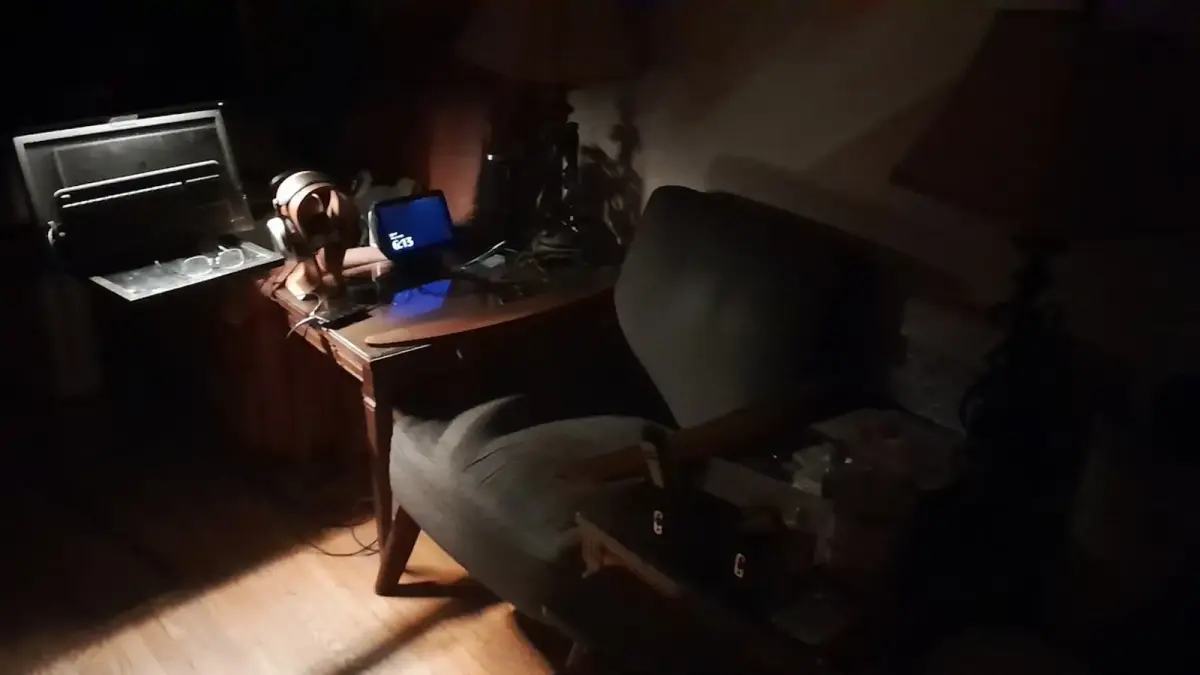
I spent an entire forty-five-minute team call on mute last March. Not because I had nothing to say. Not because my dog was barking or the dishwasher was running. I was sitting in complete silence in my home office, and I was still muted.
When I finally realized it, I felt something unexpected. Not embarrassment. Relief. Because no one had noticed. My silence had been seamless, indistinguishable from participation, and some part of me found that deeply comforting.
If you are someone who hovers over the mute button like it is a security blanket - who unmutes only to deliver your carefully rehearsed sentence and then immediately retreats back behind that little red microphone icon - I want you to know something. That impulse did not start with Zoom. It did not start with the pandemic.
It started decades before any of us had ever heard the phrase “you’re on mute.”
The mute button is the first piece of technology that finally matched something you have been doing your entire life. Minimizing your ambient presence. Making yourself smaller in shared spaces.
Treating your own existence - your breathing, your shifting in your chair, the sound of your pen clicking - as something that needed to be managed.
Here are 8 things people who live on the mute button tend to do, and what psychology tells us about why.
1. You rehearse your sentences before unmuting
You do not just speak. You compose. You wait for the perfect opening, construct your sentence internally, sometimes mouth it once to yourself, and only then do you press that button, deliver your words, and retreat.
This is not shyness. A 2003 study published in the Journal of Personality and Social Psychology found that people who grew up in environments where spontaneous speech was met with criticism or dismissal develop what researchers call “communicative hypervigilance” - a pattern of over-monitoring their own verbal output before releasing it into shared space.
You learned early that unpolished words had consequences. So now every sentence gets an internal edit before it reaches the air.
2. You apologize before speaking even when no apology is needed
“Sorry, can I just add something?” “Sorry, I don’t know if this is relevant, but -” “Sorry, go ahead, I didn’t mean to interrupt.”
You preface your contributions with apologies that no one asked for, because somewhere along the way you absorbed the idea that your voice entering a room is an imposition. That taking up auditory space requires permission.
This is not politeness. It is a finely tuned survival strategy from someone who learned that existing loudly was a form of misbehavior.
3. You feel genuine anxiety about unmuted background noise
Not loud background noise. Not construction or a screaming child. You worry about the subtle sounds. Your breathing. The creak of your chair. The sound of you sipping water. Sounds that no reasonable person would notice or care about.
But you care. Because you grew up understanding that ambient noise - the sound of just being a person in a room - was something that could irritate people. Could draw the wrong kind of attention. Could make someone say “do you have to do that?”
The mute button solved a problem you did not know you had been trying to solve your whole life. It gave you a way to exist in a room without the risk of your existence being too much.
4. You have accidentally spent entire meetings on mute and felt more comfortable that way
This is the one that gives it away. Most people would feel mortified to discover they had been muted for twenty minutes. You felt something closer to peace.
Dr. Susan Cain, author of Quiet, has written extensively about how introverts do not simply prefer less stimulation - they process social environments differently at a neurological level. For people wired this way, the mute button removes a layer of performance pressure that most extroverts do not even realize exists.
You were not absent from that meeting. You were listening intently. You were thinking deeply.
You were fully present. You were just doing all of that without the exhausting requirement of being heard doing it.
5. You monitor the mute status of everyone else on the call
You notice who is muted and who is not. You notice when someone unmutes and does not speak - and it makes you slightly anxious on their behalf. You are aware of the entire auditory landscape of the call in a way that most participants are not.
A 2019 study published in Frontiers in Psychology found that individuals with high sensory processing sensitivity - roughly 15 to 20 percent of the population - are significantly more attuned to ambient environmental details that others filter out unconsciously. You are not being controlling. You are processing the room the way you have always processed rooms.
You walk into a party and immediately note the exits. You sit in restaurants with your back to the wall. And on video calls, you track every unmuted microphone like a quiet air traffic controller.
6. You type your thoughts into the chat instead of saying them out loud
The chat box became your voice. Not because you are shy. Not because you have nothing to say. But because written words feel safer. You can edit them. You can delete them before sending. You can contribute without the vulnerability of your actual voice entering a room full of people.
There is something profound about this preference. You are not avoiding communication. You are choosing the form of communication that gives you a revision process. The one that lets you exist in the conversation without the rawness of real-time speech.
For someone who spent their childhood editing themselves before every interaction, the chat function is not a secondary feature. It is the first time a meeting gave you a way to participate on your own terms.
7. You feel irrationally guilty when your microphone picks up any sound
Your dog barks during a call and you feel a wash of shame that is wildly disproportionate to the event. Your child walks into the room and you scramble to mute as if something terrible is about to happen. A notification sound plays from your phone and your stomach drops.
This is not about professionalism. This is about the deep, old belief that your personal environment - your home, your sounds, your life - is something that should not leak into shared spaces. That the messy evidence of your actual existence is something others should be protected from.
Psychologist Dr. Brene Brown describes this as a form of “worthiness wound” - the internalized belief that your authentic, unmanaged self is fundamentally too much for other people to absorb.
8. You feel a deep, quiet kinship with other people who stay muted
You notice them. The other silent icons on the call. The people whose microphones never accidentally pick up a cough or a sigh. The ones who unmute with surgical precision, say their piece, and disappear again. You feel a wordless connection with them.
You recognize each other the way all quiet people have always recognized each other - in waiting rooms, at the edges of parties, in the back rows of classrooms. The mute button just made your tribe visible in a new way.
And there is something beautiful about that. A grid of muted icons, each one a person who learned the same lesson you did - that silence is safer, that quiet is considerate, that the world prefers you managed.
You found each other without saying a word.
Here is what I want you to sit with. The mute button is not a technology feature for you. It is the first tool that ever validated how you have always wanted to move through shared spaces - present but not imposing, listening but not leaking, there but not too much there.
And that impulse did not come from nowhere. It came from a childhood where you learned, in a thousand small ways, that your ambient presence needed to be minimized. That the sound of you being a person in a room was something that could bother people.
But here is the thing nobody told you back then, and that I want to tell you now. Your breathing is not too loud. Your chair creaking is not a disruption. The sound of you existing in a room is not an imposition on anyone.
You are allowed to be unmuted. You always were.
You just never had anyone tell you that the noise you were making - the noise of simply being alive and present - was never the problem in the first place.