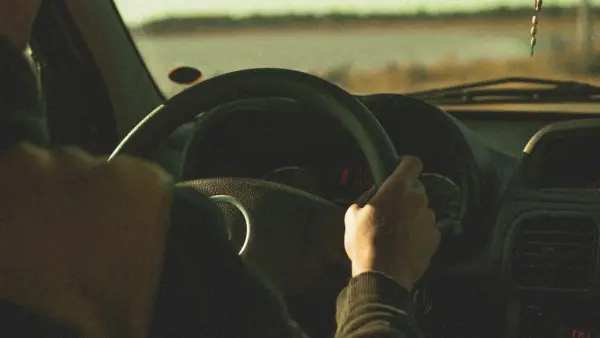
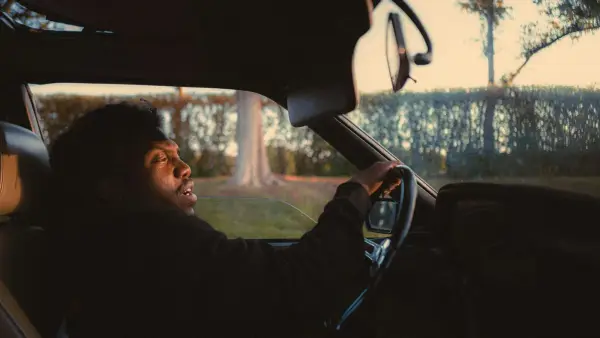
8 things people who always text 'I'm here' instead of knocking on the door - who sit in the driveway and send the message rather than walk up and ring the bell, who announce their arrival through a screen instead of with their hand, who treat every threshold like something that requires the other person's permission to cross - quietly do without realizing it, according to psychology, because a child who knocked once at the wrong moment and watched the atmosphere of an entire house shift learned that the safest arrival is one the other person controls
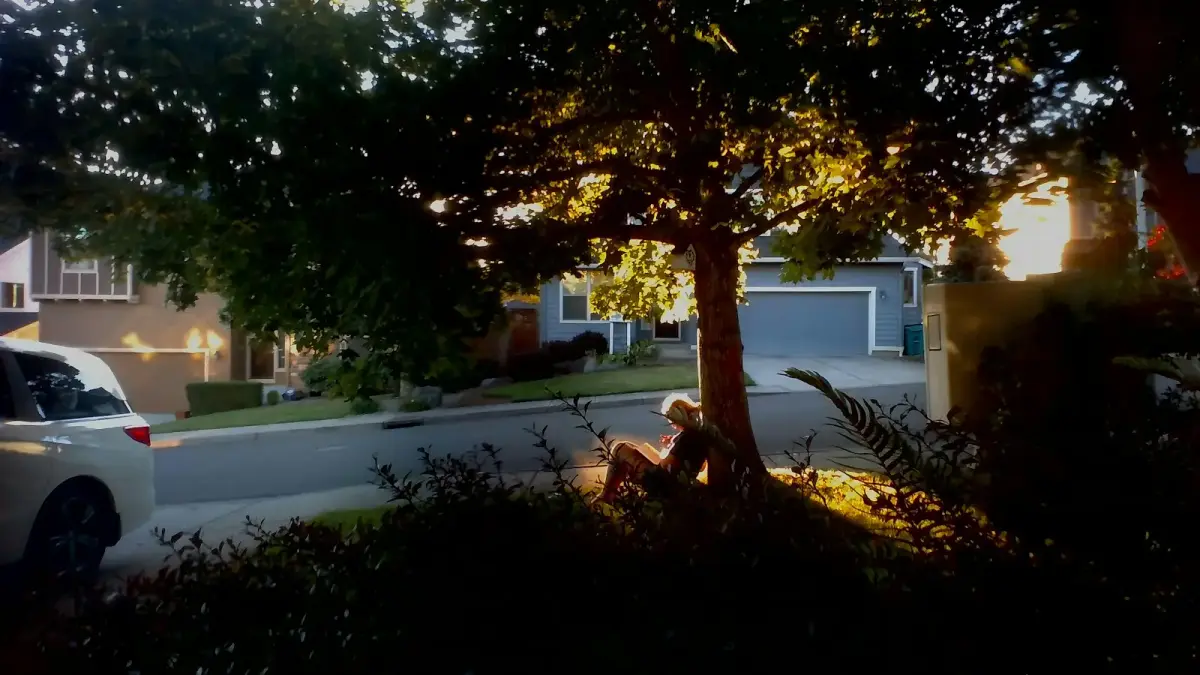
I did it again last Tuesday. Pulled into my friend’s driveway, turned off the engine, and sat there with my phone in my hand. She was expecting me. We’d confirmed plans that morning. Her porch light was on. And still, I typed the words I always type: “Hey, I’m here whenever you’re ready.”
I sat in the car for another four minutes. I checked the mirror. I scrolled through nothing. I waited for the front door to open from the inside before I unbuckled my seatbelt.
It wasn’t until I was halfway through dinner that I realized she’d been standing at the kitchen window watching me sit in her driveway, and the look on her face when she finally mentioned it wasn’t confusion. It was something closer to sadness. “You know you can just come in, right?” she said. “The door was unlocked the whole time.”
I do know that. I’ve always known that. But knowing and feeling are two different countries, and the border between them was built when I was very young.
If you’re someone who announces your arrival through a screen instead of with your knuckles - who treats every threshold like it requires permission from the person on the other side - there’s a reason you do that. And it has almost nothing to do with politeness.
Here are 8 things you quietly do without realizing it, and what psychology says they actually mean.
1. You text “I’m here” but you also add “no rush” or “whenever you’re ready” - because you need the other person to control the timing of your entrance
You don’t just announce your arrival. You immediately hand the reins to whoever is inside. “I’m here, no rush.” “Just pulled up, take your time.” “Outside whenever you’re ready, no hurry at all.”
The message underneath the message is: I will not impose the pace of my arrival on you. You decide when I enter your space.
A 2019 study published in the Journal of Personality and Social Psychology found that individuals with anxious attachment styles consistently prioritize the emotional comfort of others during transitions - arrivals, departures, even pauses in conversation. They monitor for signs of readiness before they proceed.
You learned this because there was a time when your arrival shifted something. Maybe it was a parent’s mood. Maybe it was the volume in the room. Maybe nobody said anything at all, but you could feel the temperature drop when you walked in without warning. So now you give everyone a buffer. You let them arrange their face before they see yours.
2. You never ring a doorbell at someone else’s house - because the sound of it feels like an intrusion you can’t take back
There’s something about the sound of a doorbell that makes your chest tighten. It’s loud. It’s sudden. It echoes through someone’s home without asking whether the moment is right.
You’ve stood on porches and stared at the little glowing button and chosen to knock softly instead. Or you’ve skipped the door entirely and sent a text. The bell feels like an announcement you didn’t earn. Like walking into a room and clapping your hands.
Most people ring a doorbell without thinking. You think about it every single time. Because somewhere inside you, that sharp sound is connected to a memory of disruption - of being the thing that interrupted the peace. Of watching a face change because a sound you caused traveled through a house before you did.
3. You always wait in the car for a few minutes after arriving - because the transition between outside and inside requires a buffer
You arrive on time, sometimes early, and then you sit. You check your phone. You adjust the mirror. You take a breath. You do everything except walk up to the door.
This isn’t procrastination. It’s preparation. You’re giving yourself a transition zone between the outside world and someone else’s space. You need those two or three minutes to shift from arriving to being received.
Psychologist Edward Tronick’s research on relational attunement suggests that children raised in emotionally unpredictable homes often develop what he calls “self-regulatory buffers” - small rituals that help them manage the anxiety of transitioning between emotional states. Sitting in the car is one of them. It’s your airlock. Your decompression chamber between one version of yourself and the version you’ll need to be inside.
You might not even be aware you’re doing it. It just feels natural to you that arriving somewhere and entering somewhere are two separate events with a gap between them.
4. You apologize when you arrive even when you’re exactly on time - because your presence always feels like it requires an explanation
“Sorry, am I early?” you say, standing at the door at precisely the time you were told to be there. “Sorry, I hope this is still okay.” “Sorry - just me.”
You apologize for being on time. For showing up. For existing in the doorway. The word “sorry” isn’t a response to anything you’ve done. It’s a reflex born from years of feeling like your presence needed justification.
Researcher Karina Schumann at the University of Pittsburgh has studied the psychology of over-apologizing and found that it’s frequently rooted in a childhood pattern where the child’s needs were treated as burdensome. The apology becomes preemptive. You say sorry before anyone has a chance to be inconvenienced, because you learned early that the safest way to enter a room was to enter it already making yourself smaller.
You’re not actually sorry. You’re asking, without asking, whether it’s safe to be here.
5. You never show up unannounced - because the concept of a surprise visit fills you with dread, both giving and receiving
The idea of someone appearing at your door without warning makes your whole nervous system light up. Not with excitement. With the sharp, electric feeling of being unprepared to be seen.
And you would never do that to someone else. You confirm. You double-check. You text when you’re leaving, text when you’re ten minutes away, text when you’re outside. You build a trail of warnings so the person on the other end is never caught off guard by you.
This goes beyond preference. This is architecture. You’ve built an entire communication system around making sure that no one is ever startled by your arrival - because you know exactly what it feels like to be startled by someone else’s.
A 2021 study in Frontiers in Psychology found that adults who grew up in homes with high emotional volatility - where a parent’s mood could shift without warning - tend to develop rigid predictability patterns in adulthood. They need to know what’s coming, and they assume everyone else does too.
6. You stand slightly back from the door after knocking, as if giving the person space to decide whether to answer
Watch yourself the next time you knock on someone’s door. You don’t stand close. You take a small step back. Maybe two. You create distance between yourself and the threshold so the person opening it doesn’t feel crowded. Doesn’t feel pressured. Has room to decide.
You might angle your body slightly to the side, as if you’re already half-turned to leave. You might look down at your phone or at the ground instead of staring directly at the door. Everything about your posture communicates the same thing: I’m here, but I’m easy to turn away.
This isn’t shyness. It’s choreography. You’ve been rehearsing this dance your entire life - the dance of being present without being too much. Of arriving without landing. The child who learned that standing too close to the door meant standing too close to a reaction they couldn’t predict became an adult who gives every entrance an escape route.
7. You notice instantly when someone is not ready for you and offer to wait outside or come back
You walk in and within seconds you can feel it. The slight tension in someone’s shoulders. The half-second pause before their smile reaches their eyes. The way they glance at the kitchen or the hallway, as if they needed five more minutes they didn’t get.
And you respond immediately. “I can wait outside.” “Want me to come back in a bit?” “I’m totally fine in the car.”
Most people wouldn’t notice. But you do, because you spent years calibrating yourself to the emotional weather of a room. Daniel Goleman’s work on emotional intelligence describes this as a heightened form of social perception - the ability to read micro-expressions and shifts in tone that most people miss entirely. It’s a skill, and it’s a real one. But you didn’t develop it for fun. You developed it because not noticing had consequences.
You are exquisitely tuned to the difference between a person who is ready for you and a person who is not. And when the answer is “not yet,” you don’t push. You retreat. You’ve always retreated.
8. You always confirm plans the morning of - not because you think they forgot but because you need permission refreshed
The plans were made. The date was set. Everyone agreed. And still, on the morning of, you send that text: “Hey, we’re still on for tonight, right?” or “Just checking - still good for later?”
You’re not worried they forgot. You’re worried that what was true three days ago might not be true now. That their enthusiasm might have cooled. That they agreed when they were in a good mood and now they’re in a different one and you’ll show up to a version of them that didn’t actually want you there.
You need the yes refreshed. Updated. Current. Because in your experience, permission can expire. A welcome that was genuine on Monday can be revoked by Wednesday without anyone saying a word. You learned to check because you learned that the emotional contracts other people make are not always honored - and the only way to protect yourself from showing up unwanted is to ask, one more time, whether you’re still wanted.
This is not insecurity. This is data. You collected years of evidence that arrival is conditional, and you adapted accordingly.
There’s a moment that happens sometimes, if you’re lucky, where someone you love looks at you standing on their porch with your phone in your hand and says the thing that rewires something small inside you.
“You don’t have to text. You don’t have to knock. Just come in.”
And you might not be able to do it the first time. Or the fifth. You might still sit in the driveway for two minutes, still type “I’m here,” still wait for the door to open from the inside. That’s okay.
But hear this: the child who learned that their presence needed to be managed was not wrong about what they observed. They were paying attention. They were reading the room correctly. The problem was never that they were too much - it was that the room was too fragile.
You are not too much. You were just in rooms that couldn’t hold you.
And the fact that you still announce yourself so gently, that you still give people the space to decide, that you still treat every threshold like a question instead of a right - that’s not damage. That’s the kind of care that only someone who knows what it feels like to be unwelcome can offer.
You learned the weight of arrival. And now you carry it lightly, so no one else has to feel it.