8 things people who always turn the radio down when they're looking for a street address - who reach for the volume knob the instant navigation gets uncertain, as if sound itself were obscuring the street signs - do without realizing it, according to psychology, because a child who grew up in a house where concentration was the only thing standing between her and a mistake learned that the world requires all of her senses aimed in the same direction, and she has never found the instruction manual for doing anything important with noise in the background
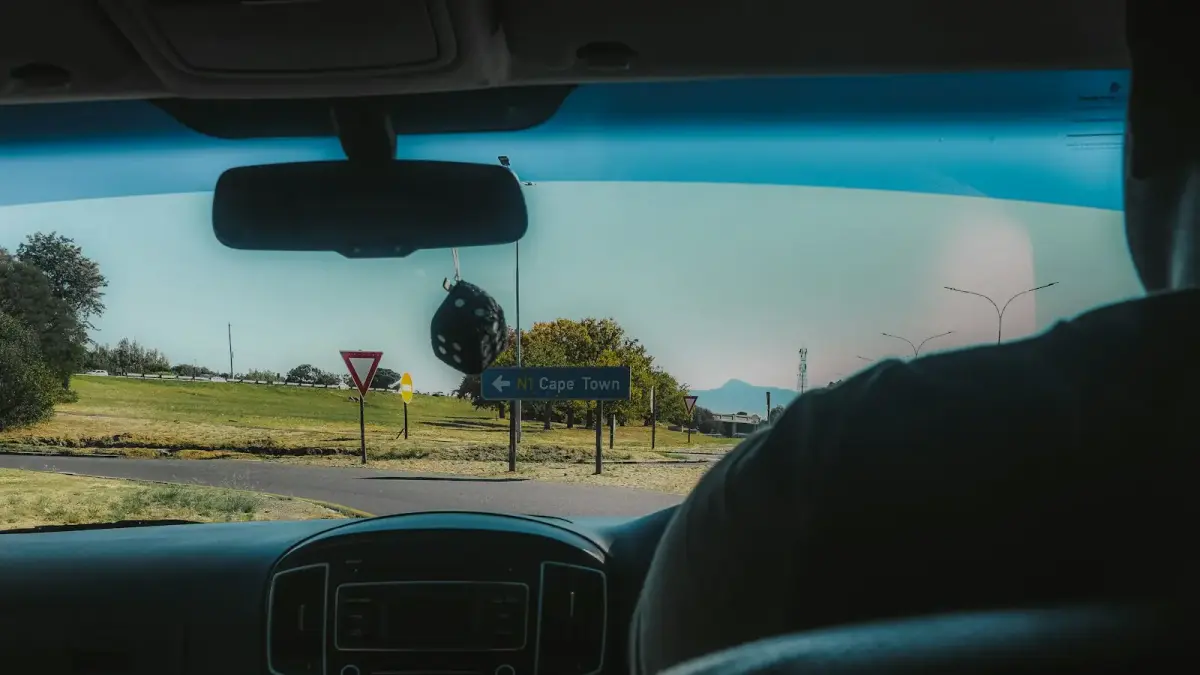
I was looking for a parking garage in a city I’d never driven in before. The GPS had recalculated twice, the one-way streets weren’t matching the map on my phone, and the entrance was supposedly on my left but all I could see were storefronts and a fire hydrant.
My hand went to the volume knob before my brain even registered the decision.
The music - some perfectly fine song I’d been singing along to thirty seconds earlier - suddenly felt like it was standing between me and the parking garage entrance. Like the bass line was physically blocking my ability to read the sign on that building across the intersection.
I turned it all the way down. Not low. Off. And in the silence, my eyes could finally do their job.
If you’ve ever done this, you already know it doesn’t make logical sense. Sound doesn’t obstruct your vision. The radio has nothing to do with the street numbers on those buildings. But your nervous system doesn’t care about logic. It cares about clearing the channel - removing every unnecessary input so the one sense that matters right now can operate without interference.
And if you trace that instinct back far enough, you won’t find a quirky driving habit. You’ll find a child who learned that the world punishes you for splitting your attention.
Here are eight things people like us do without ever questioning why.
1. You turn the radio down to see better
This is the signature move, the one that makes your passengers laugh. “You know the music doesn’t affect your eyesight, right?” They say it like it’s funny. But your hand is already on the knob, and the car has already gone quiet, and now - yes, now - you can see that the turn is just past the gas station.
Cognitive load theory, developed by educational psychologist John Sweller in the late 1980s, explains exactly why this works. Your working memory has a limited capacity for processing information simultaneously. When the cognitive demand of a task increases - navigating an unfamiliar street, scanning for a half-hidden address - your brain starts shedding inputs it can’t afford to process.
The radio isn’t irrelevant because it’s unrelated to driving. It’s irrelevant because your system has decided that right now, in this moment, every available resource needs to be pointed at your eyes.
You’re not being irrational. You’re being efficient in the way a child who couldn’t afford to miss anything learned to be efficient.
2. You mute the television to read a text message properly
Not every text. Not the ones from your friend about dinner plans. But the important one - the one from your boss that might be bad news, or the one from your doctor’s office with a number you need to call back - that one requires the TV to go silent.
You can’t even explain why. The show was just background noise. You weren’t watching it. But something about the content of that message required the room to cooperate, and the laugh track of a sitcom was not cooperating.
Research on cross-modal attention - the way our brains manage input from multiple senses at once - shows that auditory and visual processing share more neural resources than we realize. A 2014 study published in the journal Psychological Science found that irrelevant sounds significantly impaired performance on visual tasks requiring focused attention, even when participants reported not noticing the sounds at all.
Your nervous system noticed. It always notices.
3. You close your eyes when you’re trying to remember something
Someone asks you a phone number, a name, the thing you were supposed to pick up at the store. And your eyes close. Not dramatically - just a gentle shutting of the lids, as if the visual world is too much right now and you need to go inward to find the answer.
This is the same operating system at work. You’re not meditating. You’re reducing input so your brain can allocate resources to memory retrieval instead of processing the face of the person standing in front of you, the light coming through the window, the pattern on their shirt.
You learned early that thinking requires a certain kind of stillness. That the answers live in a quiet place, and you have to go there to find them.
4. You cannot cook and listen to a podcast at the same time
Other people seem to manage this effortlessly. They chop onions and absorb a forty-minute episode about the fall of Rome. They stir risotto and follow the narrative arc of a true crime series. You’ve tried. You really have.
But ten minutes in, you realize you’ve heard nothing since the garlic went into the pan. The podcast has been playing and your brain simply stopped receiving it. Because the sauce needed your attention, and your system made a unilateral decision about where that attention was going.
Nilli Lavie’s perceptual load theory, published in research spanning the early 2000s through the 2020s, explains this phenomenon beautifully. When the perceptual demands of your primary task are high enough, your brain literally stops processing secondary stimuli. It’s not a choice. It’s not a failure of multitasking. It’s architecture.
Your architecture just happens to have a lower threshold for what counts as “high demand,” because you grew up in an environment where the threshold for consequences was also low.
5. The car goes completely silent when the argument starts
You could be halfway through your favorite album. Your partner says something - not even loud, not even angry, just something with an edge - and the music is gone before either of you can acknowledge what just happened.
Because this is serious now. This is a conversation where you need to hear every word, read every inflection, catch every shift in tone. You need to hear what they’re saying and what they’re not saying and the space between those two things, and you cannot do that while a guitar solo competes for the same bandwidth.
This one has the deepest roots. The child who grew up listening for shifts in mood - for the change in a parent’s voice that meant the evening was about to go sideways - that child trained herself to clear the auditory field when emotional information became the priority.
You’re not overreacting. You’re activating a system that was built to keep you safe.
6. You need to pause a conversation to merge onto a highway
Your friend is in the middle of a story. It’s a good story. You’re genuinely interested. But the on-ramp is short and the traffic is moving fast and there’s a truck in the lane you need and your mirrors need checking and -
“Hold on one second.”
The sentence is out before you can stop it. And your friend pauses, slightly confused, because merging onto a highway is something you do every day. But today the traffic is thick, or the ramp is unfamiliar, or the sun is in your eyes, and the cognitive demand just crossed the line where your system says: one thing at a time.
A 2018 study published in Frontiers in Psychology found that even experienced drivers showed measurable decreases in conversational engagement during high-demand driving scenarios. The brain prioritizes survival-relevant tasks, and for someone whose nervous system learned early that the cost of distraction is high, “high demand” starts earlier than it does for others.
You’re not rude. You’re keeping everyone alive with the tools your childhood gave you.
7. You turn off the music to parallel park
This is the cousin of the radio-down-for-navigation move, but somehow more intense. Because parallel parking isn’t just cognitive load. It’s cognitive load with witnesses. There are people on the sidewalk. There might be someone waiting behind you. The space looks smaller than your car and you need every neuron pointed at the rearview mirror.
The music doesn’t just get turned down. It gets turned off. The passenger knows not to speak. The world narrows to the width of that parking space and the geometry of getting your car inside it without touching anything.
And when it’s done - when you’re in the spot and the engine is still running and the gap between your bumper and theirs is just right - you exhale. And you turn the music back on. And nobody says anything, because everyone in the car understood what just happened, even if they couldn’t name it.
8. You need the house quiet before you can make a difficult phone call
Not a casual call. Not ordering takeout. The call to the insurance company about the claim that got denied. The call to your aging parent’s doctor. The call where you have to advocate for yourself and you’re not sure you have the words yet.
Before you dial, the television goes off. The dishwasher can wait. If someone else is home, you close a door. You need the environment to match the seriousness of what you’re about to do - or more accurately, you need the environment to stop competing with the seriousness of what you’re about to do.
Because your system learned a long time ago that important things happen in silence. That the sound of a television during a hard conversation is not just distracting - it’s disrespectful. As if the moment doesn’t matter enough to deserve the room’s full cooperation.
You’re honoring the weight of the moment. You always have been.
There’s a version of this article that would tell you these are just normal cognitive behaviors - that everyone turns the radio down sometimes, that it’s just a funny quirk of human attention.
And that’s partly true. Cognitive load management is universal. Every brain has limits.
But if you recognized yourself in more than half of this list - if you read about the argument silencing the music and felt something tighten in your chest - then we’re not talking about a funny quirk. We’re talking about an operating system.
You built this system when you were small. When the sound of a television in the other room could mask the sound of a footstep you needed to hear. When splitting your attention between homework and the mood of the house could mean missing something that mattered. When concentration wasn’t a school skill - it was a survival strategy.
And now you’re an adult, and you’re driving through a city you don’t know, and your hand reaches for the volume knob, and you think it’s about the parking garage. But it’s never really been about the parking garage.
It’s about a child who learned that the world only makes sense when all of her senses are pointed in the same direction. Who discovered that silence isn’t empty - it’s organized. It’s every resource she has, lined up and ready.
That’s not a flaw. That’s not a deficit in multitasking.
That’s a person who takes the world seriously enough to give it her full attention. And honestly, the world could use more of that.