8 things people who always volunteer to take the group photo instead of being in it - who say 'here, let me take it' before anyone asks, who have years of holiday gatherings and birthday celebrations where their face does not appear once - quietly reveal about themselves, according to psychology
I noticed it about three years ago. I was scrolling through my phone looking for a photo of myself with my kids - something recent, something casual, the kind of picture that just happens at a barbecue or a Sunday morning. And I couldn’t find one.
Not one.
There were hundreds of photos from the past year. Birthday parties. A trip to the coast. Thanksgiving at my sister’s house. My daughter’s school play. And in every single image, everyone I love was there - smiling, caught mid-laugh, holding plates of food, squinting into the sun.
Everyone except me.
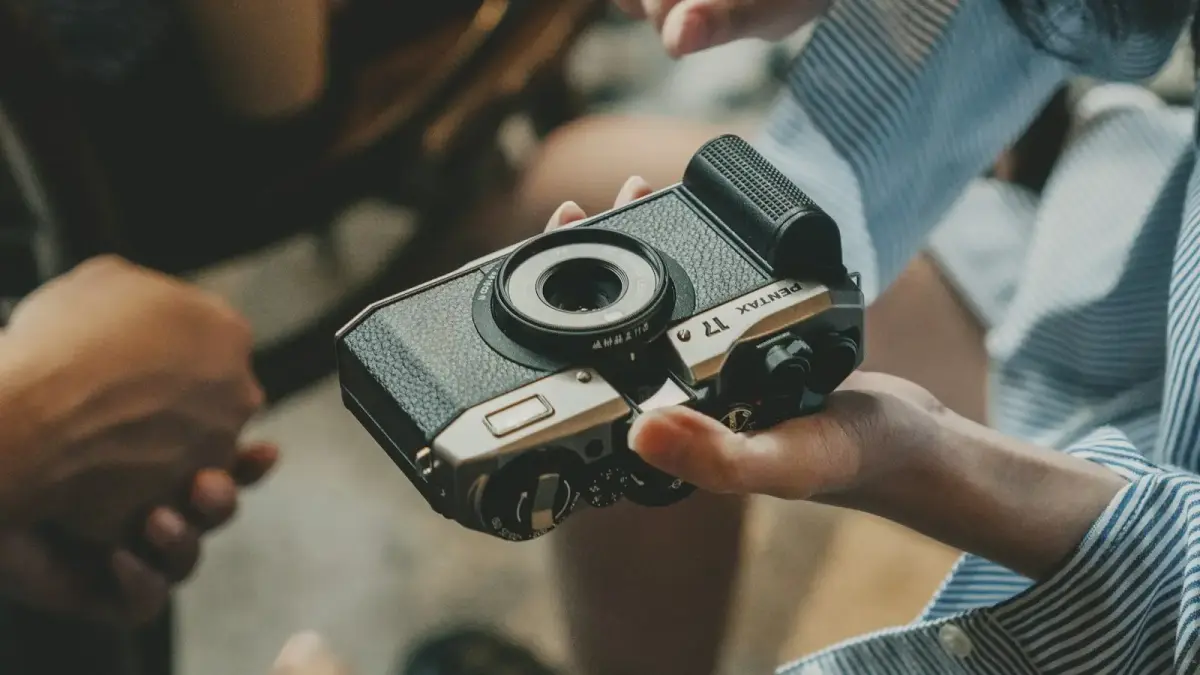
Because I was the one holding the camera. I was the one who said “here, let me take it” before the moment had even fully formed. I was the one who stepped back so smoothly, so naturally, that nobody thought to say “wait - get in here.”
And honestly? Nobody needed to say it. I had already decided, somewhere deep in my chest, that I was more useful behind the lens than beside the people I loved. That my job was to preserve the moment, not to be part of it.
If you recognize yourself in that sentence, this is going to be a difficult read. But I think it’s one you need.
Here are eight things people who always volunteer to take the group photo quietly reveal about themselves - not because they’re camera-shy, but because something much older is running the show.
1. They learned early that their value came from what they could do, not who they were
This is the root. Almost always.
A 2019 study published in the Journal of Personality and Social Psychology found that children who received conditional regard from caregivers - love and approval tied to helpfulness, achievement, or compliance - developed a persistent sense that their worth depended on their utility to others.
The child who got praised for being helpful. Who got noticed when they set the table without being asked. Who figured out, through hundreds of small interactions, that the quickest way to feel safe in a room was to make themselves useful in it.
That child grows up and hands you a camera at Christmas, and they don’t even know why.
They just know that standing in the frame feels dangerous. Standing behind it feels like home.
2. They are hypervigilant about other people’s comfort
Watch someone who always takes the group photo. They don’t just grab the camera and snap. They notice things.
They notice that Uncle David always gets cut off on the left side. They notice that your mother looks happier in natural light. They notice the teenager who is standing slightly apart and gently wave them into the frame before the shot.
This isn’t a casual skill. This is a surveillance system built in childhood.
Psychologist Dr. Gabor Mate has written extensively about how children in emotionally unpredictable homes develop what he calls “hypervigilance disguised as empathy” - an extraordinary capacity to read rooms, moods, and micro-expressions. Not because they are naturally gifted at connection, but because reading other people accurately was once a survival strategy.
The person behind the camera sees everything. That’s not a hobby. That’s a history.
3. They have a complicated relationship with being seen
Here’s what most people don’t understand: this isn’t about disliking photographs.
Ask them, and they might say they’re not photogenic, or they hate how they look, or they just prefer being behind the camera. And maybe some of that is true. But underneath those explanations is something quieter and more painful.
Being seen - truly, fully visible in a group - requires believing that your presence matters. That the photograph is somehow incomplete without you in it. That people would look at it later and think, “Where were you?”
And for someone who spent their formative years feeling like a background character in their own family, that belief doesn’t come naturally. It has to be fought for. And most days, it’s easier to just pick up the camera.
4. They confuse disappearing with being easy to be around
This one still catches me off guard.
For years, I told myself I was low-maintenance. Easygoing. The kind of person who doesn’t need the spotlight, doesn’t make things about themselves, doesn’t take up unnecessary space.
And people confirmed it. “Marcus is so chill.” “He never makes a fuss.” “He’s the easiest person to have around.”
But a 2021 study in Frontiers in Psychology examined what researchers called “self-silencing behavior” - the tendency to suppress one’s own needs to maintain relational harmony. They found it was strongly correlated with childhood emotional neglect and predicted higher rates of depression and chronic loneliness in adulthood.
Being easy to be around is not a personality trait. Sometimes it is a disappearing act performed so gracefully that everyone applauds it.
The person who takes the group photo is often performing that act in its purest form. They have removed themselves from the picture - literally - and framed it as generosity.
5. They are often the most observant person in any room
There is a strange gift that comes with a lifetime of watching from the edges.
You learn things. You notice the couple who hasn’t touched each other all evening. You catch the moment someone’s smile stops reaching their eyes. You see the friend who keeps checking their phone under the table, and you know - without asking - that something is wrong at home.
Research by psychologist Susan Cain, whose work on introversion and sensitivity reshaped how we understand quiet people, suggests that individuals who habitually take observer roles develop richer internal models of social dynamics. They process more deeply. They remember more. They understand the subtext of a room in ways that louder participants often miss.
The person behind the camera is not checked out. They are paying a kind of attention that most people never will.
But here is the cost: they are paying that attention to everyone except themselves.
6. They carry a quiet grief about their own absence
This is the part that people don’t talk about. And it is the part that hurts the most.
One day, you flip through old photo albums. Family reunion, 2014. Christmas morning, 2017. Your best friend’s 40th birthday. Your parents’ anniversary dinner.
And you are not in any of them.
You remember being there. You remember the laughter, the food, the warmth of the room. But there is no evidence that you existed in those moments. You were there, and you are also completely absent. Both things are true at the same time.
A 2020 study in Psychological Science found that people who consistently minimize their own presence in group settings often experience what researchers termed “participatory invisibility” - the painful sense of having been present but unwitnessed.
You were part of the memory. But you are not part of the record. And some nights, that distinction feels enormous.
7. They test - without meaning to - whether anyone will notice they are missing
This is not manipulation. I want to be clear about that.
But there is a part of the person behind the camera that is quietly, unconsciously waiting. Waiting for someone to say, “Hey, get in here. We need you in this one.” Waiting for someone to take the phone from their hand and say, “No. You’re in this picture.”
It is a test they don’t know they are running. And most of the time, they fail it in silence. Nobody reaches for them. Nobody notices the empty space. And the person behind the lens files that information away in the same folder where they keep every other piece of evidence that their absence is easier to tolerate than their presence.
Psychologist Adam Grant has written about how people with high other-orientation - those who habitually prioritize others’ needs - often unconsciously create situations that confirm their belief that they are needed but not wanted. The group photo is one of the most elegant versions of that test.
8. They are capable of extraordinary love - they just forgot to include themselves in it
This is what I want you to hear. Because if you are the person behind the camera, you already know everything I’ve written above. You know it in your body. You’ve known it for years.
What you might not know is this: the instinct to capture the people you love, to preserve their laughter, to frame them beautifully and make sure nobody gets cut off at the edges - that instinct comes from a deep and generous place.
You love fiercely. You pay attention. You remember the details that other people forget.
The only problem is that somewhere along the way, you decided that the frame was not big enough for you, too. That you had to choose between being the one who holds the moment and the one who lives inside it.
You don’t have to choose.
You never had to choose.
I still take the group photo sometimes. Old habits don’t dissolve overnight, and honestly, I’m good at it. I know the angles. I know the light.
But last Thanksgiving, my daughter walked over and took the phone out of my hand. She didn’t ask. She just said, “Dad, get in there.”
I almost said no. Almost said “it’s fine, I’ve got it.” Almost stepped back, the way I always do.
But I didn’t. I walked into the frame, stood between my mother and my brother, and let someone else hold the camera.
It was the most uncomfortable ten seconds of my day. And when I looked at the photo later, I barely recognized the man standing there - not because he looked different, but because I had so few reference points for what I look like when I’m not the one behind the lens.
If you’re the person who always volunteers to take the picture, I’m not going to tell you to stop. I’m not going to give you five steps to reclaiming your visibility.
I’m just going to say this: you deserve to be in the frame. Not because of what you do for the people in it. But because you are one of them.
You always were.