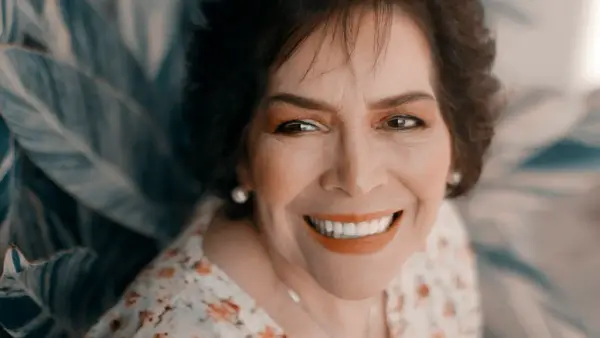
She is 57 and just realized she has never once bought herself flowers even though she buys them for every friend's birthday, every neighbor's surgery, every coworker's retirement - not because she does not love flowers but because a girl who watched her mother call fresh flowers 'a waste of good money on something that just dies' learned that beautiful things are purchased for other people, never for the woman buying them
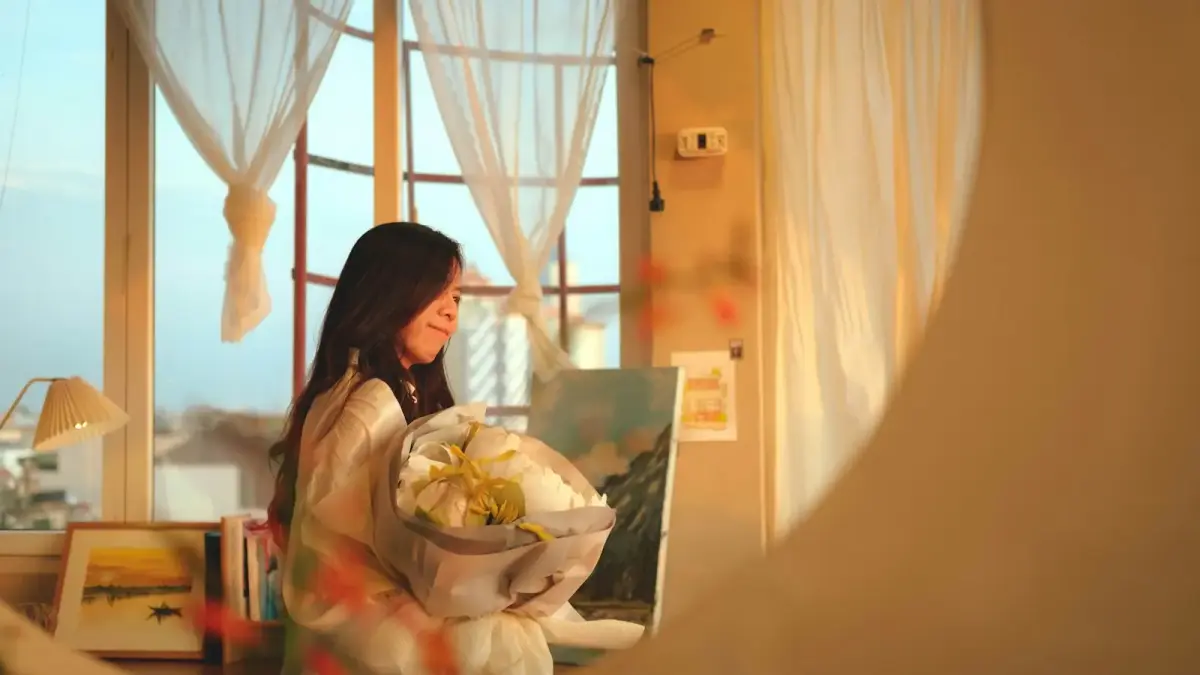
The Grocery Store Bouquets
I was standing in the checkout line at the grocery store last Tuesday when I noticed the woman in front of me do something I have done a thousand times.
She picked up a bouquet of sunflowers from the display near the register. She held them for a moment - and I mean really held them, the way you hold something you love - and then she put them back. She didn’t check the price. She didn’t decide the petals looked wilted. She just set them down with this quiet little exhale, like a door closing on a room she wasn’t allowed to enter.
I recognized that exhale because I have been making it for decades.
I am 57 years old, and until very recently, I had never purchased a single bouquet of flowers for myself. Not once. Not the grocery store kind, not the farmer’s market kind, not even the half-dead clearance ones marked down to three dollars on a Monday afternoon. I have bought flowers for birthdays, for surgeries, for retirements, for new babies, for broken hearts, for no reason at all - just to tell someone I was thinking of them. But the idea of carrying a bouquet to my own kitchen table, trimming the stems, arranging them in a vase, and sitting down to look at them simply because they made me happy? That thought never fully formed. It would start to surface and something would intercept it before it became a decision.
That something had a voice. And it sounded exactly like my mother’s.
”A Waste of Good Money on Something That Just Dies”
My mother was not a cruel woman. She was a practical one, which is what women of her generation were required to be when the money was tight and the needs were endless and no one was coming to rescue anyone.
She kept a clean house. She raised four children on a salary that should have only stretched for two. She could make a whole chicken last three meals and still find a way to send something to the neighbor who just had surgery.
But flowers? Flowers were a frivolity she could not justify.
I remember being maybe nine or ten, walking through the garden section of a store with her, and reaching toward a pot of pink geraniums. “A waste of good money on something that just dies,” she said, not even looking at me. She said it the way you say something you’ve said so many times it’s become a law of nature. Water is wet. The sun comes up. Beautiful things are not for women like us.
She wasn’t talking about geraniums. She was handing me a philosophy of selfhood that I would carry for the next forty-seven years without ever examining it.
The Invisible Curriculum
Here is what I absorbed, not through lectures but through a thousand small observations of my mother’s life: a good woman’s money flows outward.
It flows toward the mortgage. Toward the children’s shoes. Toward the electric bill. Toward the church collection plate. Toward the gift for the teacher, the neighbor, the cousin getting married. A good woman’s money is a river, and it runs in one direction - away from her.
The moment that river turns inward - toward something that exists only to make her feel beautiful, or rested, or delighted - it becomes something shameful. It becomes selfishness wearing a price tag.
A 2021 study published in the Journal of Consumer Psychology found that women are significantly more likely than men to experience guilt when making purchases intended solely for their own pleasure, particularly when those purchases have no practical function. The researchers called it “hedonic guilt” - the specific discomfort that arises when spending money on beauty, enjoyment, or sensory experience rather than utility.
But the study only named what millions of women already knew in their bones.
I knew it every time I put back the nicer lotion and reached for the store brand. Every time I almost bought the dress that wasn’t on sale, then talked myself out of it in the fitting room. Every time I spent an afternoon doing nothing and felt a low hum of anxiety about it, as though rest without a productive purpose was a debt I would eventually have to repay.
The flowers were just the most visible version of a pattern that touched everything.
What She Was Really Teaching Me
My mother wasn’t teaching me to be frugal. She was teaching me something far more specific: that a woman’s relationship to beauty is always mediated through someone else.
Flowers purchased for a friend are an expression of love. Flowers purchased for yourself are vanity.
A nice dress for your daughter’s wedding is appropriate. A nice dress because you saw it in the window and it made your heart lift is indulgent.
An afternoon spent helping someone else is generosity. An afternoon spent doing something that only nourishes you is laziness dressed up in a Sunday hat.
Dr. Kristin Neff’s research on self-compassion has shown that women consistently score lower than men on measures of self-kindness - the ability to treat yourself with the same warmth and care you extend to others. In a 2023 paper published in Mindfulness, Neff and her colleagues found that this gap is not simply about personality. It is about deeply internalized beliefs regarding who deserves gentleness. Women, particularly women raised in households where resources were scarce and sacrifice was the primary language of love, learn to position themselves as the last person in the receiving line.
Not because they don’t matter. But because proving they matter through self-denial is the only model of goodness they were given.
My mother didn’t hate flowers. She loved them. I remember her face when my father brought home roses for their anniversary - this softening around her eyes, like someone who’d been holding her breath all year finally letting it go. She loved beautiful things the way a person behind glass loves the rain. She could see it. She could almost feel it. But something always stood between her and the experience of receiving it from her own hands.
The Proxy for Everything
The flowers were never really about flowers.
They were a proxy for every beautiful, unnecessary, life-giving thing I have denied myself across five decades of being alive.
The bath that takes too long. The book read in the middle of the day. The trip taken alone, for no reason, to no place in particular. The hour spent arranging something on a shelf just because the arrangement pleases me. The candle that costs fourteen dollars. The quiet of a room with no one else in it.
A 2019 study in Frontiers in Psychology explored what researchers call “intergenerational transmission of self-concept” - the way beliefs about personal worth and entitlement pass from parent to child, not through direct instruction, but through modeling. Children don’t learn who they are from what their parents tell them. They learn who they are from watching what their parents allow themselves.
I watched a woman who never sat down first. Who never ate until everyone else had been served. Who never bought the thing that was only for her. And I learned, with the certainty of a child watching the most important person in the world, that this is what good looks like.
Good means last.
Good means without.
Good means the flowers are always, always for someone else.
The Moment It Cracked
I wish I could tell you there was a dramatic revelation. A breakdown in a florist shop. A tearful conversation with a therapist who said exactly the right words at exactly the right time.
But it was smaller than that. It was a Sunday.
I was at the farmer’s market, buying tomatoes. The flower vendor was right next to the vegetable stand, and a bucket of pale pink peonies caught my eye. They were loose and open, the kind that look like they might fall apart by Tuesday, and they were twelve dollars.
I stood there, and the thought rose up the way it always does: Those would be beautiful on the kitchen table. And then the second thought, right behind it, the one that has chased the first thought my entire life: But you don’t need them.
Except this time, I heard it differently. I heard the “you” in it.
Someone needs them. Just not you. Someone deserves to look at something beautiful for no reason at all. Just not you. Someone is worth twelve dollars of perishable, impractical, heart-lifting beauty. Just not you.
I bought the peonies. I carried them to my car like a person carrying something fragile and stolen. I put them in a mason jar on my kitchen table and I sat across from them and I cried, which is an absurd thing to do over flowers but also maybe the most reasonable thing I have ever done.
Because I wasn’t crying about peonies. I was crying about the forty-seven years of standing in front of beautiful things and deciding, every single time, that I was not the person they were for.
She Cannot Be Both
Here is the sentence I have been circling for five decades without ever saying it out loud: I did not believe I was allowed to be both the giver and the receiver of my own generosity.
I could buy flowers for everyone. I could spend any amount of money expressing love and care and attention toward other people. But I could not turn that same impulse toward myself without feeling like I was stealing from the people who deserved it more.
Brene Brown has written extensively about how worthiness is not earned through service. “You are worthy of love and belonging - right now, today,” she writes. Not after you’ve given enough. Not after you’ve sacrificed sufficiently. Not after you’ve proven that every dollar you spend can be justified by someone else’s benefit.
But knowing that in your head and knowing it in your hands - the hands that reach for flowers and then pull back - are two very different things.
What the Flowers Were Always About
The flowers that die are proof, my mother believed, that beauty for its own sake is money that disappears. You can’t eat them. You can’t wear them. They serve no function except to sit there and be beautiful, and then they wilt and you throw them away and what do you have?
Nothing. You have nothing to show for it.
But that logic only applies when beauty is aimed at yourself. When it is aimed at someone else, it transforms. It becomes love made visible. It becomes “I was thinking of you.” It becomes proof that the person on the receiving end matters enough to receive something impractical and perishable and absolutely unnecessary.
The question I could never answer until now: Why was I the only person in my life who didn’t matter that much?
The Bouquet Is for You
If you recognized yourself in any of this - if you are the woman who puts back the sunflowers, who buys the store brand, who cannot sit in a beautiful room without looking for something to clean - I want you to hear something.
The flowers were never about money. They were never about practicality or waste or whether peonies last until Thursday.
They were about whether you were allowed to be the person the bouquet was for. Whether you were permitted to stand at the receiving end of your own love and say yes, this is for me, and it doesn’t have to be for anyone else, and that is not a crime.
You were always allowed. You were always the person the bouquet was for.
Your mother loved you. She taught you what she knew. But she was wrong about this one thing, and you are allowed to set it down now the way you set down a grocery bag that has gotten too heavy. Gently. Without anger. Without betraying her memory.
You can love a woman who never bought herself flowers and still become a woman who does.
I keep peonies on my kitchen table now. They die by Wednesday, usually. I buy more on Saturday.
It is the most worthwhile waste of money I have ever allowed myself.