8 things people who always volunteer to take the group photo instead of being in it - who have been present for hundreds of moments and visible in none of the pictures - do according to psychology, because a child who learned that taking up space meant taking it from someone who deserved it more found that the safest place to exist was behind the lens, where you could hold the moment for everyone else without ever having to prove you belonged in it
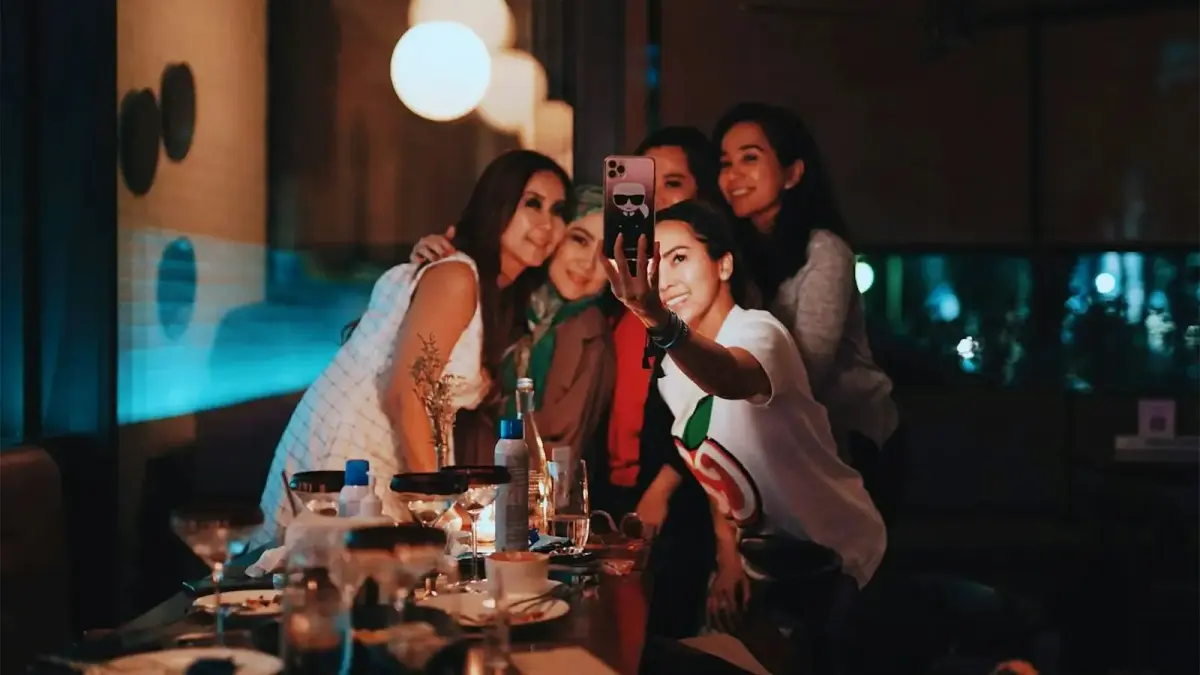
I found a box of photos from my childhood last spring. Two hundred pictures, maybe more - birthday parties, Christmases, beach vacations, the whole catalog of a family that documented everything.
I was in four of them.
Not because I wasn’t there. I was at every single gathering. I was the one who said “everybody get together” and held the camera steady while everyone else squeezed into the frame. I was ten years old the first time I volunteered, and I never stopped.
For a long time, I told myself it was practical. Someone has to take the picture. I was good at it. I knew how to get everyone smiling at the same time. But sitting on my living room floor with those photos spread around me, looking at hundreds of moments I had been present for and visible in none of them, I understood something I had been avoiding for thirty years.
I didn’t take the photos because I was good at it. I took them because standing behind the camera was the only place I felt safe enough to exist without apology.
If that sentence just hit you somewhere specific, this one is for you.
1. They say “I’ll take it!” before anyone even asks
It comes out fast - almost reflexive. The group starts assembling, someone pulls out a phone, and before anyone has a chance to look around for a volunteer, they’ve already stepped back and extended their hand.
It looks generous. It looks easy and natural, like someone who just doesn’t mind.
But the speed of it tells a different story. A 2019 study published in the Journal of Personality and Social Psychology found that people who grew up in environments where their needs were consistently deprioritized develop what researchers call “preemptive self-erasure” - they remove themselves from situations that might require others to make room for them before anyone has the chance to reject them. The volunteering isn’t kindness. It’s a rehearsed exit strategy, disguised as helpfulness.
They learned a long time ago that if you remove yourself before anyone has to ask you to move, you never have to feel the sting of not being wanted in the frame.
2. They feel a specific kind of relief when they’re behind the lens
There’s a moment - right after they step back and raise the camera - where their shoulders drop. Their breathing slows. Something in their chest loosens.
This is the relief of becoming invisible on purpose.
When you’re behind the camera, nobody is looking at you. Nobody is evaluating your smile, your posture, where you’re standing, whether you look like you belong. You become a function instead of a person. And for someone who spent their childhood feeling like their presence was a burden, becoming a function feels like safety.
The tragedy is that they’ve confused this relief with preference. They genuinely believe they don’t like being in photos. But what they actually don’t like is the vulnerability of being seen - of standing in a group and silently hoping that someone is glad they’re there.
3. They’ve scrolled through years of family albums and cannot find themselves
This is the one that breaks them open, usually around midlife.
They’re cleaning out a closet or organizing digital files, and they realize they have almost no photographic evidence that they existed in their own family. There are hundreds of pictures of everyone else. Birthday candles, holiday tables, arms around shoulders, matching pajamas. But they are a ghost in their own archive.
And the strange part is that nobody noticed. Nobody said “wait, get in this one.” Nobody handed the camera to someone else and pulled them into the frame. Their absence was so consistent that it became invisible - which is exactly what they trained everyone to expect.
Brene Brown has written extensively about how belonging requires visibility - that you cannot feel truly connected to a group you have systematically removed yourself from. These are people who documented belonging for everyone else while quietly accumulating proof that they were never quite part of it.
4. They became the organizer, the documenter, the one who holds everything together
The camera was just the beginning.
These are the people who plan the gatherings, coordinate the schedules, remember the dietary restrictions, wrap the extra gifts just in case. They became the infrastructure of every family event, every friend group, every holiday. They are essential in the way that electricity is essential - everyone depends on them and nobody thinks about them until something goes wrong.
This is a role they learned in childhood. In families where emotional resources are unevenly distributed - where one child’s needs consumed most of the oxygen - another child learns to become useful instead of visible. They figured out early that the way to earn a place in the room was to become the room. To hold it all together so everyone else could relax.
A 2021 study in Frontiers in Psychology found that children who take on caretaking roles before age ten often carry those patterns into adulthood, struggling to distinguish between being loved and being relied upon.
5. They deflect every compliment by redirecting attention to someone else
Tell them they look nice and they’ll immediately compliment your shoes. Thank them for organizing everything and they’ll say it was nothing, that honestly Jen did most of the work. Praise their cooking and they’ll credit the recipe.
This isn’t humility. This is a reflex built from years of learning that attention directed at them feels dangerous.
Somewhere in their history, being noticed was associated with something threatening - criticism, jealousy from a sibling, a parent who needed to be the center. They learned that the safest response to a spotlight was to hand it to someone else as fast as possible. The compliment doesn’t land because they’ve built an entire system for deflecting it before it can reach them.
Watch closely the next time you compliment someone like this. You’ll see a micro-expression - half a second of something soft and startled - before the deflection kicks in. That half-second is the real person, the one who wants desperately to believe the nice thing you just said, catching herself before she lets it in.
6. They have a complicated relationship with their own birthday
Their birthday is the one day a year where the social contract says they are supposed to be the center of attention. And for most people who live behind the camera, this feels approximately like being asked to stand in traffic.
They’ll downplay it. “Oh, I don’t really do birthdays.” They’ll organize their own party and then spend the whole night making sure everyone else is having a good time. They’ll blow out candles with a smile that looks easy but isn’t.
The discomfort isn’t about the birthday. It’s about the terrifying premise underneath it - that one day a year, people are supposed to celebrate the fact that you exist. And if you spent your childhood believing that your existence was a minor inconvenience at best, someone singing to you while you sit there with nowhere to hide feels like exposure rather than celebration.
7. They confuse being needed with being wanted
This is the core wound, and it runs deep.
They have built entire lives around being indispensable. They are the friend you call at 2 a.m. The coworker who stays late. The sibling who handles the difficult parent. They have made themselves so necessary that they can almost convince themselves they are loved - because people keep showing up, keep calling, keep needing them.
But in quiet moments - driving home alone after the party they organized, lying awake after the holiday they coordinated - they feel a specific kind of emptiness that usefulness cannot fill. Because being needed is not the same as being wanted. Being needed means someone values what you do. Being wanted means someone values who you are. And they have spent so long performing the first one that they have no idea whether the second one is true.
Daniel Goleman’s work on emotional intelligence describes this pattern as “earned belonging” - the belief that your place in a relationship must be continuously justified through service. People who live this way rarely rest, because rest means stopping the performance, and stopping the performance means risking the discovery that nobody would choose you if you weren’t useful.
8. They are only now learning that taking up space is not the same as taking from someone else
This is the belief that started everything. Somewhere in childhood, they absorbed the idea that space was finite. That visibility was a limited resource. That if they stepped into the frame, someone else would have to step out.
So they made themselves small. They stood behind the camera. They volunteered before anyone asked. They built a life in the margins of other people’s moments and called it generosity.
But here’s what psychology actually tells us about that belief - it’s wrong. A 2023 study published in the Journal of Research in Personality found that people who allow themselves to be visible in group settings don’t diminish others. They actually increase the sense of connection for everyone present. Your presence in the photo doesn’t take anything away from the people next to you. It adds something. It says: I was here. I was part of this. This moment included me.
The child who learned to disappear did it to protect the people they loved. The adult who keeps disappearing is protecting no one. They are just continuing a habit that stopped being necessary a long time ago.
If you recognized yourself in this - if you are the person with a thousand photos on your phone and almost none of your own face - I want you to sit with something for a moment.
You were not being generous all those years. You were being careful. You were managing the impossible math of a childhood that taught you there wasn’t enough room, and you chose to be the one who went without. That choice made sense when you were small. It kept you safe. It kept the peace.
But you are not small anymore.
The next time someone pulls out a camera and your hand starts reaching for it - that automatic “I’ll take it!” already forming in your throat - I want you to pause. Just for a second. And instead of stepping back, try staying where you are.
You don’t have to smile perfectly. You don’t have to earn your place in the frame. You just have to stand there and let yourself be seen.
That’s it. That’s the whole practice.
You belong in the picture. You always did.