8 things people who can express their deepest feelings in writing but cannot produce the same words out loud tend to have in common, according to psychology - they type I love you fluently but lose the entire sentence the moment a person is standing in front of them
I wrote my mother a birthday card last year that took me forty minutes. I chose every word like I was placing stones across a river, careful where each one landed. When I handed it to her, she opened it at the kitchen table and her eyes filled, and she looked up at me and said, “Julia, this is beautiful.”
I said, “Yeah, well. Happy birthday, Mom.”
That was it. That was all my mouth could do with everything my pen had already said.
If you recognize that gap - between the person who writes and the person who speaks - you already know what I’m talking about. You know what it feels like to compose something honest at midnight and then spend the next morning unable to say even the mild version of it out loud. You know the strange grief of being more articulate on paper than you have ever been in a room full of people you love.
This isn’t a flaw. A 2020 study published in the journal Cognition and Emotion found that written emotional expression activates different regulatory pathways than spoken disclosure, allowing people to access and organize feelings they might otherwise suppress. Your written voice isn’t a performance. It’s the version of you that finally has enough space to tell the truth.
Here are eight things people who live in that gap tend to share - and why psychology suggests it says more about your depth than your limitations.
1. They write cards that contain more honesty than a year of conversation
You know the kind. The birthday card that goes three paragraphs deep. The thank-you note that quietly says everything you’ve been carrying for months. The holiday message to a sibling that somehow holds an entire history of gratitude and regret and tenderness you’ve never once spoken at the dinner table.
People who write like this aren’t being dramatic. They’re being accurate - finally, in the only medium that doesn’t rush them.
Psychologist James Pennebaker’s foundational research on expressive writing, much of it published through the Journal of Experimental Psychology, showed that writing about emotional experiences produces measurable improvements in well-being partly because it creates distance between the feeling and the person experiencing it. That distance isn’t avoidance. It’s safety. The card says what the mouth can’t because the card doesn’t have to watch anyone’s face while the words arrive.
2. They have unsent drafts that say everything they have never spoken
Somewhere on your phone, or in a notebook, or buried in an email draft folder, there is a message you wrote and never delivered. Maybe several. Maybe dozens.
These aren’t failures of courage. They’re proof that the feeling existed and needed a form, even if it never found a recipient.
You wrote the thing because you needed to know you could. You needed to see it outside your body, arranged in sentences, real enough to read back. The unsent draft is not a letter that failed. It is a feeling that survived - just not out loud.
3. Their written voice is richer, warmer, and more articulate than their spoken one
People describe this like living with two selves. The one who speaks in meetings and says “I’m fine” and laughs through hard conversations. And the one who sits down with a blank page and suddenly has access to language that feels truer, more precise, more generous than anything they’ve ever managed to say face to face.
A 2017 study in Frontiers in Psychology found that individuals who score high in emotional complexity often struggle with verbal expression not because they lack emotional awareness but because they possess too much of it. The feeling is too layered to flatten into a spoken sentence that has to land in real time.
Your written voice isn’t a different person. It’s you with enough room to be all of yourself at once.
4. They send the text instead of making the call because the text allows them to get it right
You’ve done this. The moment was important - an apology, a confession, a declaration - and you chose to type it instead of say it. Not because you didn’t care enough to call. Because you cared too much to get it wrong.
The phone call is live. It is uneditable. It happens once and you can hear the other person breathing while you try to assemble your honesty in the right order. The text lets you rearrange, delete, start over. It lets you be brave in a medium that allows revision.
This is not cowardice. This is someone who learned early that feelings delivered imprecisely can cause damage, and who decided that precision was a form of care.
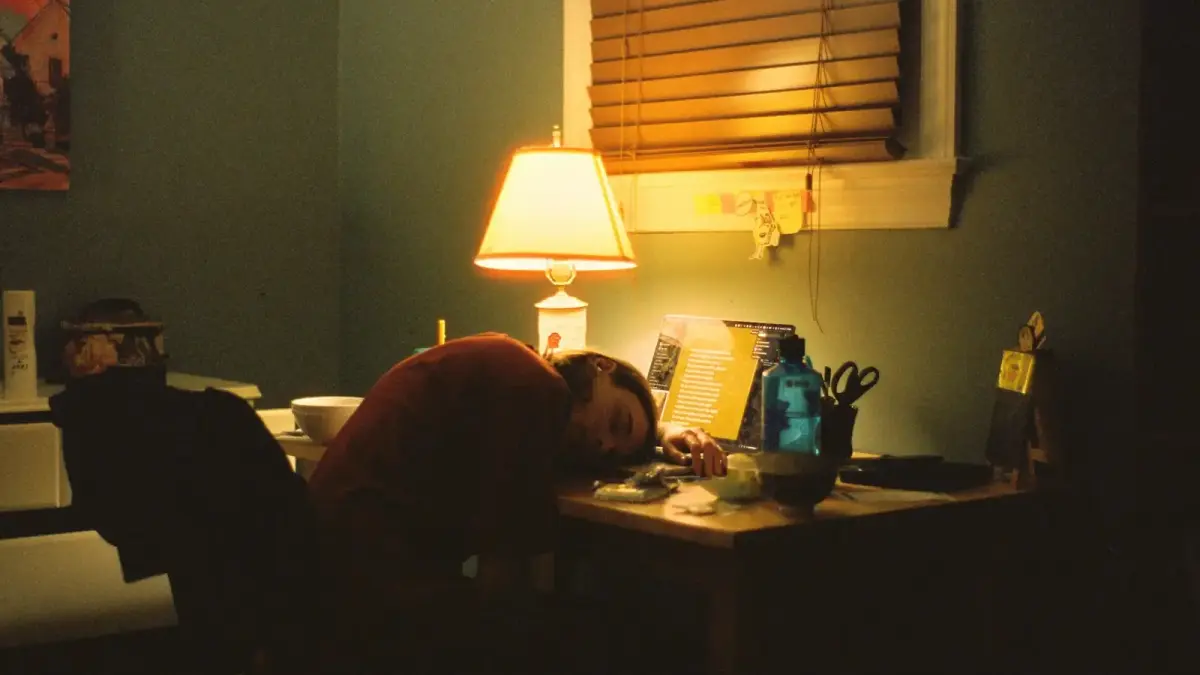
5. They express love most fluently at 2 AM when nobody is awake to hear it land
There is something about the quiet hours that unlocks the people who live in this gap. The house is still. Nobody is watching. The only audience is the screen or the page, and it cannot flinch or go quiet or change its expression.
At 2 AM, you write the thing you could not say at dinner. You type the paragraph to your daughter that would have come out as a joke if you’d tried it over breakfast. You compose the message to your oldest friend that holds twenty years of unsaid gratitude.
The darkness is not what makes you honest. The absence of a witness is. The page does not react while you’re still in the middle of being vulnerable, and that is the only condition under which some people can be vulnerable at all.
6. They write apologies better than they speak them
A spoken apology has a terrible design problem. You have to say the hard thing while looking at the face of the person you hurt, and their expression becomes part of the experience, and suddenly you are managing their reaction and your guilt simultaneously, and the words come out smaller or stranger than you meant them.
The written apology lets you hold the full weight of what you did without having to perform composure at the same time. It lets you be specific. It lets you say “I know exactly how I failed you” without your voice breaking on the word “failed” and turning the whole thing into a moment where they have to comfort you instead.
Research by communication scholars at the University of Texas has shown that written apologies are often perceived as more thoughtful and sincere than spoken ones - not because the medium is superior but because it allows the apologizer to prioritize the other person’s experience over their own anxiety.
7. They keep journals not for memory but because the page is the only relationship where they do not edit themselves
Here is the paradox. They edit every word on the page, rearranging sentences, crossing things out, starting over. But they do not edit the feeling. The journal gets the unfiltered version - the anger, the grief, the longing, the petty resentment they would never admit to in conversation.
In every spoken relationship, there is a filter running. What is safe to say. What will be received well. What might change the way someone looks at them. The journal has no such filter because the journal has no face.
You edit the language because you care about precision. But you do not edit the truth because there is no one to protect from it. The page is the only relationship where honesty carries no social cost, and for people who learned early that honesty could be expensive, that is not a small thing.
8. They mourn the gap between what they write and what they say
This is the one that sits heaviest. You are fifty-three and you can write a letter that would bring a room to silence, but you cannot finish a sentence about how you feel without laughing it off or changing the subject. You know this about yourself. You have always known it.
And it grieves you - quietly, in the background, like a low hum you’ve learned to live with.
You watch other people say “I love you” easily, casually, in the middle of a grocery store parking lot, and you wonder what it would feel like to have a mouth that cooperated with your heart. You have tried. You have started sentences and felt your throat close around them like a hand.
Psychologist Susan David, whose work on emotional agility has been published extensively through Harvard Business Review and the Journal of Personality and Social Psychology, describes this pattern not as emotional avoidance but as emotional precision under constraint. The person who writes what they cannot say is not withholding. They are someone who learned that feelings delivered in the wrong atmosphere become something other than what they were meant to be.
You are not broken for needing the page. You are someone who discovered, probably very young, that honesty spoken out loud could rearrange a room - the silence that followed, the face that changed, the conversation that shifted away from you. And you found a way to keep being honest anyway.
The written word became your safe audience. The one that did not flinch. The one that stayed still while you said the true thing.
That is not a limitation. That is a person who refused to stop feeling just because speaking was dangerous. You found another door. You kept walking through it. And everything you have ever written in the quiet hours - every card, every draft, every 2 AM message - is proof that your heart has been working this entire time.
It just learned to speak in a different language. And that language is not less. It is yours.