8 things people who follow every recipe exactly - who level every measuring cup with the back of a knife, who set timers to the exact second, who have never once substituted an ingredient or guessed at an amount, who will drive to the store for a quarter teaspoon of something rather than leave it out - do according to psychology, because a child who grew up in a house where nothing worked the way it was supposed to found that a recipe was the first set of instructions that actually produced exactly what it promised
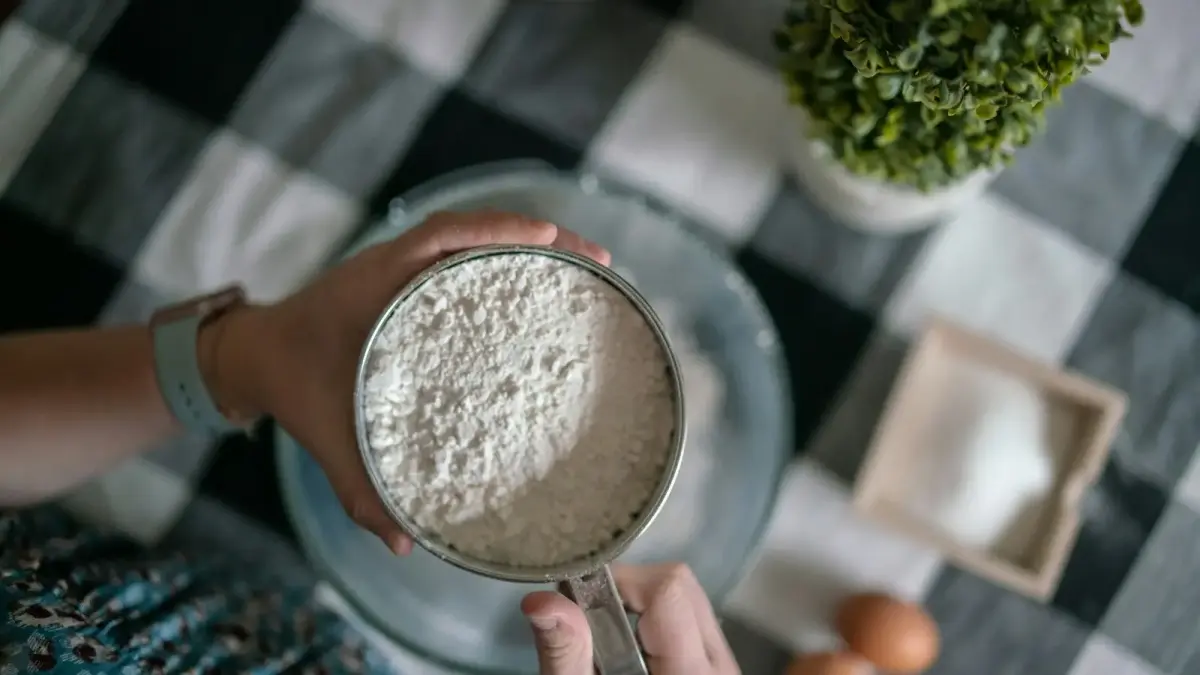
I watched my mother pour flour into a measuring cup last Thanksgiving. She scooped, shook it loosely, eyeballed it, and dumped it in. “Close enough,” she said. And my whole body tightened.
I couldn’t do that. I have never been able to do that. I level every cup with the flat side of a butter knife. I scrape the excess back into the bag. I set the timer on my phone to the exact minute and I stand near the oven when it counts down, because what if I miss it by thirty seconds and something goes wrong.
People laugh about this. They call it “type A.” They say I’m a perfectionist, a control freak, someone who needs to loosen up. But when I started looking into the psychology behind this kind of precision, I found something that made me put the measuring cup down and sit with it for a while.
It wasn’t about flour. It was never about flour.
1. They grew up in environments where outcomes were unpredictable
Here is what most people don’t understand about a child in a chaotic home. The chaos doesn’t have to be dramatic. It doesn’t require violence or screaming or anything that looks like a crisis from the outside.
Sometimes it’s just that dinner happened at a different time every night. Sometimes the rules changed depending on which parent was home, or what mood they were in, or whether the electricity was on. A 2004 study published in the Journal of Personality and Social Psychology found that children raised in unpredictable environments develop heightened needs for structure and control as adults - not because they’re rigid, but because their nervous systems learned early that safety required vigilance.
A recipe is a contract. You do these things in this order and you get this result. For a child who never had that kind of guarantee, the first time a recipe actually worked - the cookies came out looking like the picture, the cake rose the way it was supposed to - something clicked into place that had nothing to do with baking.
2. They don’t trust their own instincts in areas where most people improvise
You know that person at the dinner party who tastes the sauce, adds a splash of wine, throws in some oregano, and it comes out perfect? That person trusts themselves. They believe their instincts are good enough.
The person who follows the recipe to the letter doesn’t have that trust. Not because their instincts are bad, but because somewhere along the way they learned that trusting themselves was dangerous. That winging it led to consequences. That the safest path was the one someone else had already tested and verified.
This isn’t about cooking confidence. It’s about a deeper belief that their own judgment can’t be relied on. And that belief almost always started before they were old enough to hold a whisk.
3. They find genuine comfort in precision - not satisfaction, comfort
There’s a difference between enjoying organization and needing it. The person who color-codes their closet because it looks nice is having fun. The person who color-codes their closet because the alternative makes their chest feel tight is managing something.
People who measure every ingredient to the gram aren’t getting a thrill from accuracy. They’re getting relief. The precision isn’t a preference. It’s a regulation strategy. Their nervous system settles when the numbers line up, when the steps are followed, when the outcome matches the expectation.
Dr. Gabor Mate has written extensively about how children in unstable environments develop coping mechanisms that look like personality traits. The adult who cannot improvise in the kitchen isn’t showing you who they are. They’re showing you what they survived.
4. They will drive to the store for a quarter teaspoon rather than leave it out
This one sounds absurd until you understand the logic underneath it. It’s not about the quarter teaspoon of cream of tartar. It’s about what happens if you skip it.
If you skip it, the recipe isn’t the recipe anymore. It’s your version. And if your version fails - if the cookies spread too thin or the texture is wrong - you can’t blame the recipe. You have to blame yourself. You deviated. You made a choice.
And choices, for someone who learned early that their choices led to bad outcomes, feel like walking into traffic.
So they drive fifteen minutes to the grocery store. They buy a jar they’ll use once. They measure out exactly what’s needed. Because the recipe promised a result, and they are going to hold up their end of that agreement no matter what.
5. They apologize when food turns out imperfectly, even when no one else notices
I once pulled a batch of brownies from the oven and immediately said, “They’re a little overdone, I’m sorry.” My partner looked at me like I’d lost my mind. They were perfect. They were better than perfect. But the edges were slightly darker than the photo in the cookbook, and that gap between expectation and result set off something in me that felt a lot like failure.
A 2011 study in Psychological Science found that individuals with heightened sensitivity to discrepancy - the gap between what they expected and what happened - often developed that sensitivity in childhood environments where small mistakes had disproportionate consequences. You didn’t just burn the toast. You ruined the morning. You didn’t just forget to take out the trash. You proved you couldn’t be trusted.
The apology over slightly overdone brownies isn’t about brownies. It’s a reflex from a time when imperfect results meant you weren’t careful enough, and not being careful enough meant something was about to go wrong.
6. They read the entire recipe through before starting - sometimes twice
Ask them. They’ll confirm it. They read the recipe top to bottom before they preheat the oven. They note the temperatures. They check whether the butter needs to be softened. They lay out ingredients in the order they’ll be used. Some of them do this the night before.
This isn’t meal prep enthusiasm. This is hypervigilance wearing an apron.
When you’ve grown up in a house where surprises were almost never good, you develop a relationship with preparation that goes beyond practicality. You don’t just want to know what’s coming. You need to know.
Because the feeling of being caught off guard - of reaching step four and realizing you were supposed to have done something at step two - isn’t just frustrating. It’s activating. It puts you back in the body of a child who was always one missed cue away from everything falling apart.
7. They struggle to enjoy the process because they’re managing the outcome
Here’s the part that actually breaks my heart. Cooking can be joyful. It can be messy and experimental and full of laughter and tasting things off the spoon and saying “I don’t know, let’s see what happens.”
But the person who follows every recipe exactly can’t access that. They’re not in the moment. They’re ahead of the moment, scanning for what could go wrong, tracking every variable, holding the entire process in their head like a project manager running a critical deployment.
Susan Cain, in her work on temperament and sensitivity, has noted that highly conscientious individuals often sacrifice presence for predictability. They’re so focused on making sure the outcome is right that they miss the experience of getting there. And the thing is, they know this. They wish they could just throw some spices in and see what happens. They watch other people do it with something that looks a lot like envy.
They can’t let go. Not because they don’t want to. Because letting go was never safe.
8. They’re not rigid - they’re still protecting the one place where the rules actually worked
This is the thing I need you to hear, because I think it changes everything.
The woman who is forty-nine years old and cannot add a pinch of anything without measuring it first is not difficult. She is not uptight. She is not in need of someone telling her to “just relax and have fun with it.”
She is standing in her kitchen, in her own home, doing the one thing that has never let her down.
The recipe said two cups. She measured two cups. The recipe said 350 degrees for twenty-two minutes. She set the timer.
And it worked. Every single time, it worked.
In a childhood where promises were broken routinely, where the rules shifted under her feet, where doing everything right still sometimes wasn’t enough - baking was the first place where effort and outcome had a direct, reliable, one-to-one relationship.
You follow the steps. You get the result. No surprises. No chaos. No one suddenly changing the terms.
That’s not rigidity. That’s the most rational response in the world to an irrational beginning.
If you recognized yourself in any of this, I want you to know something. The precision you carry into your kitchen - into your measuring cups and your timers and your reluctance to substitute - is not a flaw. It’s not something you need to fix or outgrow or laugh at yourself about.
It’s evidence of how intelligently you adapted. How creatively your young mind found order in disorder. How you taught yourself, long before anyone else did, that you could create something reliable in a world that wasn’t.
You don’t have to learn to improvise. You don’t have to become the person who eyeballs everything and hopes for the best. You can keep leveling your measuring cups with the back of a knife for the rest of your life, and that is perfectly, completely fine.
But if it ever starts to feel less like a choice and more like a cage - if you ever find yourself wanting to try something different but your body won’t let you - know that the door was never locked from the outside. The child who needed those rules is safe now. And the recipe will still be there if you need it.