She's 56 and checks the expiration date on everything in the fridge - not just the milk or the yogurt but the mustard, the baking soda, the jar of pickles that has been there since her youngest left for college - because the girl who grew up in a house where things ran out without warning learned that the only way to feel safe was to stay ahead of every small disaster before it arrived
The sour cream didn’t need checking
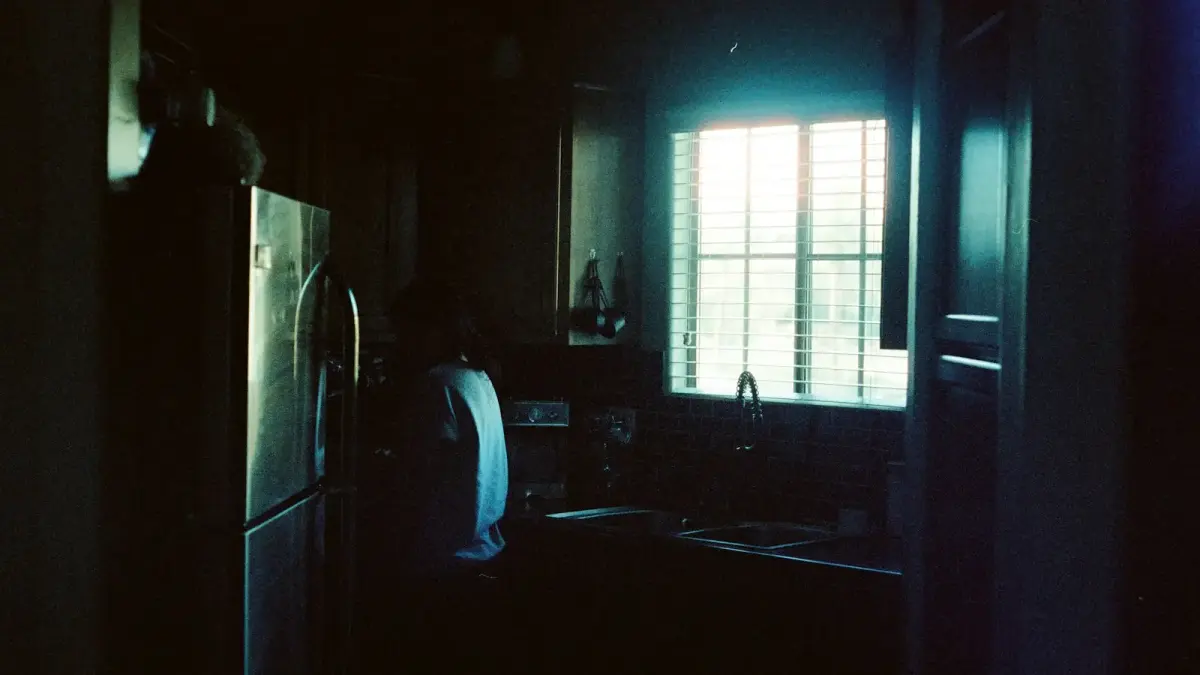
It was 11:14 on a Tuesday night and I was standing in front of the open fridge, turning a container of sour cream slowly in my hands, looking for the date stamped on the bottom.
I had already checked it that morning.
I knew it was fine. I knew the sour cream was purchased four days ago, that it wouldn’t expire for another three weeks, that nothing about its smell or texture or color had changed since the last time I held it under the kitchen light and read the tiny numbers pressed into the plastic. But I was checking anyway, the way you touch your pocket for your keys even when you can feel the weight of them against your thigh.
My husband walked in, got a glass of water, kissed the top of my head, and said nothing. He stopped asking about the fridge checks years ago. He used to joke about it - called me the “expiration detective,” which I laughed at because what else do you do when someone names the thing you can’t stop doing. Now he just lets it happen, the way you let someone lock the front door a second time because you know the fight isn’t worth it and the lock isn’t really what they’re checking.
He’s right not to ask. Because the answer isn’t about sour cream. The answer is about a house I grew up in thirty-seven years ago, where nothing in the kitchen could be trusted to still be there when you needed it.
The house where things ran out
My mother wasn’t neglectful. I want to say that first because the story sounds like it’s building toward something dramatic, and it isn’t. She was overwhelmed. She was a woman raising three kids on a teacher’s salary in a house that always needed something fixed, married to a man who was present in body and absent in every way that mattered. She did her best. Her best just didn’t include keeping track of the milk.
You’d open the fridge for cereal in the morning and the carton would be empty. Not almost empty - someone had put it back with a swallow left in the bottom, a gesture toward fullness that fooled nobody.
The bread would be stale by Wednesday because the bag wasn’t sealed. The butter would run out and there wouldn’t be more until Friday. The ketchup bottle would have that crusted ring around the cap and nothing inside, and when you mentioned it, the response was always some version of “I’ll get it tomorrow” or “use something else” or just silence, which was worse.
These were not tragedies. I know that. A kid without ketchup is not a kid in crisis.
But a kid who opens the fridge every morning not knowing what will be there and what will be gone is a kid whose body is learning something about the world. She’s learning that supply is unreliable. That the adults in charge are not tracking the basics. That if she wants to know whether there will be milk for her cereal tomorrow, she will have to count the inches left in the carton herself.
A 2019 study published in the journal Development and Psychopathology found that children who grow up in unpredictable home environments - not necessarily abusive, just inconsistent - develop heightened monitoring behaviors as a core adaptive strategy. They don’t learn to relax. They learn to scan. They become small systems administrators for households that have no administrator.
That was me. I was nine years old and I knew the inventory of our kitchen better than my mother did. I knew the peanut butter was low. I knew the eggs were down to three. I knew the orange juice had been in there too long because I’d watched the pulp settle in a way that meant nobody was drinking it.
I wasn’t being helpful. I was trying to prevent the next small failure before it happened, because each small failure felt like evidence that no one was paying attention, and if no one was paying attention to the milk, then no one was paying attention to anything, including me.
What the checking actually does
Here’s what people don’t understand about the expiration date ritual: it is not about whether the food is safe.
I know the mustard is fine. Mustard lasts essentially forever. I know the baking soda in the back of the fridge is doing its quiet work of absorbing odors and will continue doing that work long after I’m gone. I know the jar of pickles that’s been there since before my youngest left for college is still perfectly edible because pickles are, by definition, preserved.
I know all of this. The rational part of my brain has no confusion about shelf life.
But the checking isn’t a rational act. The checking is an emotional one. Every time I pick up a container and read the date, I am doing something my body learned to do decades ago: I am confirming that nothing has gone wrong yet. I am running inventory. I am making sure that tomorrow morning, when someone opens this fridge, everything will be where it should be and nothing will have quietly expired while no one was watching.
It’s a patrol. That’s the most honest word for it. I’m patrolling the kitchen the way a security guard walks the perimeter of a building - not because there’s been a break-in, but because the walking itself is what keeps things safe. If you stop walking, you stop knowing. And if you stop knowing, something slips past you.
Dr. Gabor Mate has written extensively about how the coping strategies we develop in childhood don’t disappear when the original threat does. They persist because the nervous system that created them doesn’t know the emergency is over. It’s still running the old program. And the old program says: check. Check again. Know what’s about to run out before it runs out, because if you’re caught off guard by something as small as an empty milk carton, then the larger things you can’t control will blindside you too.
That’s the logic. It doesn’t make sense on the surface, but underneath it’s airtight. If I can prevent the sour cream from going bad, I can prevent something. If I can stay ahead of the yogurt, I am staying ahead of chaos. The fridge is the smallest, most manageable unit of a world that once felt entirely unmanaged, and I will keep it in order even if it kills me.
The cost of the kitchen you can’t leave alone
My daughter invited me to her apartment last year for dinner. She’d just moved in with her partner, a kind young man who cooks beautifully and keeps a kitchen that I would describe as relaxed. There were open containers without lids. A block of cheese rewrapped loosely in its original plastic. A carton of eggs on the counter - not in the fridge, on the counter - which I know is fine in many countries but which made my hands itch.
I didn’t say anything. I have worked very hard on not saying anything.
But I also couldn’t eat without a low hum of something running in the background of my mind, a quiet inventory scan that I couldn’t shut off. How long has that chicken been in the fridge? Is that salad dressing past its date? The rice - when was the rice made? Is it within the safe window?
I wasn’t worried about getting sick. I was worried about not knowing. The not knowing was the thing that felt dangerous - the same formless unease I felt at nine years old, standing in front of our fridge and realizing the milk was gone and no one had noticed but me.
A 2021 study in the Journal of Anxiety Disorders found that adults who scored high on measures of childhood unpredictability showed significantly elevated need-for-control behaviors in domestic settings - organizing, checking, monitoring household supplies. The researchers noted that these behaviors were rarely about the objects themselves. They were about maintaining a sense of environmental predictability that the person’s early life had failed to provide.
That’s the clinical version. The lived version is simpler: I am tired.
I am tired of knowing the purchase date of every item in my pantry. I am tired of replacing things before they’re half empty because half empty feels too close to empty, and empty feels too close to gone. I am tired of the ten-minute sweep I do every Sunday, pulling things forward, rotating stock, checking dates on cans that won’t expire until 2029.
My husband doesn’t do this. He opens the fridge, takes what he needs, and closes it. He has no idea when the mayonnaise was purchased. It has never occurred to him to wonder. And watching him do this - watching him move through a kitchen with that kind of trust, that unearned ease - sometimes makes me want to cry. Not because he’s wrong. Because I want to know what it feels like to open a refrigerator without auditing it.
What the research says about children who learned to scan
Psychologists who study hypervigilance in adults often trace it back to what they call “environmental unpredictability” in childhood. This doesn’t require abuse or poverty or any of the markers that people associate with difficult childhoods. It requires only inconsistency - a household where the child could not reliably predict whether basic needs would be met from one day to the next.
A 2020 study published in Psychological Science by researchers at the University of Pennsylvania found that people who grew up in unpredictable environments showed fundamentally different attention patterns as adults. Their brains were tuned to detect change, absence, and depletion. They noticed when things were running low. They tracked resources with a precision that looked, from the outside, like conscientiousness. From the inside, it felt like survival.
The researchers called this “adaptive calibration” - the idea that the brain adjusts its monitoring systems based on early environmental input. If your early environment taught you that resources appear and disappear without warning, your brain calibrates to a higher level of vigilance. You become someone who always knows what’s in the fridge. You become someone who notices when the soap dispenser is getting low, when the paper towels are on their last roll, when the gas tank hits a quarter full.
You become someone other people call “on top of things.”
You know the truth. You’re not on top of things. You’re underneath them, holding everything up, scanning for the next crack.
Susan Cain, in her work on the inner lives of people who process deeply, describes how certain temperaments absorb environmental instability in ways that become woven into identity. The child who becomes the household monitor doesn’t choose that role. It’s assigned by default - by a nervous system that says, if no one else is watching, you must.
And so you watch. For decades. Long after the house you grew up in has been sold, long after the unreliable fridge has been replaced, long after the adults who failed to track the milk have aged and softened and maybe don’t even remember the mornings that shaped you. You watch because the watching was the thing that made you safe, and your body hasn’t received the memo that you are safe now without it.
You were the smartest person in that house
If you recognize yourself in any of this - if you are the person who checks, who tracks, who knows the contents of every shelf and the age of every container - I want you to hear something that the checking will never tell you.
You were not being anxious. You were being intelligent.
You were a child who assessed a chaotic environment and found the one variable she could control. You built a system out of nothing - an inventory, a schedule, a set of quiet rituals that kept the household running when no one else was running it. You did this without being asked. You did this without being thanked. You did this because your nervous system understood, long before you had words for it, that if you could stay ahead of the small failures, the big ones might not come.
That was brilliant. It was also expensive. And you have been paying the cost of that brilliance every night at 11 pm when you find yourself standing in front of the fridge, turning a container of sour cream in your hands, reading a date you already memorized.
You are allowed to put it down.
Not all at once. Not tonight. Maybe not even this year. But the girl who tracked the milk because no one else would - she did her job. She kept everything running. She can rest now, even if resting feels like the most dangerous thing she’s ever done.
The fridge is full. You made sure of it. You always do.