8 things people who keep the TV volume on an even number - who cannot leave it on 13, 17, or 23 and press the button one more time to land on 14, 18, or 24 - always do, according to psychology
I was thirteen the first time I noticed I was doing it.
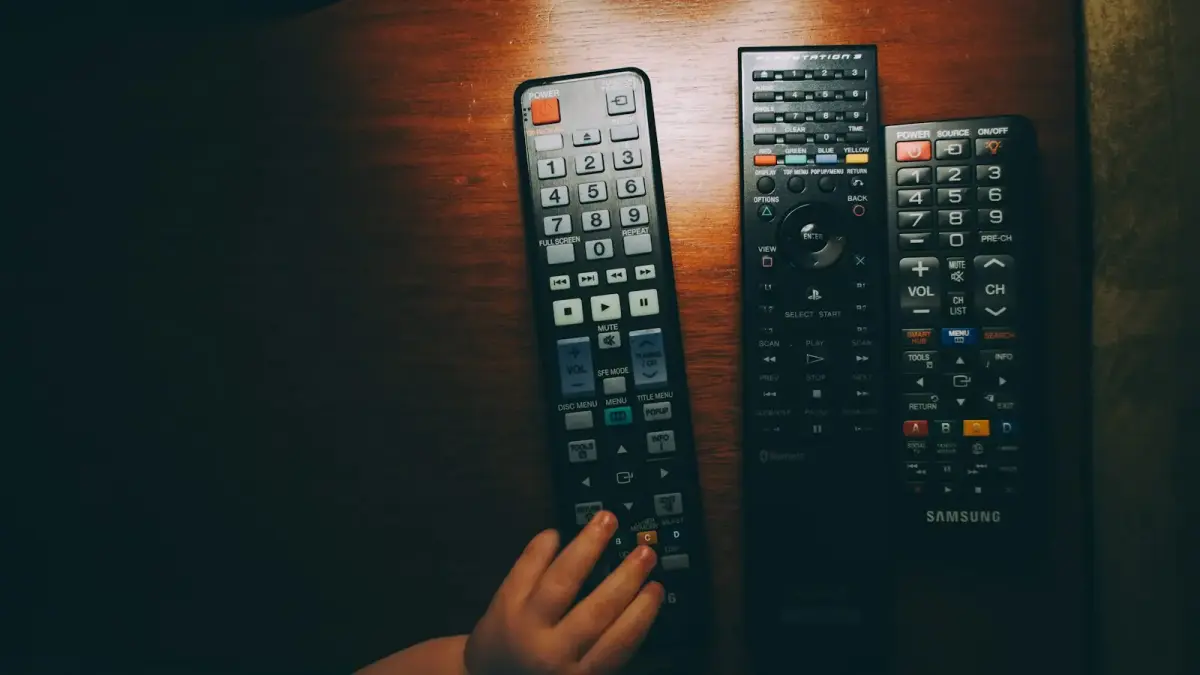
My dad had just left the room after one of those arguments that wasn’t technically an argument - the kind where nobody raised their voice but the air got so heavy you could feel it pressing against your chest. I picked up the remote and turned the volume to 22. Not 21. Not 23. Twenty-two.
I didn’t know why it mattered. I just knew that when the number on the screen was even, something inside me unclenched. The room felt slightly less dangerous. The show wasn’t even good. But the number was right, and that was enough.
It took me twenty years and a lot of therapy to understand what I was actually doing in that moment. I wasn’t being quirky. I wasn’t being “a little OCD.” I was a kid who had discovered the first instrument of order she’d ever held, and she was using it to build a world that made sense when the real one refused to.
If you do this - if you physically cannot leave the volume on 17 when 18 is one button away - I want you to know something. You are not neurotic. You are someone whose nervous system learned very early that safety lives in the small things you can control. And that instinct shows up in more places than you think.
1. You keep the TV volume on an even number, always
This is the one that gives us away. You’re watching something, someone hands you the remote, and you glance at the screen and see 19. Your stomach does a tiny flip. Not dramatic. Not a panic attack. Just a quiet wrongness, like a picture frame tilted two degrees.
So you press the button once more. Twenty. And your shoulders drop half an inch.
A 2020 study published in the Journal of Experimental Psychology found that humans have a deep cognitive preference for “round” numbers - particularly even ones - because our brains process them more fluently. The researchers called it “numerical aesthetics.” Your brain literally finds even numbers more beautiful than odd ones.
But for people like us, it goes beyond aesthetics. That even number isn’t just prettier. It’s safer. It means the world is in the position we put it in, and nothing has shifted without our permission.
2. You arrange your phone apps in perfect rows with no gaps
You know the feeling. You delete one app and suddenly there’s a hole on the second row, and the remaining icons shuffle in a way that looks like someone rearranged your furniture while you were sleeping.
So you spend the next fifteen minutes moving everything. Productivity apps on page one. Social on page two. Nothing on the dock that doesn’t earn its place. Every row full. Every gap closed.
This isn’t about efficiency. You could find any app in two seconds with the search function. This is about the same thing the volume is about - you need the grid to be complete because incomplete grids feel like incomplete sentences, and incomplete sentences feel like conversations that ended before anyone said the thing that actually mattered.
3. You close every browser tab before bed
Some people have 47 tabs open and sleep fine. You are not those people.
Before you shut your laptop, you close them all. One by one. Sometimes you pause on one and think, “I might need that tomorrow.” You close it anyway. Tomorrow-you will find it again. Tonight-you needs the slate clean.
A 2019 study in Frontiers in Psychology found that unfinished tasks create what psychologists call the Zeigarnik effect - a mental tension that keeps incomplete items cycling through your working memory. For most people, open browser tabs are mildly annoying. For you, they’re unfinished business. And unfinished business is the thing your nervous system tolerates least.
Closing those tabs isn’t procrastination avoidance. It’s a nightly ritual of telling your brain: everything that needed to be handled today has been handled. You can stop scanning for threats now.
4. You fold towels in thirds because thirds look neater than halves
This is the one people laugh about, and honestly, I get it. From the outside, the difference between a towel folded in half and a towel folded in thirds is invisible. From the inside, it’s the difference between a drawer that looks like it belongs to someone who has her life together and a drawer that looks like someone shoved things in and closed it fast.
You fold in thirds. You smooth the edges. You stack them so the folded side faces out and no raw edges are visible.
You’re not performing neatness for an audience. Nobody opens your linen closet. This is for you. Because you learned somewhere along the way that if the small things are in order, the big things feel less terrifying. And honestly? Psychologist Brene Brown has written extensively about how small rituals of control often emerge in people who grew up in environments where emotional chaos was the norm. The towels aren’t about towels. They’re about building a world that holds still.
5. You turn all the hangers in the same direction
Every hanger faces the same way. The hooks all curve toward you, or all curve away - the direction doesn’t matter as much as the uniformity. When one gets turned around, maybe by someone else putting laundry away, you feel it before you see it. Something is off. Something broke the pattern.
You fix it immediately. Not with irritation, exactly. More like the quiet urgency of straightening a crooked painting in a hotel room that isn’t yours. You can’t explain why it matters. You just know it does.
This is pattern completion - your brain’s deep need to see consistency in a sequence. A 2017 study in the Journal of Research in Personality linked this kind of environmental ordering to a personality trait researchers call “personal need for structure.” People high in this trait aren’t rigid or controlling in relationships. They’re people who feel the chaos of the world more acutely than others, and who discovered that external order is the fastest way to quiet internal noise.
6. You make sure every clock in the house shows the same time
The microwave says 7:42. The stove says 7:44. The clock in the living room says 7:40.
For some people, this is background noise. For you, it’s three different realities existing in the same house, and you cannot rest until they agree.
You go through and sync them. You check your phone for the real time and then you walk room to room adjusting. It takes three minutes. Nobody notices. But you notice, and the noticing is the point.
Daniel Goleman’s work on emotional intelligence describes a type of environmental awareness that some people carry like a second nervous system. You’re not just in a room. You’re monitoring the room. The clocks, the sounds, the temperature, the energy. When one element is out of alignment, your whole body registers it as a problem to solve.
This isn’t a disorder. It’s a deeply developed sensitivity. You feel the room the way a musician hears a note slightly flat in a chord nobody else caught.
7. You line up the shampoo bottles by height in the shower
Tallest in the back. Shortest in the front. Labels facing forward. Nothing touching the wall at an angle.
You do this wet, in the shower, with conditioner in your hair. You do it knowing full well that the next person who showers will knock everything sideways. You do it anyway.
Because the doing is the point. A 2021 study in Psychological Science explored what researchers called “compensatory control” - the human tendency to impose order on physical environments when psychological environments feel uncertain. The study found that people who engage in these small ordering behaviors report lower anxiety not because the behaviors eliminate the source of stress, but because the act of ordering provides a momentary experience of agency.
You’re not controlling the shampoo bottles. You’re reminding yourself that you can affect your environment. That you’re not just subject to the chaos - you can shape at least this one tiny corner of it.
8. You straighten the rug fringe after vacuuming
This is the one that might seem the most irrational, and it’s the one that breaks my heart the most.
You vacuum the living room. You do a good job. The carpet looks clean, the lines are even, the room smells fresh. But the rug fringe is tangled from the vacuum running over it, and you cannot walk away.
So you kneel down. And you straighten each section of fringe with your fingers until it lies flat and even, like teeth in a comb.
You do this knowing it will get messed up again the moment someone walks across the room. You do this knowing it doesn’t matter. But here’s what I want you to hear: it matters because you decided it matters. And the ability to decide what matters in your own space - to choose where order lives and where it doesn’t - is not a symptom. It’s sovereignty.
Susan Cain, whose research into introversion and sensitivity reshaped how we understand quiet people, has written about the deep inner worlds of people who process their environments with unusual intensity. You are not fussy. You are someone who feels everything, and arranging the fringe is how you turn that feeling into something manageable.
I used to be embarrassed about the volume thing. I’d change it quickly, hoping nobody noticed. I’d make a joke if they did - “Oh, I’m just weird about numbers, ha ha.”
I’m not embarrassed anymore.
Because I understand now that every even number, every closed tab, every straightened fringe is a love letter I’m writing to my own nervous system. It’s me saying: I know the world felt big and loud and unpredictable when you were small. I know you learned to survive by controlling the only things you could reach. And I’m not going to make fun of you for that. I’m going to hand you the remote and let you pick the number.
If you recognized yourself in this list, I want you to sit with that recognition for a moment. Not with shame. With tenderness. You built these rituals out of intelligence, not brokenness. Out of sensitivity, not weakness.
The volume is at 22. The tabs are closed. The towels are folded.
You’re okay.