8 things people who need to be completely alone after socializing do during those hours that everyone calls antisocial but are actually the nervous system finally running its own software after hours of executing everyone elses
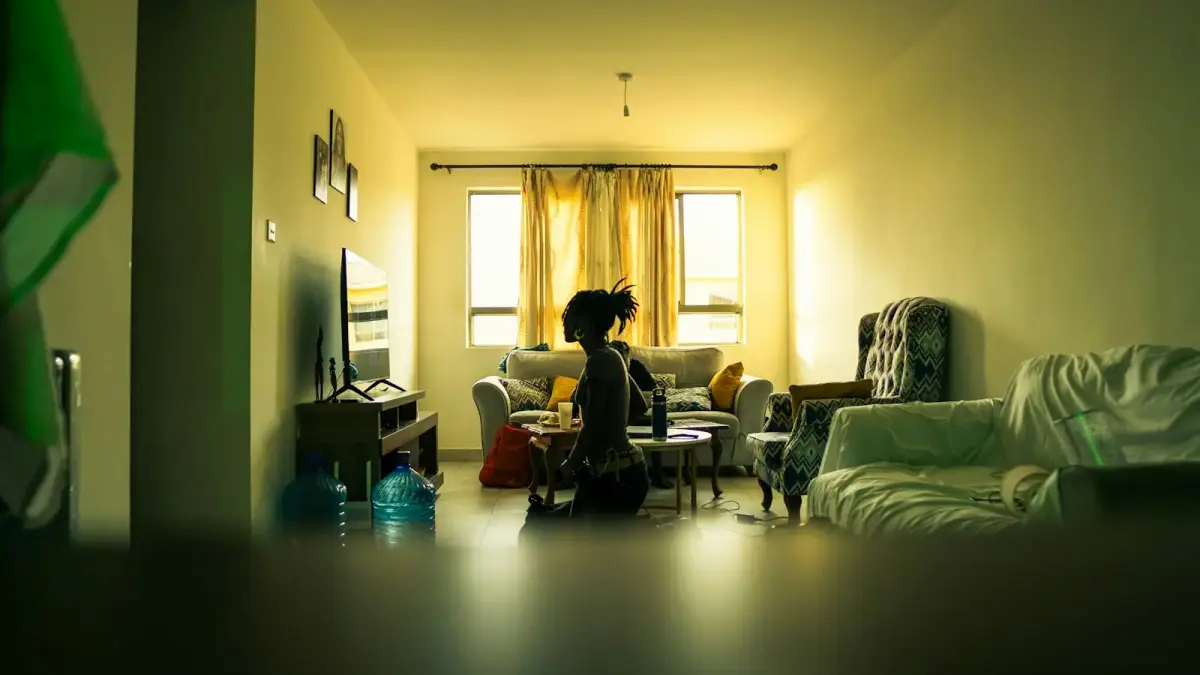
I came home from a birthday dinner last Saturday - twelve people, good food, real laughter - and I sat in my car in the driveway for nine minutes before I went inside.
I wasn’t upset. I wasn’t processing conflict. I had genuinely enjoyed myself. But something in my body needed to sit in the dark and the quiet before I walked through the door and became a person in a house again.
My partner used to ask if something was wrong. Now he just leaves the porch light on and gives me the space. He has learned what I am still learning to explain - that the stillness after connection is not the opposite of connection. It is the cost of doing it thoroughly.
If you are someone who needs to be fully, completely alone after social engagement - not because you hated it but because your nervous system ran at full capacity for hours and now it needs to run its own programs for a while - then the things you do during that window probably look strange to people who don’t share this wiring.
They call it antisocial. They call it avoidant. They call it weird.
But psychologist Hans Eysenck proposed decades ago that introverts operate with a higher baseline of cortical arousal, meaning social stimulation doesn’t energize them - it adds to an already active system. The quiet afterward is not shutdown. It is recalibration.
Here are eight things people like us do during those hours, and why none of them are what other people think.
1. Sitting in the car before going inside
You have arrived home. The engine is off. The seatbelt is still on.
You are not looking at your phone. You are not crying. You are just sitting there, letting the silence press against the windshield like something physical.
This is not avoidance. This is your parasympathetic nervous system beginning to take over from the sympathetic state that kept you alert and responsive during hours of social engagement. A 2021 study in Frontiers in Psychology found that introverts show markedly higher autonomic nervous system reactivity during social interactions - meaning the transition from “on” to “off” is not a switch but a slow, deliberate unwinding.
The car is the airlock. You are decompressing before re-entry.
2. Turning off every single light and lying on the couch in silence
Not sleeping. Not meditating. Just lying there in the dark with your eyes open, doing what looks like absolutely nothing.
People who do not need this cannot understand it. To them, you just left a fun event and now you are lying in the dark like someone grieving. But your brain is not empty during this. It is finally catching up.
Susan Cain writes in Quiet that the introvert brain routes information through longer neural pathways associated with deep processing, internal planning, and long-term memory. During social time, your brain was collecting enormous amounts of data - tone, facial expression, the thing someone said that they probably did not mean the way it sounded, the moment the energy in the room shifted and nobody acknowledged it. Lying in the dark is not withdrawal. It is your brain filing everything it absorbed.
3. Taking the long way home
You left the dinner at a reasonable hour. You said your goodbyes warmly and genuinely. And then you drove past your exit.
Not because you are lost. Because the drive itself - the movement, the streetlights, the absence of anyone needing you to respond to anything - is a form of decompression that your body has figured out even if your mind has not named it yet.
There is a reason movement without social demand feels restorative. It gives the brain gentle sensory input without requiring any output. You are still processing the evening, but you are doing it at your own speed, in your own direction, and nobody is asking you what you think about it.
4. Reheating something simple and eating it standing up
This one gets misread constantly.
You come home from a gathering that probably had food - good food, shared food, food that required you to eat at someone else’s pace and make conversation between bites. And now you are standing at the kitchen counter at 10:30 at night eating leftover rice out of a container with a fork.
This is not laziness. This is the refusal to perform one more social ritual. Sitting down, plating food, eating properly - those are still performances. They still have structure and expectation baked into them.
Standing at the counter in the dark eating something warm and simple is your body saying: nothing needs to be arranged right now. Nothing needs to be presented. You can just feed yourself without it being an event.
5. Scrolling your phone without actually reading anything
Your thumb is moving. Your eyes are technically on the screen. But if someone asked what you just looked at, you would have no answer.
This is not mindless consumption. This is stimulation without demand - your nervous system’s version of a screen saver. The gentle movement of content passing by gives your brain just enough input to prevent the kind of restless, jangled feeling that comes when you go from maximum stimulation to zero.
A 2019 study published in the Journal of Research in Personality found that introverts are more likely than extroverts to engage in low-stimulation activities after periods of high social engagement - not because they are less curious or engaged, but because their processing systems need to downshift gradually rather than stop abruptly. The mindless scroll is the idle gear.
6. Replaying specific conversations in your head
Not the whole evening. Just that one exchange with your friend’s new partner where something felt slightly off. Or the moment you told a story and you are not sure you landed the ending. Or the way someone looked at you when you said you had been tired lately.
People who process socially in real time do not do this. They responded in the moment, moved on, and forgot.
You did not forget. You could not. Because your brain was recording everything at higher resolution than it could process in real time, and now - in the quiet, in the dark, in the car or on the couch - it is finally playing back the footage at a speed where you can actually make sense of it.
This is not rumination. Rumination is circular and distressing. This is integration. You are not worrying about what you said. You are understanding what happened.
7. Canceling or postponing whatever was supposed to come next
There was a plan to call your sister after the party. Or you told a friend you would text them later. Or there is a show you and your partner watch together on Saturday nights.
And you are not going to do any of it. Not tonight.
This is the part that people closest to you sometimes struggle with. Because they see someone who was perfectly social two hours ago and is now declining further connection, and they interpret the gap as rejection. But it is not about them. It is about capacity.
Daniel Goleman’s work on emotional intelligence includes a concept he calls “attention fatigue” - the depletion that comes from sustained emotional attunement to others. You were attuned for hours. Your attention is not refusing to engage. It is depleted. The kindest thing you can do - for yourself and for every relationship you care about - is to let it refill before you try to use it again.
8. Going to bed earlier than makes sense
It is 9:45. You are not tired in the way that sleep fixes. But you are getting into bed anyway because the bed is the one place in the house where no one will ask you anything, offer you anything, or need you to arrange your face into an expression.
You might not even sleep right away. You might lie there for forty minutes, breathing, staring at the ceiling, feeling your body slowly remember what it is like to exist without an audience.
This is not depression. This is not disengagement. This is what it looks like when a nervous system that has been running someone else’s software for hours finally gets to reboot.
And here is what most people get wrong about this: they assume the person who can socialize for six hours and then bounce straight to the next thing is the one doing it right. That they are healthier, more resilient, more connected.
But Susan Cain’s research - and Eysenck’s arousal theory before her - suggests the opposite might be closer to true. The person who needs to recover is often the person who was processing at the deepest level. They were not just present at the gathering. They were absorbing it - every dynamic, every undercurrent, every shift in the room that nobody else noticed.
The recovery is not a flaw in the system. It is evidence that the system was running at full depth.
If you recognized yourself in this list, I want you to hear something that nobody said to you when you were younger and sitting in your room after a family gathering while everyone else kept the party going in the kitchen.
You were not broken then. You are not broken now.
You are a person whose nervous system takes the world seriously. Who cannot be in a room with people and only half-process what is happening. Who pays full attention, absorbs full meaning, and then needs real time to let it all settle into place.
The quiet hours after socializing are not the absence of engagement. They are the completion of it.
And the next time someone calls it antisocial, you can smile and say nothing - because you have already used up your words for the evening, and the silence you are sitting in is doing exactly what it needs to do.