8 things people over 55 who still watch the evening news at the exact same time every night - not streaming it later, not scrolling headlines on a phone, but sitting down in the same chair at six o'clock with a posture that says the world delivers its report on a schedule and your job is to be present to receive it - do according to psychology, because the ritual was never about staying informed but about belonging to a generation that believed the day had a structure and the news was the closing ceremony that told you the world was still standing
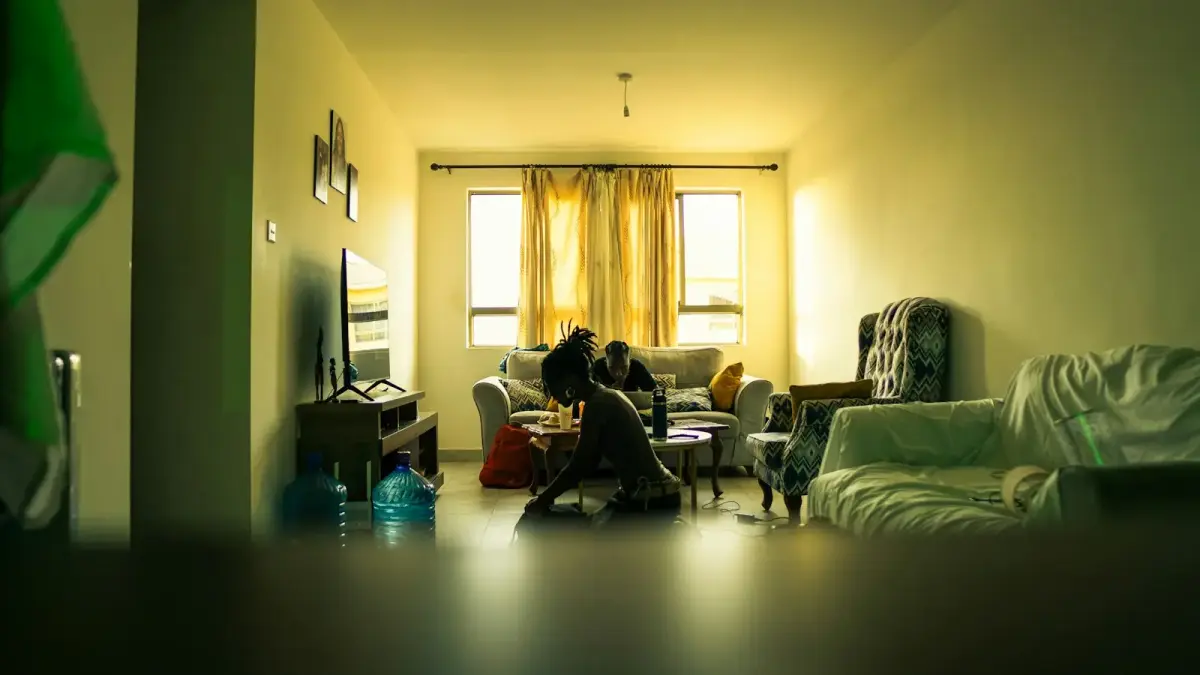
My father sits in the same recliner every evening at 5:58. Not six. Two minutes early, because the broadcast starts with a cold open and he refuses to miss the first headline. The remote is already in his right hand. His glasses are already on.
I used to tease him about it. I’d text him a news story at three in the afternoon and say, “There, now you don’t need to watch tonight.” He never laughed. Not because it wasn’t funny, but because I’d missed the point entirely. He wasn’t watching the news to learn what happened. He was watching the news because that’s what you do at six o’clock. The day has a shape, and this is the part where the shape closes.
Millions of people over 55 still do this. Not because they haven’t heard of apps or push notifications or podcasts. They have. They just don’t think those things count. The news isn’t a feed. It’s an appointment. And if you’ve ever watched someone settle into that chair with the kind of quiet authority that says “the world will now report to me,” you already know this has almost nothing to do with journalism.
It has to do with structure. With order. With the belief that the day has a closing ceremony, and you should be dressed and seated when it begins.
Here’s what psychology actually reveals about this ritual - and about the people who still keep it.
1. They sit in the same chair because the chair is a psychological anchor
It’s not the most comfortable seat in the house. Sometimes it’s not even facing the screen at the best angle. But it’s theirs, and that matters more than ergonomics.
Research on environmental self-regulation shows that people create what psychologists call “behavior settings” - physical locations that become fused with specific routines. A 2019 study published in the Journal of Environmental Psychology found that consistent use of a specific location for a recurring activity strengthens the automaticity of that behavior, reducing the cognitive effort required to initiate it. The chair isn’t furniture anymore. It’s a trigger. Sitting down is the act that says: the day is winding down now. I am switching modes.
If someone else is in that chair when six o’clock arrives, you’ll see a flash of something sharper than preference. It’s displacement. The ritual can’t begin until the setting is right.
2. They get irritated when someone talks over the anchor because the anchor is a guest they invited in
Watch what happens when a family member starts chatting during the broadcast. The shush isn’t casual. It carries weight - sometimes more weight than it would if someone interrupted a real conversation in the same room.
That’s because, psychologically, the anchor occupies a parasocial role. Research by Donald Horton and Richard Wohl, dating back to their foundational 1956 paper on parasocial interaction, established that audiences form one-sided relationships with media figures that carry many of the emotional textures of real relationships. Your parent doesn’t just watch the anchor. They trust the anchor. They’ve spent years with that voice in their living room. Talking over the anchor feels, on some level, like talking over a friend who came by with important information.
The irritation isn’t about control. It’s about respect for a relationship nobody else in the room can see.
3. They narrate headlines to an empty room because reception is an active posture
My mother repeats what the anchor says. Not all of it. Just the parts that land. “Oh, another one in Florida.” “Well, that’s not good.” She’s not talking to anyone. Or maybe she is - she’s talking to the news itself, confirming that she received it.
This is a form of what communication theorists call “active reception.” It’s the same impulse that makes people talk back to the radio or mutter at a newspaper. The information isn’t real until you’ve responded to it. For a generation raised on one-directional media - no comment sections, no share buttons, no emoji reactions - verbal acknowledgment was the only way to close the loop. You heard it, you processed it, you said something. That’s how you proved you were paying attention.
4. They refuse to watch on a phone because the screen size signals the seriousness of the content
Suggest that they watch the news on a tablet or a phone and you’ll get a look that borders on moral objection. It’s not that they can’t figure out the technology. It’s that a four-inch screen cannot hold something this important.
There’s a real perceptual basis for this. Research published in the journal Computers in Human Behavior has demonstrated that screen size affects perceived credibility and emotional engagement with media content. Larger screens produce greater immersion and higher trust ratings for the same material. Your parent isn’t being stubborn. Their brain is telling them - correctly, by some measures - that shrinking the news diminishes it. The television is the right size for world events. A phone is for weather and recipes.
5. They give the broadcast a specific quality of attention that barely exists anymore
Watch their face during the news. Not during the commercials - during the actual reporting. There’s a stillness there that you almost never see directed at a screen in the modern world. No second screen. No scrolling during the slow parts. Just watching.
This kind of sustained, single-channel attention has become genuinely rare. Psychologist Daniel Goleman, in his work on focus and attention, distinguishes between what he calls “full attention” and the fragmented monitoring most people now use as their default mode. The evening news viewer isn’t toggling. They’re receiving. It’s a posture of cognitive openness that younger generations sometimes mistake for passivity, but it’s actually the opposite. It takes more effort to sit with one stream of information than to bounce between six.
They’re not zoning out. They’re locked in. And the broadcast rewards that attention by never asking them to click, swipe, or choose what comes next.
6. They feel personally addressed by the anchor because they were trained to
“Good evening.” Two words, spoken directly into the camera, directly into the living room. For decades, this was one of the only moments in daily life where a public figure looked you in the eye through a screen and spoke as though they were speaking to you specifically.
This isn’t an accident. Broadcast news was designed to create intimacy at scale. The direct address, the measured tone, the slight nod before a transition - these are techniques that mirror the nonverbal cues of personal conversation. For people who grew up with three channels and no on-demand anything, the anchor wasn’t a personality on a platform. The anchor was the person who came to your house every evening and told you what happened today. That relationship was built over thousands of repetitions, and it doesn’t dissolve just because the media landscape changed.
When the anchor retires, these viewers grieve. Not dramatically. But there’s a gap. The new person doesn’t sit right in the room yet.
7. They use the broadcast to mark the transition from day to evening
Before the news: the day’s responsibilities are still technically in play. After the news: the evening has officially begun. Dinner can be served. The porch light goes on. The tone of conversation shifts from tasks to reflection.
This is temporal structuring - using an external event to organize internal time. A study in Frontiers in Psychology examining daily routine and psychological well-being in older adults found that people who maintain consistent daily transition rituals report higher levels of life satisfaction and lower levels of anxiety. The news doesn’t just inform. It punctuates. It tells the body and the mind that one phase of the day is over and another has begun.
Without it, the evening doesn’t start cleanly. It just sort of leaks out of the afternoon. And for someone who believes the day should have a shape, that formlessness is quietly distressing.
8. They watch because the broadcast is proof the world survived another day
This is the one nobody talks about, and it might be the most important.
When the anchor signs off - “That’s our broadcast for tonight, good night” - there’s a release. A small one. Barely perceptible. But it’s there. The world made it through another day. The structure held. Tomorrow, there will be another broadcast, which means tomorrow is expected to exist.
For a generation that grew up during the Cold War, that lived through assassination footage on live television, that watched towers fall in real time on this same screen - the evening sign-off is not trivial. It’s a benediction. The world is still here. You are still here. The anchor confirmed it. Now you can go to bed.
This isn’t paranoia. It’s a deeply human need for closure and continuity. The broadcast provides both, every single night, without ever being asked.
I don’t watch the evening news. I get my information in fragments throughout the day - a notification here, a headline there, a thread someone posted at midnight. I am technically more informed than my father at any given moment. I can name more stories, cite more sources, access more perspectives.
But I never feel the day close.
I never feel that specific settling that comes from sitting in one place, at one time, and letting one voice tell me what happened. I never get the sign-off. I never hear someone say good night and mean it as a promise that there will be a tomorrow to report on.
My father isn’t behind the times. He’s holding onto something the rest of us let go of without noticing - the belief that the day has a structure, and that structure includes a moment where you stop doing and start receiving. Where you sit still and let the world come to you on its schedule, not yours.
That’s not stubbornness. That’s not nostalgia. That’s a man who knows what it feels like when the day has a proper ending. And who isn’t willing to give that up just because someone invented a faster way to feel anxious.
The chair is still warm when he gets up. The TV goes dark. The evening begins.