8 things people who spend weeks choosing a gift for someone they love - who research, compare, add to cart and remove from cart, find something perfect and then decide it reveals too much about what they feel, who buy a safer option and then lie awake wondering if the safer option says anything at all - do according to psychology, because a child whose offerings were evaluated against a standard she could never quite identify learned that the wrong gift was not a missed guess but a failed audition, and the woman at fifty who has three returns pending and one unwrapped box in the closet is still trying to find the object that says exactly what her voice cannot
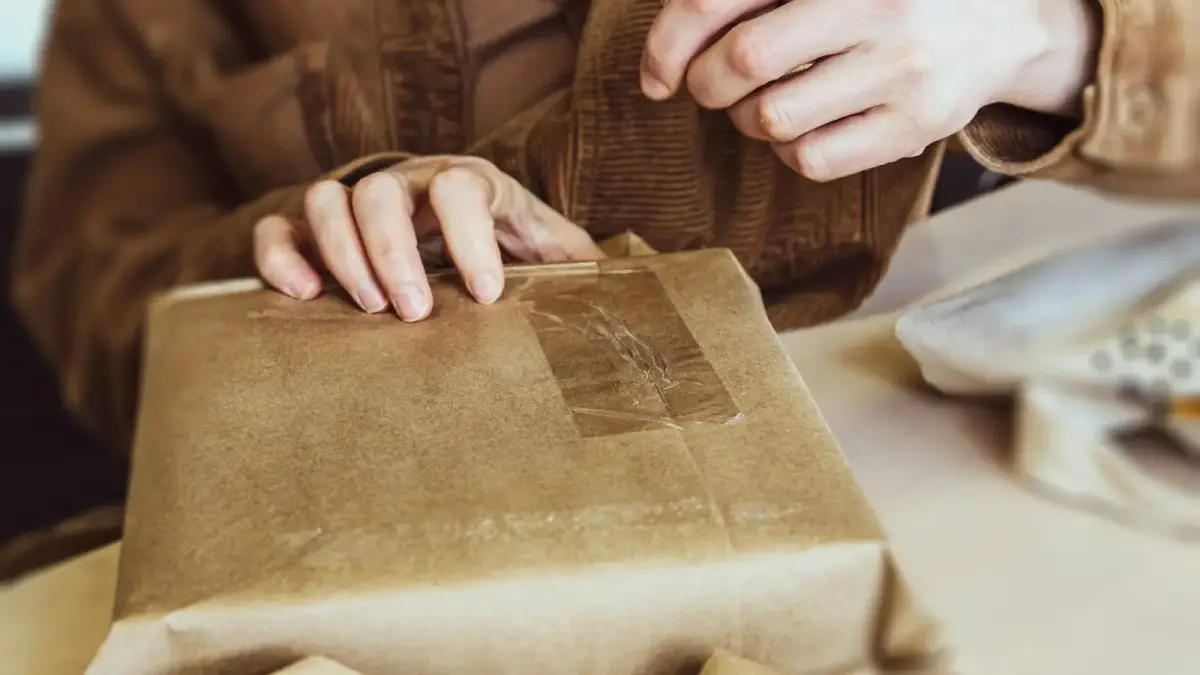
Last December, I sat in my car in a department store parking lot with two bags on the passenger seat. One held a first-edition copy of a book my mother had mentioned loving when she was in college - a book I’d tracked down over three weeks through four different online sellers. The other held a cashmere scarf in a neutral color.
I gave her the scarf.
I told myself the book was too much. Too specific. Too revealing of the fact that I had remembered a passing comment she made seven years ago about her sophomore year English class. That kind of attention, offered openly, felt dangerous in a way I couldn’t quite name.
The book is still in my closet. I look at it sometimes when I’m reaching for a sweater, and I feel the exact same knot in my stomach I felt at eight years old, handing my father a handmade card and watching his face for a verdict that never quite arrived.
If you know what I’m talking about - if choosing a gift sends you into a spiral that has nothing to do with budgets and everything to do with the terrifying possibility that you might be seen accurately - this is not a flaw in your personality. A 2019 study published in the Journal of Consumer Psychology found that gift-givers who experience high emotional investment in their selections tend to score significantly higher in empathy, relational attentiveness, and fear of negative evaluation. The agony is not neurosis. It is love trying to find a container.
Here are eight things people like us do, and what psychology says about why.
1. They start shopping months before any occasion - not because they’re organized but because they need the time
You don’t begin early because you’re a planner. You begin early because you know what’s coming. The narrowing. The moment when every option starts to feel insufficient and the clock is running out and you’re standing in a store at 9 PM the night before, holding something that feels like a surrender.
Starting early is your way of giving yourself room to fail. Room to pick something up, carry it around the store for twenty minutes, and put it back. Room to sit with an idea for a few days and decide it’s wrong without the pressure of having nothing else.
Research on decision-making anxiety from a 2021 study in Frontiers in Psychology found that individuals with high sensitivity to evaluation - people who grew up in environments where their choices were scrutinized - often need significantly longer processing windows for decisions that carry emotional weight. It’s not indecision. It’s your nervous system asking for more time to feel safe.
You learned, somewhere early, that the wrong choice was not just a mistake. It was a message. And you need time to make sure the message is right.
2. They have returned more gifts than they’ve given - the perfect thing in the store becomes the wrong thing in the car
There’s a phenomenon that happens between the register and the parking lot. The object that felt exactly right under fluorescent lights suddenly feels exposed in your hands. Too intimate. Too obvious. Too much like a confession disguised as wrapping paper.
You drive home and you set it on the counter and you look at it and you think: what will they think this means? Not what will they think of the gift - what will they think of you for choosing it.
The return isn’t about the object. It’s about the gap between what you feel and what you’re willing to let someone see. Every return is a retraction. A rough draft you decided was too honest to submit.
If you have ever returned something not because it was wrong but because it was too right, you understand. The perfect gift is sometimes the most frightening one, because it proves you were paying a kind of attention that feels, in some old and unexamined way, like it needs permission.
3. They know the person’s preferences better than their own - they’ve catalogued every passing comment about what they liked
You remember that she mentioned liking the smell of fig candles in a conversation three Novembers ago. You remember he said his favorite pen ran out and he could never find that exact one again. You carry these fragments around like they’re sacred, because to you, they are.
This is not casual observation. This is a deeply practiced form of love.
Psychologist John Gottman’s research on relational attunement calls this “building love maps” - the ongoing process of cataloguing your partner’s or loved one’s inner world. What he found is that the people who do this most thoroughly are often the ones who feel most uncertain about whether their love is landing. The map-building is compensatory. You study someone because you are not sure that simply being yourself is enough.
You know their coffee order, their shoe size, the author they mentioned once in passing. You could not tell someone your own favorite color with the same confidence. Somewhere along the way, knowing other people became safer than knowing yourself - because knowing yourself was never the part that got graded.
4. They avoid gift cards because a gift card says “I didn’t try” and trying is the only language they trust
A gift card is efficient. It guarantees the recipient gets exactly what they want. By every rational measure, it is the superior option.
You cannot bring yourself to give one.
Because a gift card says nothing. And you need the gift to say something. Not something grand or dramatic - just something that proves you were here, that you were paying attention, that you cared enough to try. Trying is the currency you were raised on. In your family, effort was the only reliable proof of love.
A 2020 study in the Journal of Personality and Social Psychology found that gift-givers consistently overestimate how much recipients care about thoughtfulness relative to desirability. Recipients, the research showed, are often happier with something they asked for. But the giver isn’t really giving for the recipient’s happiness. The giver is giving for the relationship’s survival. The gift is not a present. It is evidence that you belong here.
The gift card feels like showing up empty-handed. And you learned, long ago, that showing up empty-handed was showing up as no one at all.
5. They agonize differently for different people - the depth of the spiral reveals the depth of the attachment
You can buy a coworker a bottle of wine in four minutes. You can pick a neighbor’s birthday card in the checkout line. These decisions cost you nothing, because these relationships do not carry the weight of your oldest fears.
But your daughter. Your best friend. Your partner of thirty years. For them, the spiral opens like a trapdoor.
Notice the pattern. The people who trigger the longest, most exhausting gift searches are not the people who are hardest to shop for. They are the people whose opinion of you matters so deeply that the gift becomes a referendum on whether you truly know them. Whether you truly deserve them.
The depth of the agonizing is a map of your attachments. It shows you, with ruthless clarity, where you are most afraid of falling short. The coworker gets wine because there is nothing to lose. The person you love most gets six weeks of tortured deliberation because there is everything to lose - and no candle or book or piece of jewelry feels equal to everything.
6. They add a safety gift on top of the real gift - “just in case you don’t like the other one”
You buy the thing you actually want to give. Then you buy a second thing - something safer, more generic, less revealing - and you put them both in the bag.
The safety gift is your exit strategy. If the real gift lands wrong, if you see that flicker of confusion or politeness on their face, you can gesture to the second one and say, “Oh, I also got you this.” As if the real gift was the afterthought and the safe one was the point.
This is emotional hedging. You are distributing your vulnerability across two objects so that no single gift carries the full weight of your feelings. If one fails, the other catches you.
What you’re really doing is building a version of the interaction where you cannot be fully rejected. Because full rejection requires full exposure, and you have learned to never be fully exposed. You give pieces of yourself in increments, always holding something back, always leaving yourself a door.
The second gift is the door.
7. They watch the person open the gift with the focus of someone reading a verdict
The wrapping comes off and the world narrows. You are watching their hands. Their eyebrows. The exact speed at which their mouth moves. You are scanning for micro-expressions the way a child scans a parent’s face after handing over a report card.
This is not excitement. This is surveillance.
Research on attachment and hypervigilance, including work by developmental psychologist Mary Ainsworth, established decades ago that children who grow up uncertain about their caregivers’ responses develop heightened sensitivity to facial cues. That sensitivity doesn’t disappear in adulthood. It just migrates to new contexts. The gift-opening moment is the same emotional architecture as the childhood moment - you are presenting something that represents your effort, your attention, your love, and you are waiting to find out if it was enough.
A smile is not just a smile. It is an acquittal. A pause is not just a pause. It is a sentencing. You have compressed your entire sense of relational safety into a four-second window, and you are reading it with a fluency that most people reserve for survival.
Because for you, at some point, it was survival.
8. They remember every gift they’ve ever given that landed wrong - the archive of failed attempts
The earrings your sister clearly didn’t like. The jacket that was the wrong size. The cookbook you gave your mother that she never opened, still sitting on her shelf with the plastic wrap on, every visit a quiet reminder that you guessed wrong.
You carry these. Not in a casual, mildly-embarrassed way. You carry them the way you carry evidence in a case you are building against yourself.
A 2022 study in Psychological Science explored what researchers called “autobiographical shame memories” - the finding that individuals with high rejection sensitivity retain disproportionately vivid memories of social moments they perceived as failures. The memories don’t fade at the normal rate. They stay sharp, available, ready to be summoned at the exact moment you are trying to choose the next gift.
This is why the process gets harder, not easier, over time. You are not just choosing a gift. You are choosing a gift while your brain plays a highlight reel of every previous gift that didn’t land. The archive grows. The margin for error shrinks. And the stakes feel higher with each attempt, because each attempt carries the accumulated weight of every one that came before it.
If you read this and recognized yourself in most of these - if your chest tightened a little at the image of watching someone open a gift you spent weeks choosing - I want you to know something that took me a very long time to understand.
The agony of gift-giving is not about gifts. It is about the distance between what you feel and what you believe you are allowed to show. You are someone who loves deeply, pays attention fiercely, and carries the kind of care that most people would be grateful to receive - if you could ever let yourself deliver it without the protective wrapping of a safer option.
The book is still in my closet. I think about giving it to my mother every time I visit. Maybe this year I will. Maybe this year I will let the gift be the honest one and survive the four seconds of watching her face.
And maybe you will too. Not because the gift has to be perfect. But because the person giving it already is - even if she never learned to believe that the offering and the audition were never supposed to be the same thing.