8 things people who still listen to the same music they loved at seventeen - who haven't added a new artist in thirty years and whose children's music sounds like noise but a three-chord song from 1987 can still make their chest ache - do that psychology says reveals not stubbornness but the fact that the brain's window for letting music permanently inside closes after adolescence
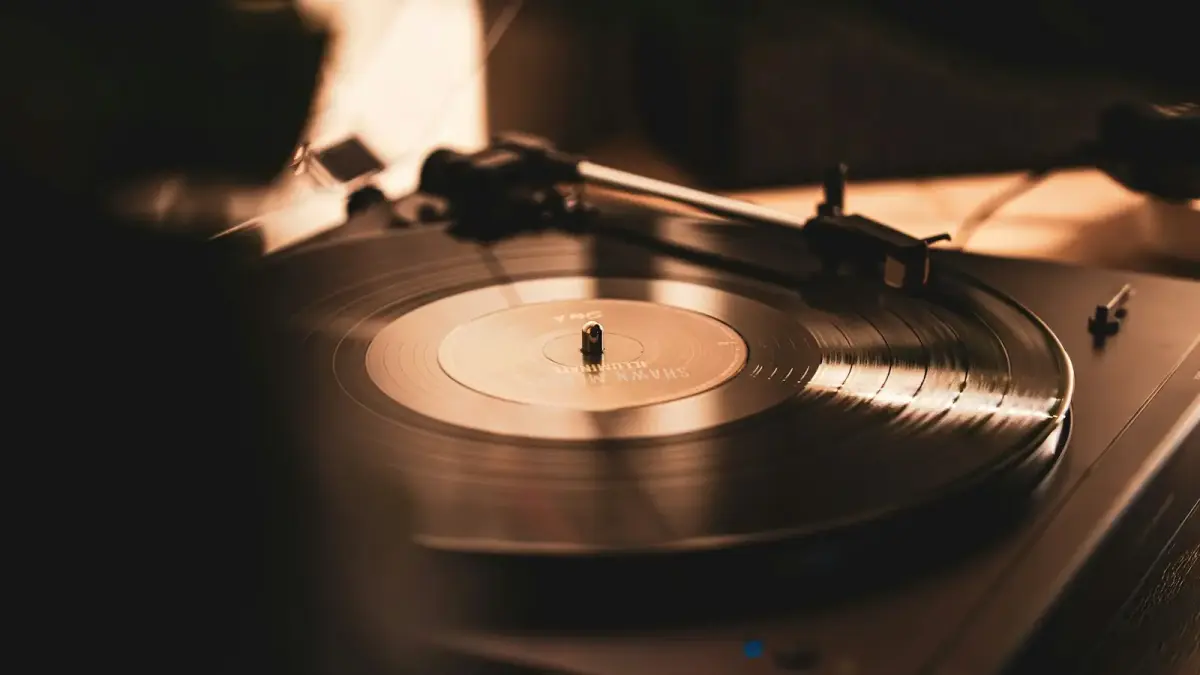
I was driving home last Tuesday when a song came on the radio that I hadn’t heard in maybe fifteen years. Fleetwood Mac. “Landslide.” And something happened in my body before my mind could catch up - my shoulders dropped, my breathing changed, and I was suddenly sitting in my best friend’s bedroom in 1986, cross-legged on a carpet that smelled like strawberry candles, feeling every feeling I had ever had at once.
My thirteen-year-old daughter was in the passenger seat. She looked over at me and said, “Why are you crying?”
I wasn’t crying. Not exactly. But I couldn’t explain what was happening either, because what was happening doesn’t have a clean word for it. It’s not nostalgia. It’s not sadness. It’s more like the song opened a door in my chest that I forgot existed, and behind it was every version of me that ever listened to that song when listening to a song was still the most important thing in the world.
I’ve written about memory and emotion for years, and I still can’t fully articulate why the music from my teenage years lives in a different room in my brain than anything I’ve heard since. But science can. And what it says is not that people like me are stuck. It’s that we were permanently shaped during a window that has since closed.
Here are 8 things people who still listen to the same music they loved at seventeen do that psychology says is completely, beautifully normal.
1. They can recite lyrics to songs they haven’t heard in decades but cannot remember a song released last year
You know every word to a song you last played in 1993. You could sing it right now, in the shower, from memory, including the part where the singer’s voice cracks slightly before the bridge. But ask you to hum something from the past five years and you draw a blank.
This isn’t a failing memory. This is memory working exactly as designed. A 2013 study by Krumhansl and Zupnick published in Music Perception found that people show a dramatic “reminiscence bump” for music from their adolescent and early adult years - roughly ages 12 to 22. Songs from that period are not just remembered. They are stored differently, encoded alongside the intense emotional experiences that defined that era.
Your brain was building itself during those years. The music came in while the concrete was still wet. Everything that arrived after the surface hardened sits on top. It doesn’t sink in the same way.
2. They feel physically different when “their” music plays - posture changes, breathing shifts
Watch someone hear a song they loved at seventeen. Really watch them. Their spine straightens or their shoulders round. Their eyes change. Their breathing slows or catches. Something in the body reorganizes itself, like the song is not entering through the ears but through the ribs.
This is not imagination. Daniel Levitin, neuroscientist and author of This Is Your Brain on Music, has documented how music from our formative years activates the cerebellum, the amygdala, and the nucleus accumbens simultaneously - the brain’s movement, emotion, and reward centers all firing at once. Music heard during peak emotional development doesn’t just trigger a thought. It triggers a full-body state.
You’re not being dramatic when a song changes how you hold yourself. Your nervous system is responding to a cue that was installed decades ago, and it still works perfectly.
3. They cannot explain why a particular song matters without telling you who they were when they first heard it
Ask someone why they love a certain song and they will not talk about the chord progression. They will not mention the production quality or the genre. They will tell you about a person. A place. A version of themselves that no longer exists anywhere except inside that song.
“I was sixteen and I had just gotten my license and I drove to the lake alone for the first time and this song was on and the windows were down and I felt like my life was actually starting.”
That’s not a music review. That’s an identity story. The song is not separate from the memory. The song IS the memory. Petr Janata’s 2009 research published in Cerebral Cortex showed that music-evoked autobiographical memories activate the medial prefrontal cortex - the same region responsible for self-referential thought. When you hear that song, you are not remembering a moment. You are briefly re-becoming the person who lived it.
4. They have tried new music and felt nothing - not dislike, just absence
This is the one that makes people feel broken. You hear something new, something critically acclaimed, something your kids swear is genius. And you don’t hate it. You don’t even dislike it. You just feel nothing. Like trying to read a letter written in a language you almost know but not quite.
There is a neurological reason for this, and it has nothing to do with closed-mindedness. During adolescence, the brain’s dopamine system is at its most reactive. Everything feels more intense - first love, first heartbreak, first time a song makes you feel understood. Music heard during this period gets paired with that heightened emotional state. After the window narrows, new music can still be enjoyed intellectually. You can recognize that it’s well-made. But it rarely reaches the depth where the old songs live.
You are not refusing to let new music in. The door that was wide open at seventeen doesn’t open as far anymore. That’s not your choice. That’s your biology.
5. Their music collection is a map of who they loved, who they lost, and who they were before life required editing
Scroll through the playlist of someone who still listens to their teenage music and you are holding a diary they never meant to write. This album is the summer after graduation. That song is the first person who broke their heart. This one is the year they moved away from home and called their mother every Sunday evening because the silence in their new apartment felt personal.
Every song is a bookmark in a life that kept moving forward while the music stayed exactly where it was.
This is why people guard their playlists so fiercely. It’s why a partner changing the station in the car can feel like a small act of erasure. Those songs are not entertainment. They are evidence. Evidence that you were young once, that you felt things at full volume, that there was a time before you learned how to manage your emotions instead of simply having them.
6. They judge the quality of a road trip by how long they can listen to their playlist without interruption
The perfect road trip, for someone whose musical heart lives in another decade, has nothing to do with the destination. It’s about three uninterrupted hours with the windows down and no one asking to change the song. It’s about hearing track four bleed into track five the way it was supposed to, the way it did on the original album, before streaming taught everyone to shuffle.
There’s a reason this feels sacred. Levitin’s research shows that familiar music creates what neuroscientists call “neural entrainment” - the brain’s rhythms literally synchronize with the music’s tempo and structure. When you listen to a song you’ve heard hundreds of times, your brain is not processing something. It is moving with something. The prediction centers light up just before the chorus hits. You know what’s coming, and the knowing is the pleasure.
A road trip with your music is not a drive. It is a three-hour meditation where you and the song are breathing in the same rhythm, and no one is asking you to be anywhere other than exactly where you are.
7. They hear “their” song in a grocery store and are briefly, involuntarily, seventeen again
You are standing in the cereal aisle, thinking about nothing, and then the first four notes of a song come through the overhead speakers and time collapses. You are not fifty-five in a fluorescent-lit supermarket. You are seventeen in a car that smells like cheap cologne and possibility, and the person sitting next to you is someone you haven’t spoken to in thirty years, and for about twelve seconds you feel everything you felt then with the same unguarded intensity.
Then the song fades into a commercial for store-brand yogurt and you’re back.
Janata’s research on music-evoked autobiographical memories describes exactly this phenomenon - involuntary, vivid, emotionally loaded memories triggered by familiar music. These are not gentle recollections. They are full-sensory time travel. You smell what you smelled. You feel the temperature. You are, for a moment, neurologically closer to your teenage self than to the person holding a shopping basket in the present.
This is not sentimentality. This is your brain doing something remarkable - preserving a moment in such high resolution that a four-note trigger can reconstruct it decades later.
8. They feel a quiet grief that nothing new will ever sound the way those songs sounded
This is the one nobody talks about. The low-grade sadness that sits underneath the love for old music. The knowledge - not the fear, but the settled knowledge - that you will never again hear a song for the first time and feel the floor drop out from under you the way it did when you were sixteen and heard that one song that changed what you thought music could do.
It’s not that new music is bad. It’s that your capacity to be completely, devastatingly undone by a song required a version of you that doesn’t exist anymore. The version that hadn’t been hurt enough times to build walls. The version whose nervous system hadn’t yet learned to regulate itself, to keep things at a manageable distance.
That grief is real. And it’s worth honoring. Because what you’re mourning is not music. You’re mourning the version of yourself who could be moved without permission, who didn’t need to decide whether to feel something before feeling it.
Here is what I want you to know, if you’re someone whose playlist hasn’t changed since the late eighties or the early nineties or whenever your window was open.
You are not stuck in the past. You are carrying the past in the only way the brain knows how to carry something that mattered that much. Those songs are not a sign that you’ve stopped growing. They are proof that you grew so intensely during those years that the music became part of the architecture.
The woman who plays the same album on every long drive home is not avoiding the present. She is visiting the last recording her nervous system made when every emotion was brand new and the body hadn’t yet learned to protect itself from being moved.
That album is not a habit. It’s a homecoming. And the fact that it still works - that it still reaches you, still changes your breathing, still puts you back in that car or that bedroom or that moment - means something was built inside you that nothing, not time, not distance, not thirty years of living, has been able to take apart.
That’s not nostalgia. That’s love. And your brain knew exactly what it was doing when it decided to keep it.