8 things people who came home to an empty house after school in the 1980s still do without realizing it, and every single one started the afternoon they learned that being alone was not something to fear but something to become, according to psychology
I was nine the first time I unlocked the front door with my own key.
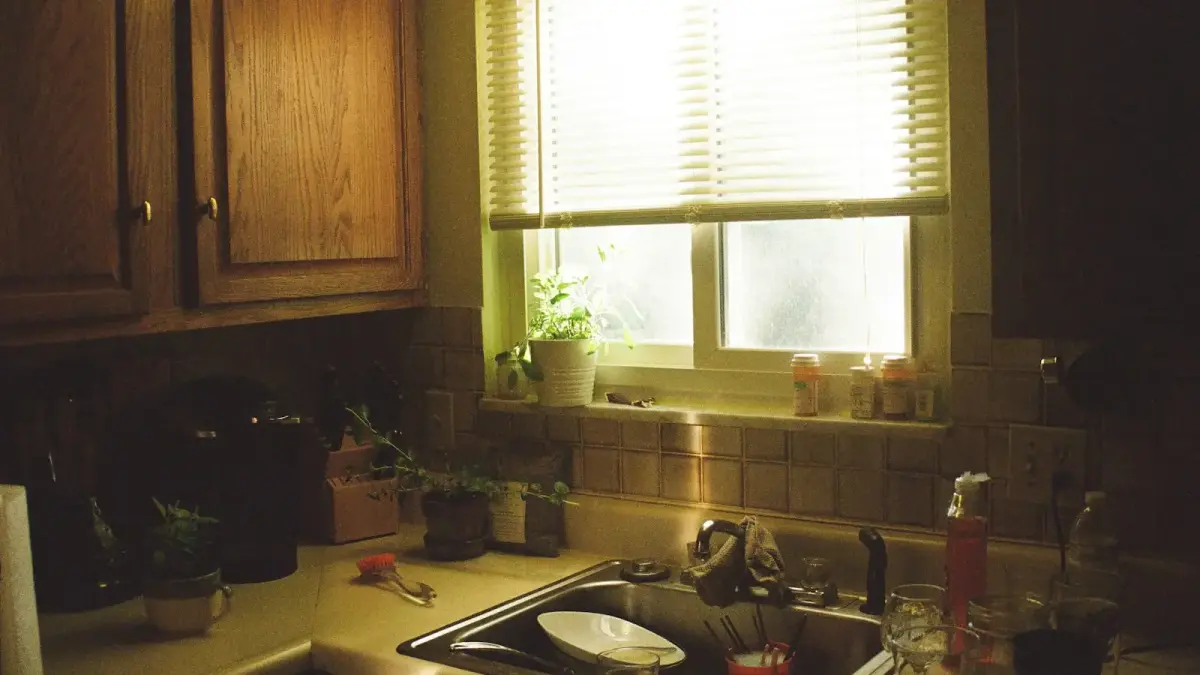
The house was quiet in a way that houses aren’t supposed to be quiet when you’re nine. No television on in the other room. No one calling from the kitchen. Just the hum of the refrigerator and the tick of the hallway clock and the particular stillness that comes from being the only breathing thing in a building.
I dropped my backpack on the floor. I locked the door behind me. I made myself a peanut butter sandwich and ate it standing at the counter, looking out the window at the empty driveway. And then I did my homework, because that’s what you did. Nobody told you to. Nobody checked. You just did it because the alternative was sitting in that silence with nothing between you and the enormity of being completely, utterly alone.
If you were a latchkey kid in the 1980s, you know exactly what I’m describing. You know the weight of that key around your neck or zipped into the front pocket of your backpack. You know the sound of an empty house at 3:15 in the afternoon.
And you probably don’t realize how much of who you are today was built in those hours.
1. You check that the door is locked more than once - sometimes three or four times before you can walk away
This one seems small until you notice yourself doing it. You lock the front door, you walk to the car, and then something pulls you back. You try the handle. You check again.
This isn’t anxiety in the clinical sense. It’s a deeply embedded protocol from childhood - because locking the door was the first thing you did when you walked into that empty house, and it was the one instruction that was non-negotiable. Lock the door. Don’t open it for anyone.
A 2019 study published in the Journal of Child and Family Studies found that children who spent significant time in self-care developed heightened vigilance around safety routines - patterns that persisted well into adulthood. You weren’t being paranoid. You were being the nine-year-old who understood that a locked door was the only barrier between you and everything your parents worried about.
2. You are fiercely, almost stubbornly self-reliant - and you genuinely don’t understand why other people need so much help
Someone at work asks you to help them figure out how to change a tire. Something in you tightens - not resentment exactly, but a kind of bafflement. You changed your first tire at sixteen from a diagram in the glove compartment. You figured out how to cook rice at ten because you were hungry and no one was coming home for two more hours.
You don’t wear this self-reliance like a badge. You wear it like skin. It doesn’t feel like a skill because it was never optional.
Psychologist Wendy Mogel, author of The Blessing of a Skinned Knee, has written extensively about how early self-reliance shapes identity. The catch is that what looks like competence from the outside sometimes feels like loneliness from the inside - the quiet belief that if you can’t do it yourself, it probably won’t get done.
3. You have an almost pathological difficulty asking for help - even when you desperately need it
This is the shadow side of number two, and it runs deeper than most people realize.
When you spent your formative afternoons solving every problem alone - the broken zipper, the scary noise from the basement, the homework question no one could answer - you internalized a rule that became invisible: needing help is a kind of failure.
You’re the person who will drive around lost for forty minutes before pulling over to ask for directions. You’ll carry every grocery bag in one trip. You’ll sit with a problem at 2 AM rather than call someone, because somewhere in your nervous system, calling someone still feels like admitting you can’t handle it.
You can handle it. You always could. But the cost of that capability is that vulnerability feels foreign, almost dangerous.
4. You stay remarkably calm in emergencies - and people comment on it like it’s a superpower
The power goes out. A pipe bursts. Someone falls and there’s blood. And while everyone else is panicking, you’re already moving - getting the flashlight, turning off the water, finding the first aid kit.
This isn’t bravery. It’s pattern recognition. When you were eight and the smoke detector went off because you were trying to make toast, there was nobody to scream for. You had to figure it out. When the neighbor’s dog got into the yard, you had to handle it. When you cut your finger slicing an apple with a knife you probably shouldn’t have been using, you ran it under cold water and found the band-aids yourself.
A 2015 study in Developmental Psychology found that children who regularly managed their own after-school time developed stronger executive function and emotional regulation under stress. You learned to be the calm one because there was no other option.
5. You keep your living space unusually tidy - not because you’re neat, but because order is how you manage the feeling of things being out of control
People walk into your home and say things like “wow, you’re so organized” or “I wish I were this clean.” You smile, but the truth is more complicated than preference.
When you came home to an empty house, the state of that house was everything. If it was clean, the world felt manageable. If dishes were piled in the sink or laundry was spilling out of the basket, the aloneness felt heavier. More permanent. More like something was wrong.
So you started tidying. Not because anyone asked. Because putting things in order was the one way a ten-year-old could make an empty house feel less empty. Fold the blanket on the couch. Wipe down the counter. Put your shoes by the door. These weren’t chores. They were rituals of self-soothing.
Decades later, you still can’t relax in a messy room. It’s not about the mess. It’s about what the mess used to mean.
6. You have a complicated relationship with solitude - you crave it and dread it in equal measure
Here’s the paradox nobody talks about. You became so good at being alone that you actually need it now. Crowds drain you. Too much social time makes your skin itch. You recharge in silence the way other people recharge at parties.
But there’s another layer beneath that - a thin, cold thread of something that feels like too much silence. Because you also know what it’s like when alone tips into lonely, when the quiet stops being peaceful and starts being the sound of nobody coming.
Psychologist Adam Grant has written about the difference between chosen solitude and imposed solitude. One restores you. The other depletes you. As a latchkey kid, you experienced both before you had the language to tell them apart. So now you oscillate - seeking solitude, then suddenly needing connection with an urgency that surprises even you.
7. You are hyper-aware of time - especially when someone is late or doesn’t show up when they said they would
Your partner says they’ll be home at six. At 6:07, something shifts in your chest. By 6:15, you’ve checked your phone twice. By 6:30, you’re cycling through scenarios, and not the rational ones.
This isn’t controlling behavior. This is the echo of every afternoon you spent watching the clock, waiting for headlights in the driveway. When you’re a child alone in a house and your parent’s arrival time is the only structure holding your world together, even ten minutes late feels like abandonment.
A 2012 study in the Journal of Research on Adolescence found that latchkey children were more likely to develop anxious attachment patterns around reliability and punctuality. You’re not being difficult when you need people to show up when they say they will. You’re honoring the kid who sat at the window and counted minutes.
8. You raised yourself in ways you’ve never fully acknowledged - and you’re still parenting yourself today
This is the one that tends to land hardest.
You made your own meals. You decided your own bedtime on the nights when the shift ran long. You soothed your own fears. You solved your own problems. You sat with your own sadness and figured out how to get up and keep going, at an age when most children were still being tucked in.
Nobody called it what it was. They called it independence. They called it maturity. They called you “the easy kid” or “such a little adult.” But what you were actually doing was parenting yourself because the situation required it, and you rose to meet a demand that never should have been yours.
Gabor Mate has written extensively about how early self-sufficiency can mask unmet attachment needs - how the child who learns to need nothing is often the child who needed the most. That doesn’t mean your parents failed. The 1980s were a different landscape. Dual incomes weren’t optional. After-school programs were scarce. Latchkey wasn’t a choice - it was an economic reality for millions of families.
But the imprint is real. And it lives in you.
If you recognized yourself in most of this list, I want you to sit with something for a moment.
You were not just independent. You were a child doing something extraordinary - holding your own world together for a few hours every day, with no training and no safety net, because that’s what the circumstances required.
The resilience you built is real. The calm under pressure is real. The competence is real.
But so is the part of you that still struggles to ask for help. So is the part that flinches when someone is fifteen minutes late. So is the part that tidies the kitchen at midnight because something feels off and you can’t name it.
You’re not broken. You’re not “too independent” or “too controlling” or “too sensitive about time.” You’re a person who learned the weight of an empty house before you learned algebra. And every one of these patterns is just proof that you survived it - not unscathed, but intact. Still here. Still locking the door behind you.
Still standing at the counter, making your own sandwich, looking out the window.
Only now, you know someone is coming home.