8 things people who keep the television on all day as background noise - not because they are watching but because they cannot tolerate the specific quality of silence that arrives when every screen in the house goes dark - do according to psychology
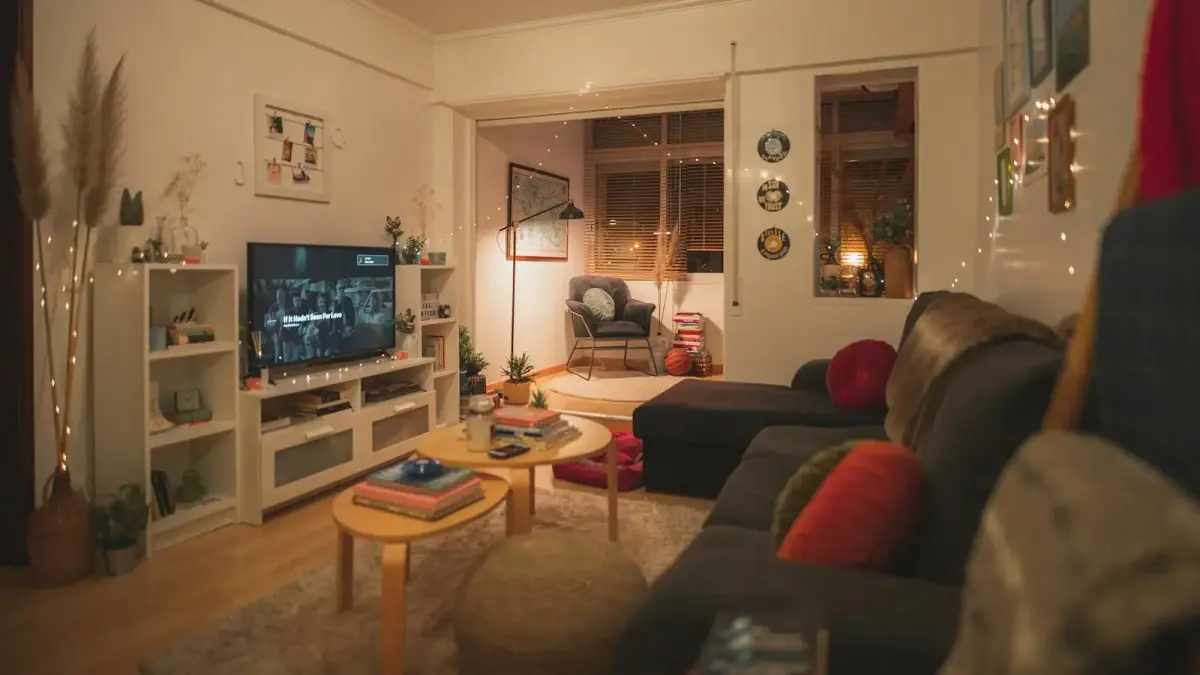
I did not realize I was doing it until my daughter pointed it out. She was maybe twelve, standing in the kitchen doorway, watching me walk through the front door with grocery bags in both hands and somehow still managing to grab the remote before I set anything down. “You didn’t even take off your shoes,” she said. She was right. The television was already on before I’d put down the milk.
I laughed it off. Called it habit. But that night, after everyone was asleep, I tried something. I turned everything off. The TV, the laptop, the white noise machine in the hallway. I sat on the couch in full silence and waited.
Within forty-five seconds, something in my chest started tightening. Not panic, exactly. Something older than that. A low-frequency hum that I could only describe as waiting - the feeling of sitting in a room where something was about to happen and you didn’t know what it was, only that you needed to be ready.
I turned the TV back on. A cooking show. Volume at nine. And my entire nervous system exhaled.
That was the moment I understood that the television had never been entertainment. It was architecture. It was the sound of a house that was not about to come apart.
If you are the kind of person who cannot exist in a quiet room without reaching for a remote, a podcast, a playlist - not because you want to watch or listen, but because the silence itself feels like a substance you are allergic to - this is not a character flaw. Psychology has a lot to say about why certain nervous systems treat ambient sound the way others treat a locked door. Here are eight things people like us tend to do.
1. They turn the television on within seconds of entering an empty house
This one is diagnostic. It is not about finding something to watch. It is about filling the room before the room fills you. A 2019 study published in the Journal of Environmental Psychology found that ambient sound significantly reduces physiological stress markers in individuals who score high on neuroticism and environmental sensitivity. The researchers described it as “auditory anchoring” - the nervous system using predictable sound to establish a sense of spatial safety.
The person who does this is not lazy. They are performing a ritual that dates back to childhood, when the sound of a television meant that an adult was present, awake, and not in crisis. The TV meant the house was inhabited. Turning it on is not choosing noise. It is refusing to be the only living thing in the room.
2. They cannot explain what they were watching if you ask
You walk in and the TV is on. You glance at the screen. “What are you watching?” And they look up, slightly disoriented, and say something like, “Oh, I don’t know. Whatever was on.”
They are not lying. They genuinely were not tracking the content. The sound was not for their attention - it was for their nervous system. It was set dressing. The way some people need a fan running to sleep, these people need voices in the room to exist in it without the floor feeling like it might open up.
This is what psychologists call a “secondary auditory environment.” The sound is processed below the level of conscious attention. It registers as presence, not information.
3. They associate silence with something being wrong
This is the root of everything. A child who grew up in a stable, warm household learned that silence was just the space between ordinary moments. Dinner being made. Pages being turned. A parent humming while folding laundry. Silence was neutral. It carried no charge.
But a child who grew up in a volatile home learned something entirely different. Silence was the precursor. It was the held breath before the yelling started. It was the twenty minutes of nothing after a door slammed. It was a parent going quiet in a way that meant you needed to become invisible.
A 2021 study in Frontiers in Psychology found that adults who reported high levels of childhood household unpredictability showed significantly elevated cortisol responses to periods of environmental silence, compared to adults from stable homes. Silence, for these individuals, was not restful. It was a signal. Their bodies still responded to it as though something dangerous was forming just out of sight.
4. They feel most relaxed in slightly chaotic environments
Airports. Busy cafes. Family gatherings where six conversations are happening at once. These environments, which would overwhelm many people, feel oddly soothing to the person who cannot tolerate home silence.
This is not contradictory. It is perfectly consistent. The nervous system is not bothered by noise - it is bothered by the absence of noise. In a crowded space, there is so much ambient evidence of human activity that the body’s threat detection system can finally stand down. There is nothing to monitor because everything is already audible.
Dr. Stephen Porges, whose polyvagal theory has reshaped how we understand the nervous system, describes this as “neuroception” - the body’s unconscious scanning for cues of safety or danger. For some people, the hum of a populated space sends powerful safety signals. The quiet of an empty house sends the opposite.
5. They often had a parent whose mood could shift without warning
This is not always the case. But it is the case often enough that it deserves its own number on this list.
The child who learned to monitor silence usually learned it from a specific person. A parent who could go from fine to furious in the space between one room and the next. A caregiver whose quiet moments were not peaceful - they were unpredictable. You could not tell, from the quality of their silence, whether they were content or building toward an explosion.
That child learned to fill silence preemptively. If there was always sound in the room, you never had to sit in the unbearable suspense of wondering what the quiet meant. The television became a third party - a neutral presence that kept the emotional temperature of the room from becoming unreadable.
At fifty-eight, that child still reaches for the remote the way someone else might reach for a light switch in a dark hallway. It is not a preference. It is a reflex built from years of learning that silence is where things go wrong.
6. They struggle with meditation, mindfulness, and any practice that asks them to sit with stillness
Every therapist they have ever seen has suggested meditation. Every time, they have tried. Every time, instead of peace, they have found something closer to dread.
This is not resistance. It is not a failure of discipline. It is a nervous system interpreting silence and stillness as a threat state. A 2020 study in Psychological Science found that approximately 25 percent of participants in a controlled mindfulness study experienced increased anxiety rather than decreased anxiety during silent meditation - and that this response was significantly correlated with histories of childhood environmental instability.
The people in this group are not bad at calming down. They are actually extraordinarily skilled at regulating their environments - they have just learned to do it externally rather than internally. The TV, the podcast, the low hum of a radio they are not listening to - these are regulation tools. They work. They have always worked. The problem is that no one ever told them that needing these tools was not a sign of weakness but a sign of a nervous system that learned its lessons very, very well.
7. They tend to be the person who notices tension in a room before anyone else does
This one surprises people, but it shouldn’t. A person who grew up monitoring silence for threat cues did not stop doing that as an adult. They just got better at it. Faster. More accurate.
You know the person at a dinner party who quietly says, “Is everything okay between those two?” before anyone else has noticed the shift? That is often someone whose childhood taught them to read atmospheric pressure the way a sailor reads the sky. They feel the storm coming before the clouds form.
Research on hypervigilance from the Journal of Research in Personality suggests that individuals raised in unpredictable environments develop heightened sensitivity to social and environmental cues - a trait that, while exhausting, also makes them exceptionally attuned to the emotional states of others. They are the people who notice. Who feel the room change temperature. Who register the micro-expression that everyone else misses.
The TV stays on because their radar is always running. Without ambient sound to soften the signal, every small shift in the house becomes data that needs to be processed.
8. They often feel guilty about this habit without understanding why
This might be the most important one. Because the person who keeps the TV on all day usually carries a quiet layer of shame about it. They have heard the messaging: screen time is bad, silence is golden, mindful people sit in stillness and find peace there.
They have tried to be that person. They have turned everything off and sat on the couch and told themselves to just breathe. And then, within minutes, something ancient in their body started vibrating at a frequency that felt like waiting for a car to pull into the driveway too fast, or a voice to rise from behind a closed door.
So they turned the TV back on. And then they felt embarrassed about it.
Here is what I want you to know. You are not broken for needing sound. You are not lazy, distracted, or addicted to screens. You are a person whose nervous system learned, through no fault of your own, that silence is a frequency where dangerous things happen. And you found a way to make your home feel safe using the tools available to you.
That is not a flaw. That is survival. That is a child who figured out how to make a scary house feel habitable, and an adult who still carries that solution in their body like muscle memory.
The television is not background noise. It is the sound of a house that is not about to come apart. And if you need that sound, you are allowed to have it - without apology, without shame, and without anyone else’s permission.
You learned silence was a warning. You filled it. That was the smartest thing you could have done. And the fact that you still do it just means you are still, after all these years, taking care of the child who needed someone to leave the TV on so the house felt like someone safe was home.

